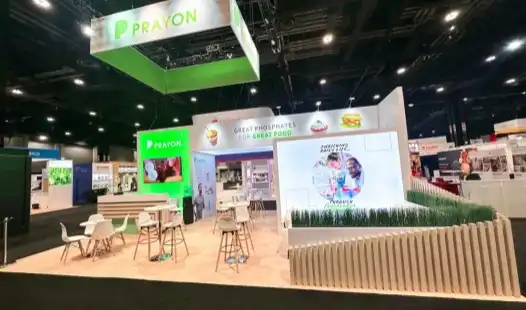
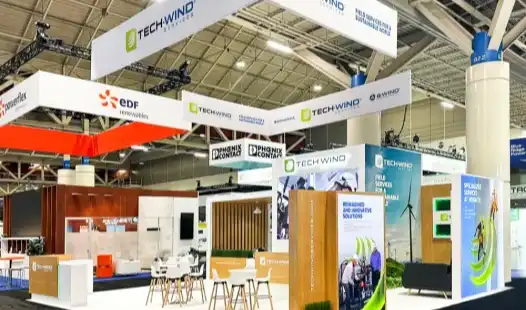
How to Plan a Successful Trade Show Exhibit Booth
To plan a successful trade show booth, you need to know that it's more than just a display. It's a smart marketing tool meant to bring in qualified leads and show a measurable return on investment (ROI). Space planning, brand psychology, and structural engineering are all important parts of good trade show booth design. They work together to make immersive settings that stand out in crowded display halls. If you follow the right steps when planning for big events like the IFT FIRST Annual Meeting & Food Expo in Chicago (July 12–15, 2026) or Cosmoprof North America in Las Vegas (July 13–15, 2026), your exhibit will go from being a simple space to a powerful business conversion hub that speaks to executives from all fields.
Understanding the Core Elements of Trade Show Booth Design
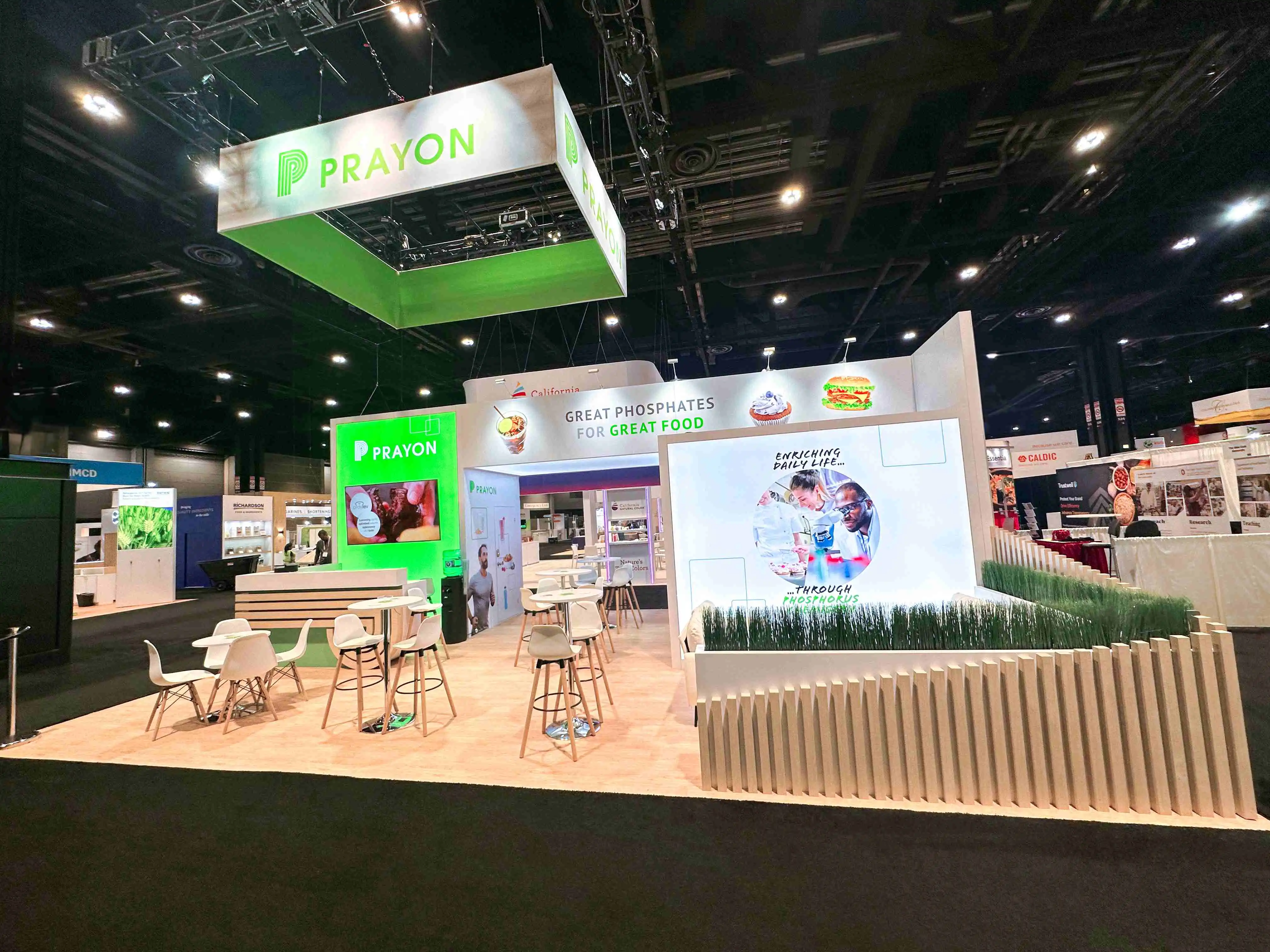
The trade show booth design is more than just pretty pictures; it's also a way to communicate with people in three dimensions and give them a sense of your brand. At its core, professional display design helps B2B exhibitors solve three major problems: keeping attendees interested in settings with lots of distractions; getting more leads; and making lasting brand impressions that last long after the event is over.
Strategic Layout and Traffic Flow
Booth arrangement has a direct effect on how visitors behave and how long they stay in the booth. A good design takes into account how people naturally move around in show halls and places important elements where people's eyes naturally go. Open lines of sight encourage discovery, and carefully placed practice areas encourage more in-depth conversation. The architectural framework needs to strike a mix between ease of access and clear paths that lead guests through your brand story without slowing things down during busy times.
Cohesive Branding and Visual Identity
Your exhibit should quickly show what your brand stands for through the use of color psychology, font, and the materials you choose. Brand recall and expertise are strengthened by visual elements that are the same at all places, from overhead signs to product displays. High-quality designs made with tension fabric systems that have a density of at least 230gsm ensure that colors are saturated and there are no problems with transparency. They also keep the freedom needed for reconfiguring for events of different sizes.
Lighting as a Strategic Tool
Professional lighting design does more than just provide light; it also changes the mood, draws attention to certain areas, and improves the way products are shown. Color Rendering Index values above 90 for LED arrays ensure correct color representation, which is important for product displays. Color temperatures that can be changed between 3000K and 5000K let you change the mood based on your industry setting. Medical gadget vendors benefit from sterile, clinical lighting, while consumer goods brands may use warmer tones to make spaces that feel more welcoming.
2026 Design Trends and Innovations
Today's display design puts more and more emphasis on sustainability by using eco-friendly materials and flexible systems that make assets last longer and can be used at more than one event. Adding interactive technologies like tablet product configurators, augmented reality experiences, and real-time data display turns watching something into doing something. These technologies are especially useful in the tech, manufacturing, and medical fields, where complicated products need to be shown through hands-on experience instead of static images.
Step-by-Step Guide to Planning Your Trade Show Booth
To turn business goals into interesting show experiences, you need to plan in a way that takes budget constraints into account. We've helped hundreds of exhibitors through this process, and we've come up with a way to do it that reduces risk while boosting effect.
Align Goals and Budget Parameters
Start by making clear, attainable goals instead of just vague ideals. Are you putting out a new line of goods? Getting suitable leads in certain industries? In a developing market, how do you build credibility? For each goal, you need to set different design objectives and use different resources. Startup owners usually focus on creative, low-cost solutions that focus on return on investment (ROI). On the other hand, corporate marketing managers may value complex custom builds that strengthen the value of an existing brand. Being clear about the budget from the start lets the design team come up with practical solutions instead of unrealistic ideas that will require expensive compromises in the end.
Select Optimal Booth Configuration
The type of booth you have has a big impact on how visitors feel and how much money you need. Knowing the differences helps people who work in buying make smart choices:
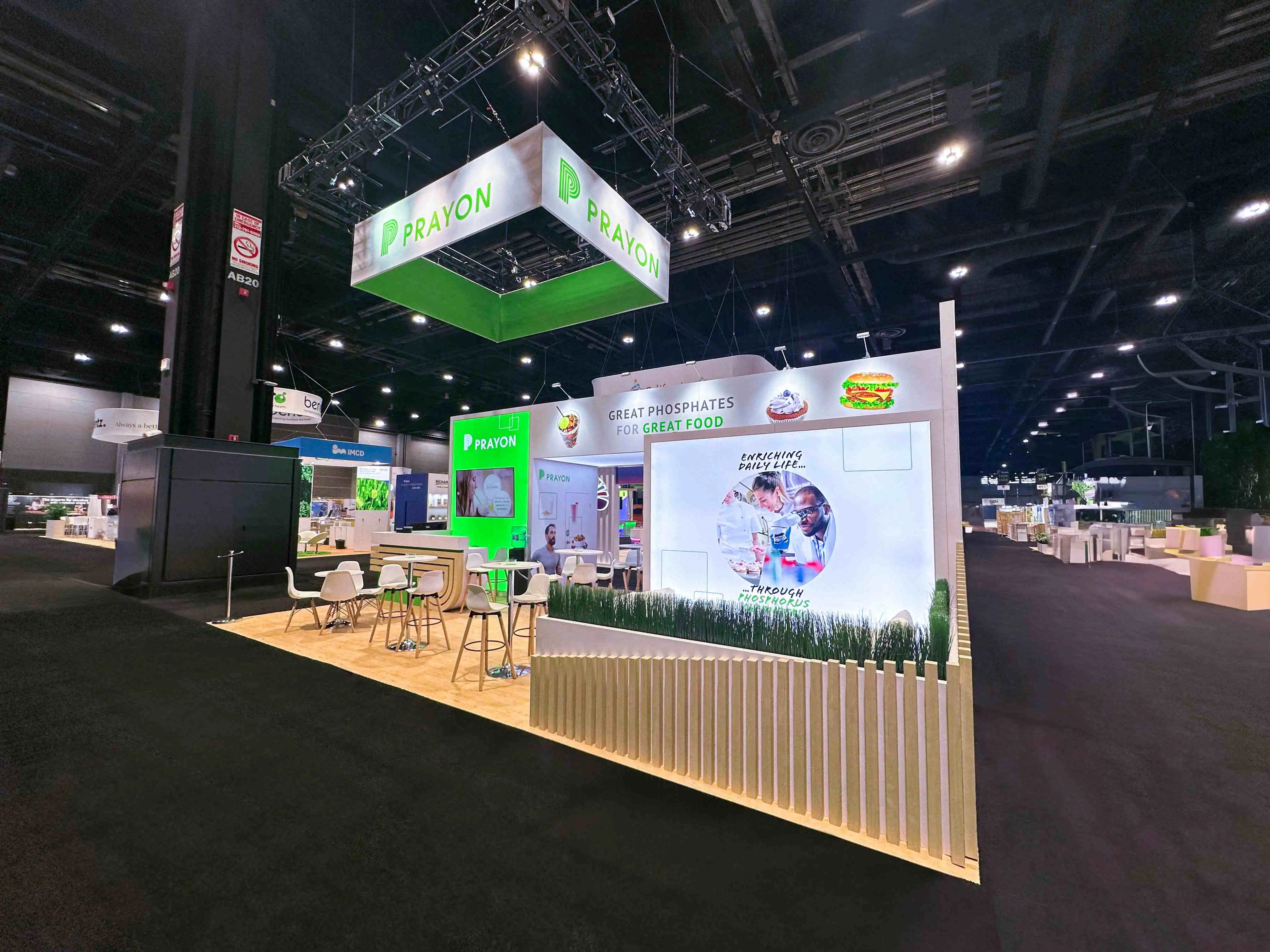
Custom island layouts (usually 20x20 or bigger) give visitors access from all sides and give designers the most freedom, making them perfect for big product launches or corporate marketing managers who need to make strong brand statements. These builds can handle complicated features like two-story buildings, private meeting rooms, and displays of heavy machinery needed at industrial shows.
Modular systems are very flexible because their parts can be reconfigured to fit different show sizes. A well-designed modular booth bought at Cosmoprof with a 20x20 size can be broken down into two 10x10 inline setups for regional shows, making the best use of the assets. The aluminum extrusion frames (usually 6063-T6 profiles) have high strength-to-weight ratios that lower drayage costs, which is a big deal for exhibitors who have to handle operations in more than one city.
Portable displays are good for new businesses and presenters who want to look professional but don't want to spend a lot of money on custom builds. Modern portable systems are more complex than simple pop-up posters. They include lightweight structures with built-in lights and graphic screens that can be put together by anyone without special skills, makingtrade show booth designmore accessible and cost-effective for exhibitors.
Detailed Design Considerations
Form and function should work together in a show design that looks good and helps with business activities. Think about how your show appearance will actually work. For example, will you be doing live product demonstrations that need a lot of electricity? Do you need quiet places for private conversations with soundproofing in your sales process? Are you going to show off big machinery that needs strengthened flooring?
Functional zoning that splits public product displays from compliance-focused consultation areas helps medical sales directors get ready for healthcare shows. Food and drink sellers at events like the IFT FIRST Annual Meeting need surfaces that are safe for food and workflow designs that keep hygiene standards high during tasting. Manufacturers who show their products at industrial trade shows need open-plan plans that let them check their equipment from all sides without having to deal with columns that block their views.
Integrate Engagement Technology
Adding technology shouldn't just look nice; it should solve specific problems with interaction. Touchscreens that can be interactive work well for complicated product configurations where customers can change details in real time. Medical gadget makers can show off surgery uses in virtual reality without having to set up a sterile field. Sharing material is easier on real-time social media walls, so your show can reach more people than just the people who are there in person. The key is to choose technologies that meet the needs of visitors in your industry instead of following trends that take away from your main message.
Selecting Trusted Partners for Design, Build, and Installation
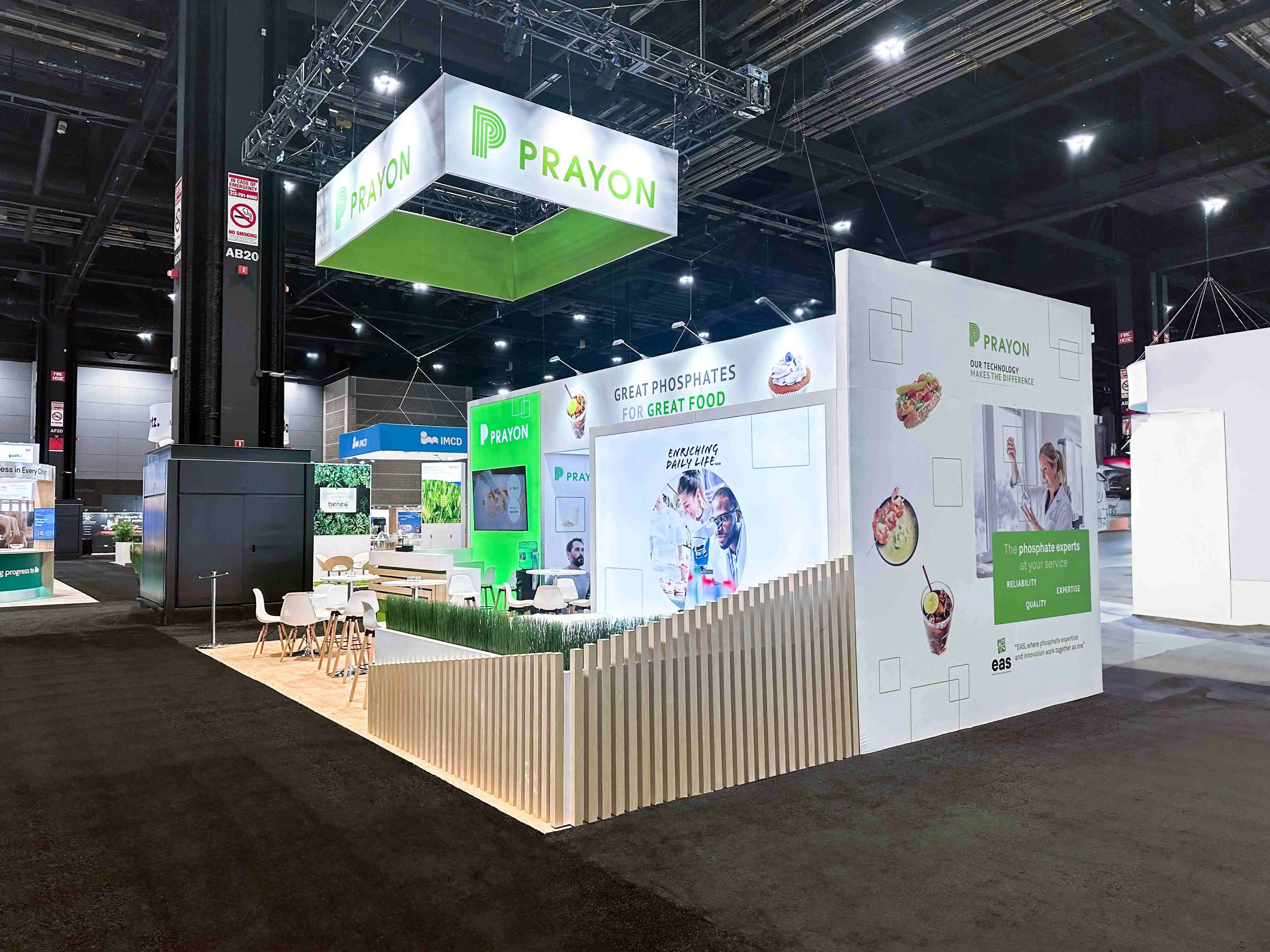
For big shows to go well, you need to work with skilled fabricators who know how to combine artistic design with practical execution. If you don't choose the right vendors, you'll have problems like late deliveries, poor building quality, and not enough help on-site that will ruin your whole event investment.
Evaluation Criteria for Exhibit Partners
Looking at a portfolio shows skills that go beyond what the marketing says they can do. Look for someone who has shown knowledge in your business, as the requirements for exhibitions vary a lot from one area to the next. A partner who is great at displaying market goods might not be good at displaying heavy industrial tools because they don't know enough about engineering. Testimonials and case studies from past clients show how well the company can solve problems that come up during installation.
When thinking about on-site help, closeness is very important. Our main fabrication plant is still in Las Vegas so that we can support the many big shows that are held there, such as Cosmoprof North America. Because of this, our team can quickly respond during installation, fix problems in real time during show hours, and take down the display quickly. These are benefits that can't be offered by companies far away who hire workers who don't know what the original plan was supposed to do.
Rental Versus Purchase Decision Framework
There are more than just costs to consider when deciding whether to rent or buy. Companies that go to a lot of shows a year and need to keep their name constant should buy custom exhibits because the costs of ownership are spread out over many uses. The payment gives you full artistic freedom and gets rid of the monthly rental fees that add up to a lot over time.
Rental options help exhibitors whose show plans change, whose brand is changing, or who want to try out different booth layouts before buying. While this method saves money for other marketing efforts, it gives the seller control over upkeep and storage conditions. Using a hybrid strategy, where you buy core flexible parts and rent configuration-specific parts, gives you freedom without having to fully commit your capital.
When considering choices, exhibitors on a tight budget should add up the total cost of ownership, which includes moving, storing, fixing up, and making changes to the design. We offer clear cost modeling that takes these factors into account, so procurement teams can make choices based on facts that are in line with their companies' long-term planning goals.
Ensuring Compliance and Safety Standards
Professional display partners know how to deal with the venue's complicated rules about building safety, fire resistance, and accessibility.Trade show booth designmust account for these regulations, as all cloth parts need to be certified as NFPA 701 fire retardant, and structure parts need to be engineered to meet local seismic standards and static load-bearing safety factors. If you don't meet these requirements, you'll have to make expensive changes at the last minute or have your booth rejected during installation. Both of these situations are disasters that hurt your brand's image and waste your event investment.
Maximizing ROI and Engagement at the Trade Show
Strategic booth design is the basis for an event's success, but to get the most out of it, you need to plan ahead for how visitors will flow, how to prepare staff, and how to make the best use of show hours.
Optimize Spatial Flow and Interaction Zones
How people move around in your show has a direct effect on how engaged they are and how well you can generate leads. Entry points should have clear, friendly spaces that aren't blocked by things that make people less likely to approach. As you move through the layout's key message areas, you shouldn't feel pushed or limited once you're inside.
Within the sales cycle, each dedicated contact zone has a specific job to do. Open display places get people interested right away and let a group see what the product can do. Semi-private meeting rooms let sales talks go on without being interrupted by outside noise. Comfortable seating in marked areas encourages long conversations that move from building relationships to finishing deals. The best designs make it easy to move between these zones while keeping the visual openness that keeps people from feeling suffocated.
Lighting and Graphics Highlighting
Strategic lighting draws attention to the most important parts of your show, creating a visual order that sends a message to people who walk by but don't enter your space. When new products come out, overhead lighting creates focus points that can be seen from the aisles and suggests innovation. Backlit images make sure that brand messages can still be seen in show halls that don't have enough natural light.
Instead of long, hard-to-read paragraphs that confuse busy guests, graphics should use short, easy-to-scan text to explain their main benefits. Generic stock photos are less appealing than high-resolution images that show how a product can be used in real life. Your most important messages will get to busy decision-makers who are looking at dozens of sellers in a short amount of time thanks to precise lighting and well-thought-out graphic design.
Staff Training and Engagement Techniques
Even the best-designed exhibits fail if the people working there aren't properly trained and can't keep tourists interested. The people working at the booth should know that their job isn't just to answer questions; it's also to actively qualify leads and move sales talks forward. Engaging people starts with open body language and real attention, not with aggressive methods that turn people off.
Training should cover things like knowing about the product, how to ask good qualifying questions, and how to record leads in a way that makes sure information moves smoothly into CRM systems. Staff rotations keep people from getting tired, which can lower the level of activity in the afternoon, when the number of attendees is highest. Clear roles, like greeters, product experts, and senior sales staff for high-value prospects, make handoffs go smoothly and match the needs of visitors with the right level of knowledge.
Post-Show Follow-Up and Continuous Improvement
The success of an exhibition lasts long after the closing events, but many exhibitors forget to plan activities for after the show that turn initial attention into closed business. Systematic follow-up and performance analysis give businesses benefits that build over time and across events.
Measuring Performance Through KPIs
To do a meaningful ROI analysis, you need to set clear metrics before the event.Trade show booth designplays a crucial role in attracting and filtering leads, but lead number is only a starting point for measuring success. Lead quality is what sets the real value for the business. Sales teams can easily organize follow-up by sorting leads into groups based on their qualification level (hot prospects ready to be engaged right away, warm leads that need nurturing, and informational contacts).
Brand impact measures, such as booth traffic counts, social media interaction, and press coverage, show that building awareness is working, even if sales don't happen right away. Cost-per-lead estimates show that future events will need to be more efficient. By comparing these measures across different exhibitions and booth layouts, you can learn how to make the best use of your future purchases.
Integrating Leads Into CRM Workflows
The most common place where trade show ROI doesn't get realized is between getting leads and following up with sales. When leads go more than 48 hours without being contacted, their conversion rates drop by a huge amount as rivals start to reach out to them. Automated CRM connection makes sure that information is sent right away to the right sales reps, along with information about the person's hobbies and past conversations.
Instead of sending out generic emails to everyone, tailored follow-up contact brings up particular conversations that happened on the show floor. Giving the promised resources—like specification sheets, case studies, and price lists—builds trust and keeps the motion going. Multi-touch nurture processes take into account the fact that decision times vary across businesses and that buying medical supplies is very different from buying consumer goods.
Continuous Improvement Strategies
The best presenters see each event as a chance to learn something that helps them improve their strategies in the future. Collecting feedback from booth staff shows practical problems that weren't seen during the planning stages, such as not enough storage, confused layouts, and broken technology. Visitor polls give you an honest look at how clear your messages are and how well they connect people.
Photographs and observations of traffic patterns can help you find empty places and traffic jams that need to be fixed up. Looking at the innovative methods other sellers have used in a competitive analysis can help you come up with new ways to stand out in the future. When you think about ways to make things better all the time and keep detailed records, show programs go from being expensive costs to marketing investments that get better over time.
Conclusion
To plan a successful trade show booth, you need to think strategically and see your booth as an important business tool rather than a temporary display. Trade show booth design is at the core of this strategy, as it directly influences how attendees perceive your brand and engage with your space. Pay close attention to the basics of planning, choosing a vendor, improving engagement, and following up after the show. All of these parts contribute to the general return on investment (ROI). Companies that want to exhibit at big events in 2026 like the IFT FIRST Annual Meeting & Food Expo in Chicago or Cosmoprof North America in Las Vegas will have to compete hard for the attention of attendees. This makes professional display planning more important than ever. Partnering with experienced fabrication experts who know the specific needs of your business can turn your unsure cost of attending a show into a reliable source of income. Putting money into good planning, high-quality building, and organized execution pays off in the form of qualified leads, better brand positioning, and measurable business growth.
FAQ
How far in advance should we begin planning our trade show booth design?
We suggest starting to plan your booth design at least four to six months ahead of time for big shows. This schedule gives enough time for coming up with a smart design, choosing a seller, making the product without having to pay extra for speed, and coordinating logistics. Custom builds that are very complicated and fit a big island may take eight months, especially if they include unique features like double-deck buildings or heavy equipment integration. For the best results, companies that want to display at events like Cosmoprof North America Las Vegas in July 2026 should start talking about it as soon as possible.
What advantages do modular booth systems offer for B2B companies?
When compared to custom builds with a single setup, modular systems are much more cost-effective because they can be reconfigured to fit different show sizes and plans. The metal framework design makes it durable enough to be put together many times while still looking professional. When a company's brand changes, modular designs save money in the long run because they only need to be rebuilt in parts instead of the whole thing. This makes them especially appealing for companies whose visual identities are always changing or whose showing plans change between different show levels.
How can we stand out in competitive trade show environments?
Differentiation comes from smart design choices that are in line with your unique value offering, not from random decoration. In crowded rooms where horizontal competition is common, vertical elements like overhead signs, tall product displays, and images that hang from the ceiling grab people's attention. Interactive technology that requires you to do something makes experiences that you'll remember, setting you apart from static screens. When well-trained staff members listen to what prospects want instead of giving practiced pitches, real connections are made that last beyond the noise of the show floor.
Partner With HR Exhibits Service, Inc. for Your Next Exhibition Success
You need more than generic solutions for your trade show presence. You need to work with a trade show booth design manufacturer who knows the unique challenges and possibilities in your business. HR Exhibits Service, Inc. has been helping vendors in the technology, industrial, medical, energy, and consumer goods industries for decades. Our fabrication facility in Las Vegas lets us provide excellent local support for the area's biggest exhibitions, such as Cosmoprof North America Las Vegas and many other well-known events. We can also provide full service for shows in the US, Canada, Mexico, and other countries.
We help our clients with every step, from coming up with an idea and making a budget to planning the production, getting it to the show, installing it, and analyzing it afterward. Our team mixes great artistic design with careful planning to make sure that your exhibit not only looks great but also works perfectly during your event. We offer customized solutions that fit your goals and budget, whether you need a modular solution that saves you money, a complex custom island setup, or a rental that lets you test out new markets. Get in touch with us at info@hrexhibits.com to talk about how we can help your next trade show be a measured business success.
References
1. Miller, J. (2023). Exhibition Design Strategies for B2B Marketing Success. Trade Show Publishing Group.
2. Thompson, R. & Martinez, S. (2024). Optimizing Trade Show ROI: A Comprehensive Guide for Marketing Professionals. Business Events Press.
3. Institute of Food Technologists. (2025). Exhibitor Planning Guide for IFT FIRST Annual Events. IFT Publications.
4. Anderson, K. (2024). Modular Exhibition Systems: Engineering and Design Principles. Industrial Display Technologies Journal, Vol. 18, Issue 3.
5. Chen, L. (2023). Lead Generation and Conversion Strategies at Trade Shows. Marketing Analytics Quarterly.
6. National Fire Protection Association. (2024). NFPA 701 Standard Methods of Fire Tests for Flame Propagation of Textiles and Films. NFPA Standards Documentation.

Embark on Your Journey to Exceptional Exhibitions! Contact HR Exhibits Today to Transform Your Vision into Global Success.
HR Exhibits Service, Inc.