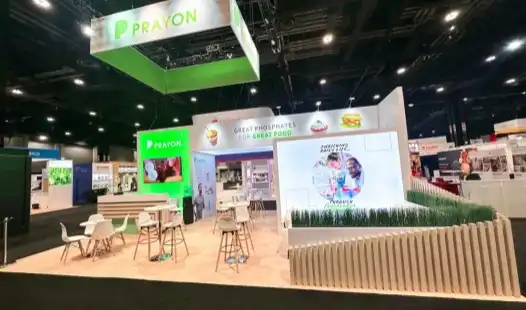
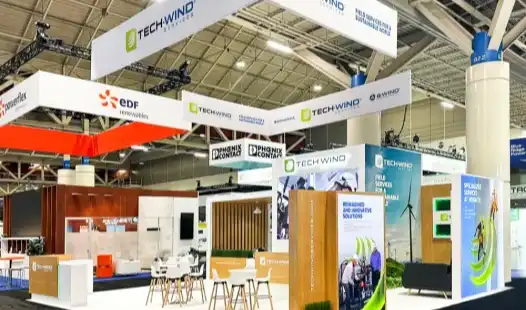
Modular trade show displays vs custom trade show booth IMTS Chicago
Selecting modular trade show displays or bespoke booths at IMTS Chicago affects brand exposure, financial efficiency, and operational flexibility. Modular systems with designed aluminum frames and tension fabric graphics provide professional aesthetics with low logistical costs, suitable for exhibitors that present at many fairs. Custom booths provide unequaled creative flexibility and architectural impact for brands that need unique design features or functional zones. At IMTS 2026, September 14-16 in Chicago, both tactics may be effective when matched to your marketing goals, budget, and long-term exhibition plan.
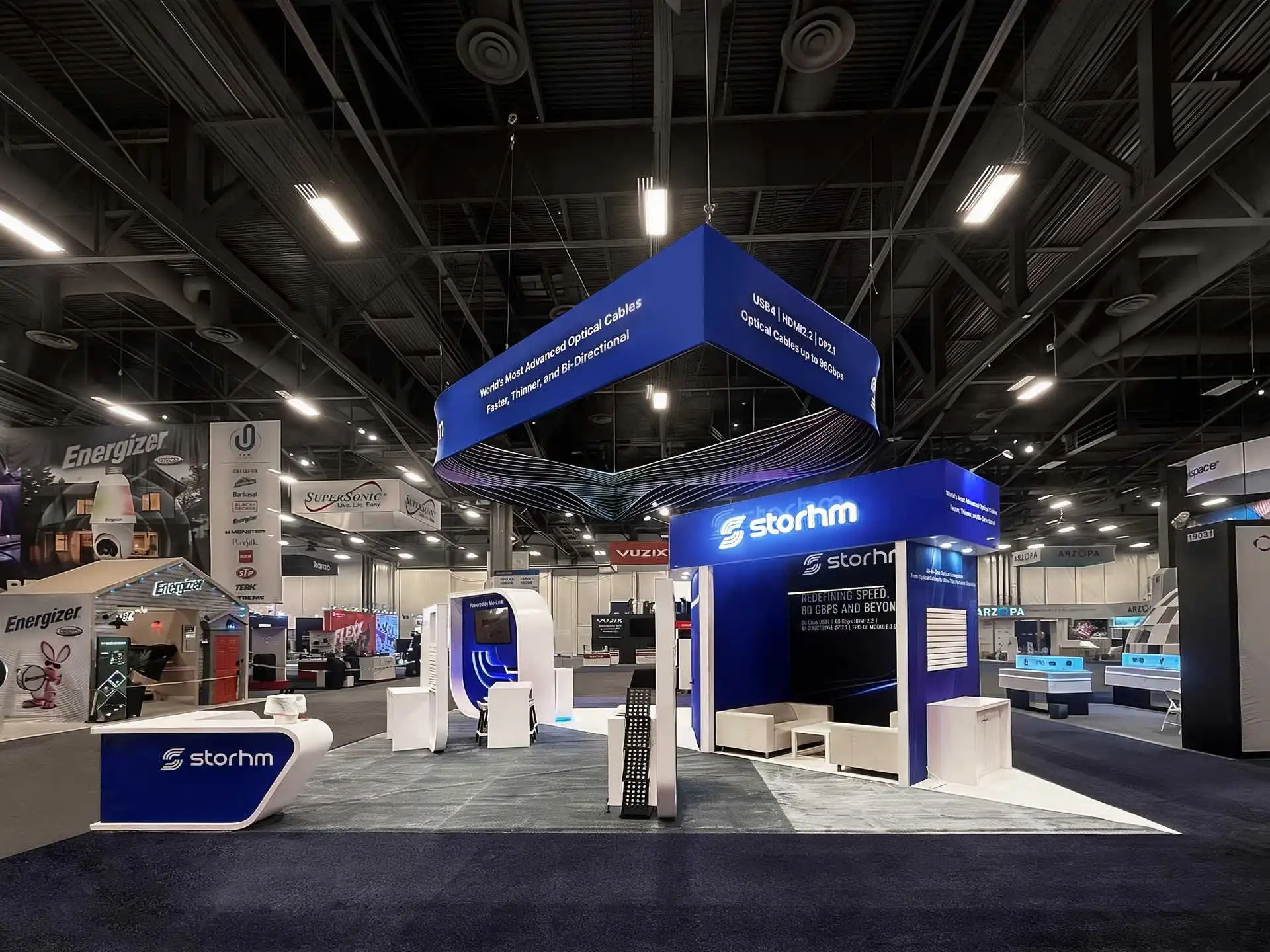
Understanding Modular Trade Show Displays and Custom Trade Show Booths
The difference between these two display topologies affects your exhibition expenditure from design to multi-year lifespan expenses.
Core Characteristics of Modular Systems
Common hardware—6063-T6 anodized aluminum extrusions—connects through tool-free cam locks and magnetic connectors in modular trade show displays. In Silicone Edge Graphics (SEG), dye-sublimation printed polyester fabric inserts into groove channels to create seamless visual panels above 1200 DPI. This technical method decreases booth weight by 60% compared to carpentry, lowering McCormick Place drayage prices. The inventory kit for IMTS' 20x20 island booth may be used for LOUPE Americas' 10x10 inline setup at the same Chicago location on September 15-17.
Design Principles Behind Custom Fabrication
Custom trade show booths use wood frame, laminated panels, and permanent graphic application to create distinctive architectural shapes. CAD renderings are turned into full-scale carpentry to create curving walls, second-story meeting areas, and integrated product presentation zones. From final clearance to show-ready completion, lead times are 8-12 weeks, necessitating careful marketing campaign coordination. They work well when brand distinction requires unique visual impact or when specific functionality, like safe product vaults for medical device presentations, requires specialist engineering.
Material and Functional Distinctions
Modular frames use hollow channels for wire management, allowing floor power connections to run up walls to monitors and lighting fixtures. U.S. convention facilities need embedded LED modules to fulfill NFPA 701 flame retardancy criteria for neutral white lighting at 6500K. Custom booths use theatrical lighting setups and AC-powered spotlights for more brightness control but require specialized electrical service with larger amp pulls. Both methods can hold big AV equipment, but modular systems need reinforced structural uprights and steel base plates for 55-inch monitors or heavy product shelves.
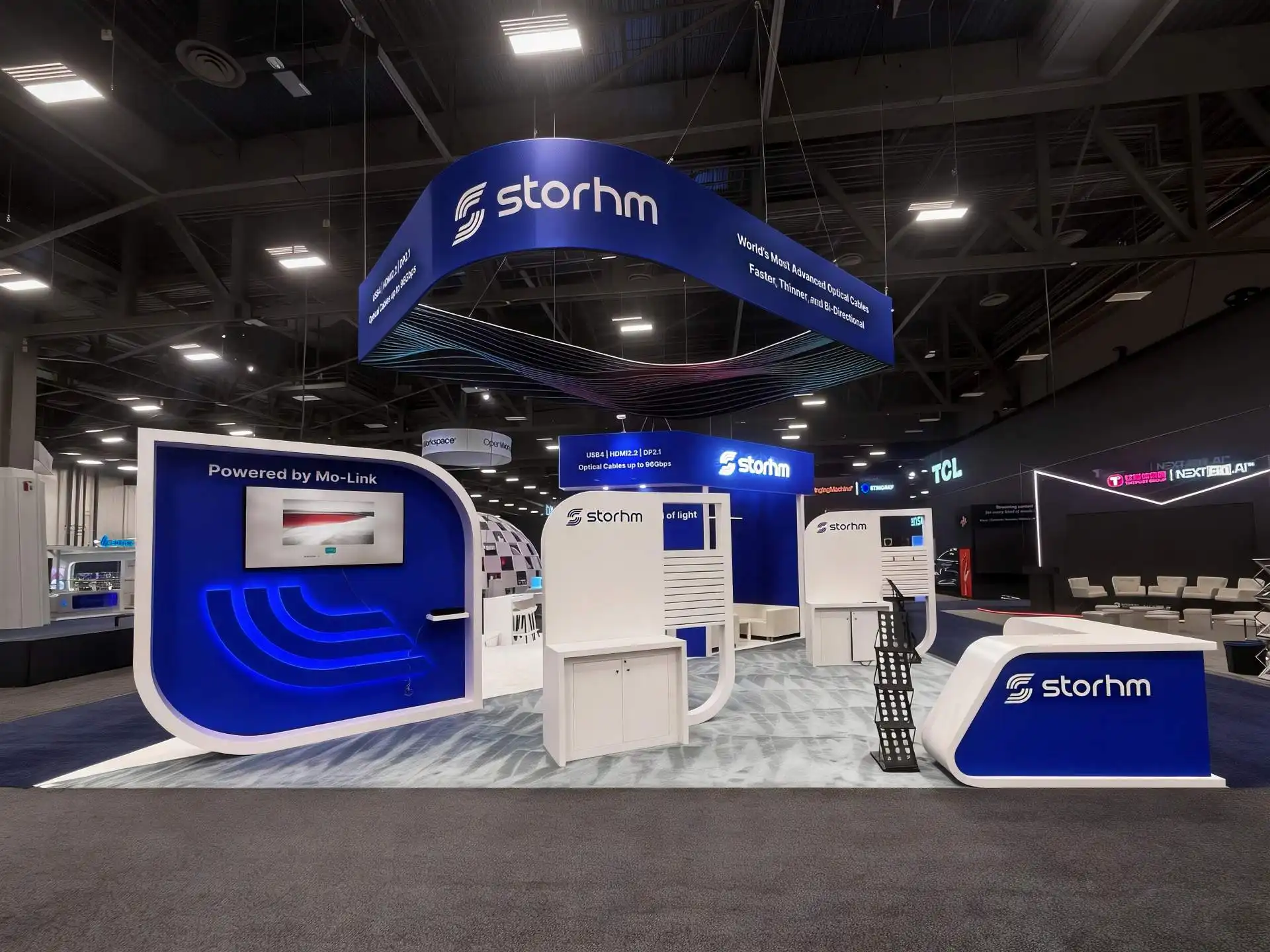
Modular Trade Show Displays vs Custom Trade Show Booths: Key Comparison Dimensions
Five key aspects affect your bottom line and operational capabilities throughout numerous exhibition cycles when making procurement selections for modular trade show displays.
Financial Investment Analysis
Initial investments for modular exhibitions range from $8,000 for 10x10 configurations to $45,000 for 20x20 island designs with integrated electronics. These solutions amortize expenses over five years of high-cycle usage, breaking even after three concerts vs rental rates or two shows versus build-and-burn bespoke fabrication. Custom booths require $15,000 to $150,000 upfront, depending on size and intricacy, but provide absolute brand representation. Modular systems save 35-50% each show on material handling since lighter aluminum and cloth components travel in ATA-300 approved cases via normal ground freight instead of flatbeds.
Setup Efficiency and Labor Requirements
Installation time affects union worker expenses at venue like McCormick Place with rigorous rules. Experts can build a 20x20 booth in 4-6 hours using modular systems' simple tool-free connections, compared to 12-16 hours for bespoke carpentry. In September 2026, teams could service IMTS Chicago (September 14-16) and then rapidly deploy to Global Security Exchange in Atlanta (September 14-16) using modular inventories. This efficiency reduces Installation & Dismantle (I&D) labor costs. Custom booths need expert carpenters for structural construction and graphic application, lengthening schedules but allowing elaborate design elements not attainable with ordinary components.
Customization Capabilities and Limitations
Modular exhibitions function under their framework systems' geometric limits, although modern technologies blur modular and bespoke aesthetics. Advanced modular designs feature custom-printed SEG fabric graphics that wrap whole buildings in brand iconography, customized countertop surfaces, and accessory integration from product shelves to digital kiosks. Custom fabrication is needed for distinctive architectural forms like curved walls or cantilevered overhangs. When brand requirements need distinct architectural languages or product demonstrations require purpose-built surroundings that modular components cannot allow, custom booths provide maximum creative flexibility.
Durability and Multi-Show Lifecycle
Quality modular systems with aluminum extrusion frames can withstand five trade show cycles, and removable graphic skins renew visual content without hardware repair. Due to tension, SEG textiles resist wrinkling. Shipping creases may be relaxed with professional steamers on low settings without destroying dye-sublimation inks. Multiple assembly-disassembly cycles wear custom booths, causing laminated surfaces to edge damage and graphics to need expert refurbishment or replacement after 6-8 shows. Modules are more environmentally friendly than disposable custom woodwork since aluminum is 100% recyclable. Sustainability indicators are increasingly influencing business buying requirements.
Transportation and Storage Logistics
Standard shipment containers with foam-lined jigging protect modular components from damage. Standard logistics can handle 8-12 boxes of 800-1,200 pounds for a 20x20 modular exhibit that fits convention center freight elevators with limited clearance. Custom booths ship in wooden containers with bigger constructed portions, weighing 2,500–4,000 pounds per square foot and requiring specialist handling equipment. Modules stack well in warehouses, but specialized booth components may need climate-controlled storage between exhibitions to prevent material degradation.
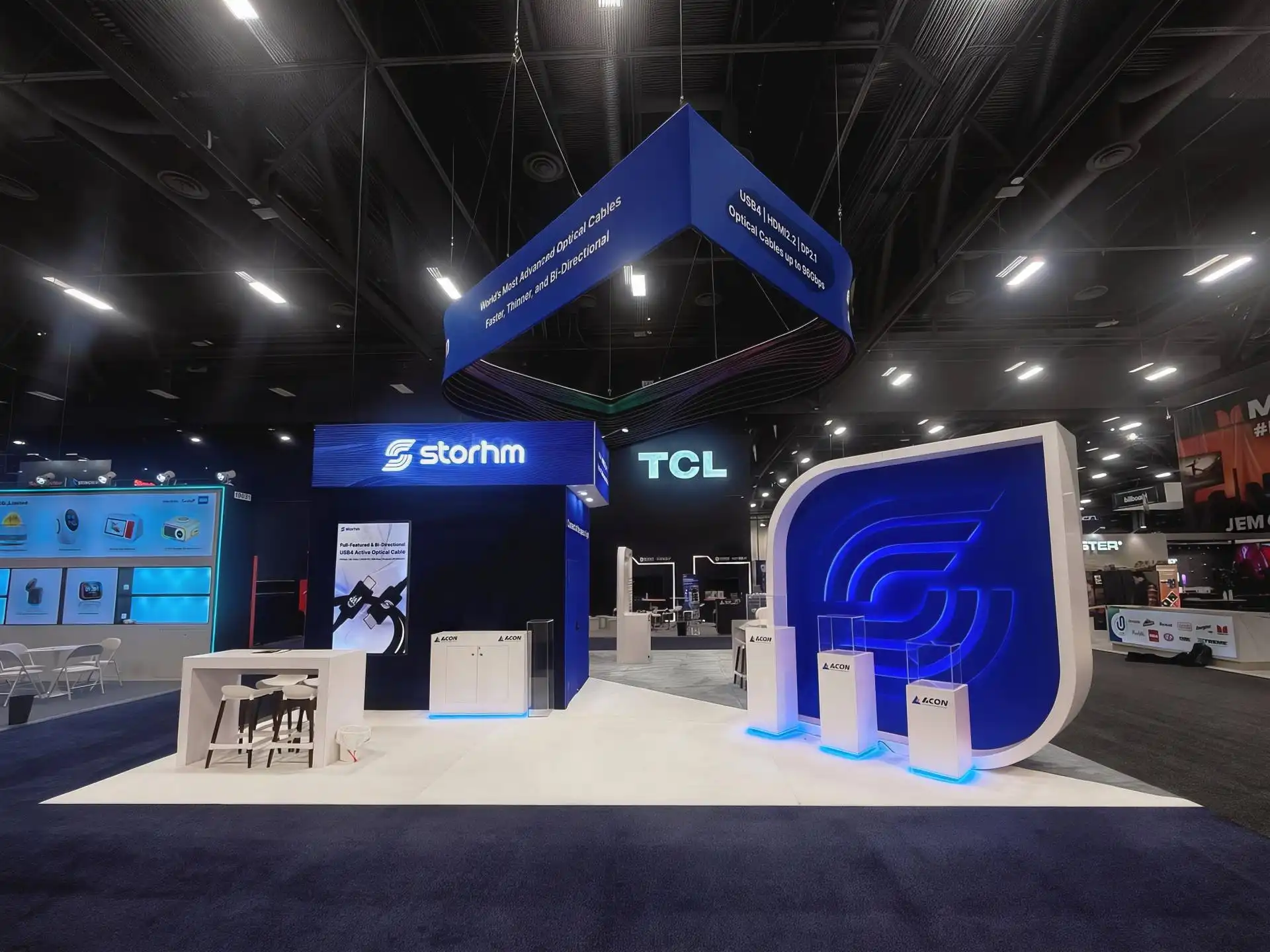
Why Modular Trade Show Displays Are a Smart Choice for IMTS Chicago Participants
The International Manufacturing Technology Show draws manufacturers, engineers, and procurement specialists assessing capital equipment investments, generating distinct exhibition needs that modular trade show displays meet.
Addressing Manufacturing Industry Exhibition Challenges
Modular design alleviates logistical challenges for IMTS exhibitors. Beyond IMTS, manufacturing businesses present at regional industry events like the PRINTING United Expo in Las Vegas (September 23-25, 2026) for production technology audiences. Modular inventory fits numerous floor designs and exhibition frequency, whereas specialized booths strain capital budgets. Aluminum-fabric structure reduces weight, which is important at McCormick Place, where drayage expenses per hundredweight may greatly affect show ROI. Material handling costs for modular shows are $1,200-1,500, compared to $3,000 for bespoke booths.
Technological Integration Capabilities
IMTS attendees demand innovation, and modern modular frameworks integrate advanced technologies. Integrated wire management supports CNC equipment demos and industrial automation displays' high power needs, while embedded LED lighting modules precisely illuminate machinery finishes at 6500K. Back-lit ladder lights and edge-lit graphic panels generate visual drama like unique installations in McCormick Place's enormous exposition halls, where ambient lighting changes. Touchscreen product selections, VR demonstration stations, and live equipment monitoring feeds install securely in modular frames with internal bracing for 75-inch displays.
Measurable ROI Performance
Trade show performance data increasingly dictate procurement decisions, and modular exhibitions offer tangible benefits. Reduced setup time lets sales teams use booth spaces sooner for product staging and staff training, optimizing selling hours during the three-day IMTS timeframe. Graphic skins may be updated between exhibitions to reflect new product photographs, case studies, or advancements without replacing the booth. Companies exhibiting at both IMTS and LOUPE Americas in Chicago during the same week can use modular flexibility to share basic gear between booth locations while keeping brand identities through graphic treatments.
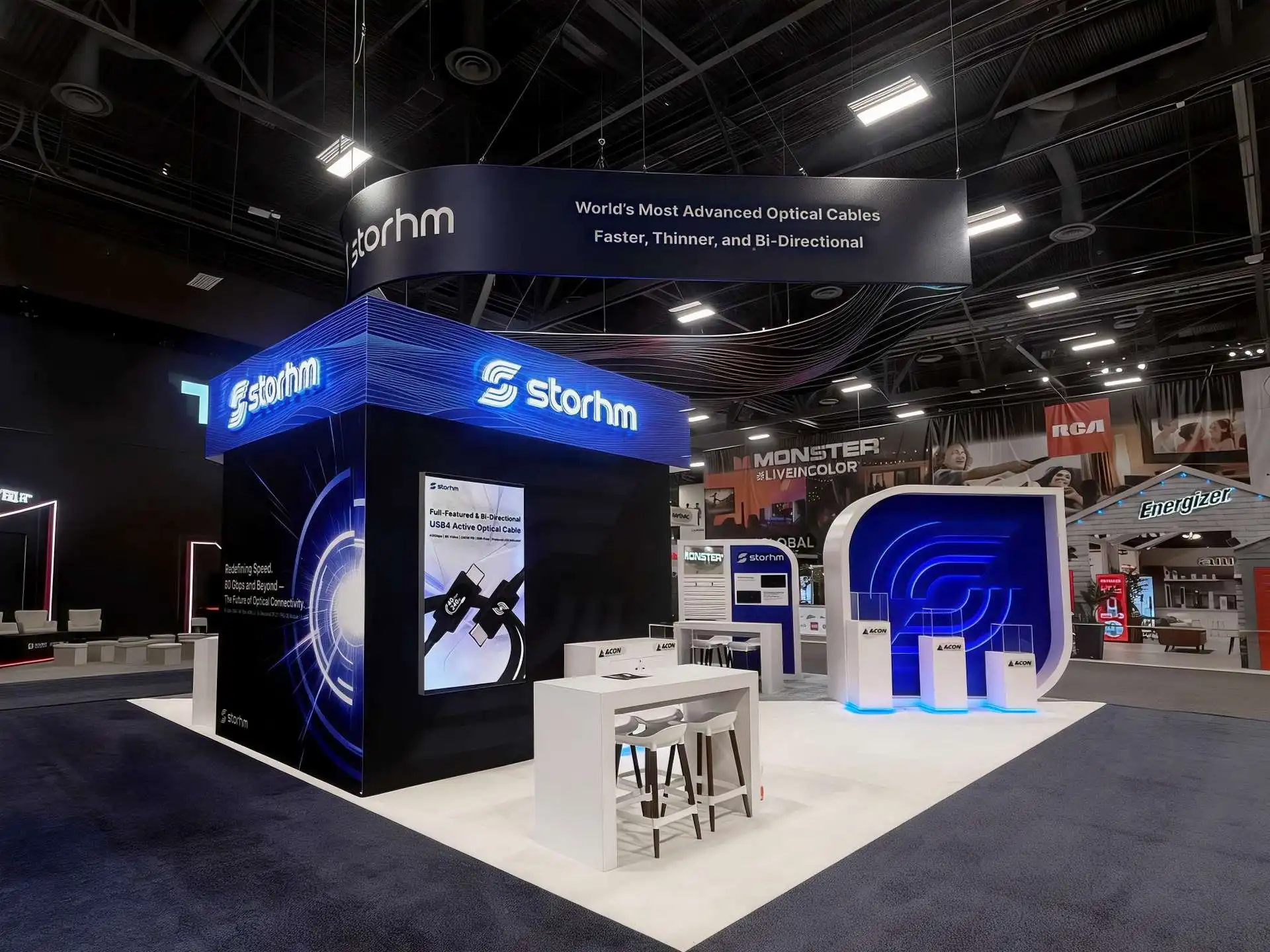
Custom Trade Show Booths: When and Why to Invest
Specific display circumstances warrant custom fabrication investments despite greater costs and decreased flexibility, especially when brand positioning requires architectural distinction.
High-Impact Brand Representation Scenarios
Custom booths let industrial technology leaders establish a distinctive physical presence and introduce innovative ideas or access new markets. A two-story building with enclosed conference areas, dramatic lighting, and massive product displays conveys market leadership unattainable with basic components. Medical device producers demonstrating complicated surgical systems need specific demonstration theaters with sterile environment simulation, illumination, and safe viewing sections. Modular frameworks cannot support them. Custom fabrication justifies premium prices when booth investment is a multi-year flagship presence plan rather than tactical exhibition participation.
Complex Functional Requirements
Booth architecture must accommodate certain product demonstrations. Industrial control system exhibitors in the energy sector may need raised flooring to hide extensive cabling infrastructures, reinforced platforms to support equipment with higher load ratings, or environmental controls to maintain sensitive electronics' temperature ranges. Designing custom booths with integrated engineering meets these demands. Technical drawings must comply with venue regulations, electrical specifications must match McCormick Place services, and shipping logistics must sequence component delivery to meet show installation deadlines without rush charges.
ROI Evaluation for Custom Investments
Brand valuation and long-term market positioning affect custom booth ROI beyond show metrics. A manufacturing technology company that spends $80,000 on an IMTS unique exhibit may use it in marketing, website, investor, and recruitment materials for years. The booth becomes brand infrastructure, not marketing waste. However, true ROI calculations must include refurbishing expenditures every 3-4 shows, $200-400 monthly storage fees, and disposal charges. Custom fabrication is most cost-effective when exhibition frequency is moderate (2-4 big shows per year) and booth specs are constant across sites, limiting reconfiguration.
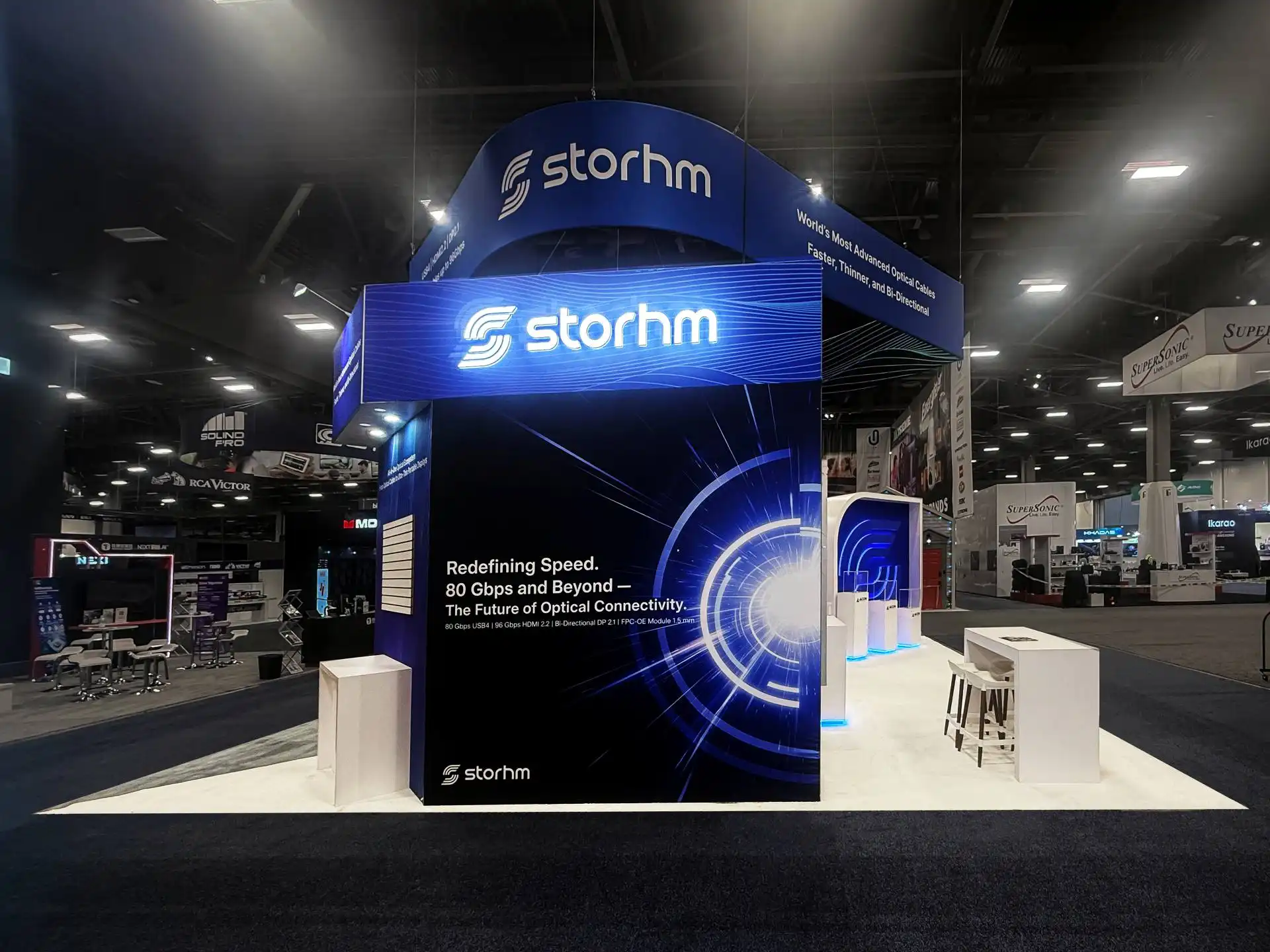
Procurement Guide: How to Choose Between Modular and Custom Trade Show Displays
Strategic procurement demands a thorough analysis of your company context, exhibition goals, and operational limitations before investing in modular trade show displays.
Defining Business Goals and Exhibition Strategy
Map up your three-year exhibition calendar, including confirmed and potential exhibitions. Through recurrent hardware use, companies attending six or more events yearly maximize modular investment value. Startups or smaller firms participating in 2-3 focused exhibitions may find specialized rental schemes cheaper than ownership. Choose between brand visibility at various sites and focused effect at flagship events in your exhibition plan. Modular scalability benefits technology startups debuting innovations at IMTS while keeping a presence at regional manufacturing expos, whereas established businesses making important product launches may demand custom booth exclusivity.
Assessing Logistical and Operational Constraints
Venue variables strongly impact display choice. International exhibitors must comply with customs, voltage, and metric measurement norms, which favor modular solutions for worldwide versatility. Domestic exhibitors switching between union and non-union sites must consider labor costs. Modular exhibitions decrease the need for skilled carpentry, allowing internal teams to put up at non-union venues. Businesses without warehouses find modular systems easier to store in compact box designs than large bespoke components. Transportation infrastructure helps—companies near show locations may self-transport modular exhibitions via cargo vans, reducing common carrier costs.
Total Cost of Ownership Analysis
Financial assessment goes beyond purchase price to include lifespan costs. Modular systems have TCO benefits when exhibition frequency surpasses three shows per year, with break-even at show four or five. Calculate per-show costs, including hardware investment amortized over estimated lifespan, graphic refresh costs (SEG fabric reprints cost $800-2,000 for 20x20 booths), shipping and drayage, I&D labor, and storage. Custom booths cost more per show due to refurbishing, premium shipping, and specialist labor. Include potential costs—modular flexibility permits last-minute show expansions or booth size changes that custom manufacturing timeframes prevent.
Supplier Selection and Partnership Criteria
Proper show partner selection is as important as display architecture. HR Exhibits Service, Inc., established in Las Vegas with North American reach, understands the challenges foreign and out-of-state exhibitors encounter at major trade exhibitions. Examine suppliers' design portfolios, engineering skills like CAD documentation and structural calculations, fabrication quality verified by facility tours or client references, and logistics expertise managing freight coordination and venue-specific requirements.
Installation services are important—some vendors offer turnkey solutions with on-site supervision, while others send crated components needing exhibitor labor. After-sales assistance includes warranty terms (premium modular frames have 3-5 year structural warranties), component replacement, and storage for clients without warehouses.
HR Exhibits Service, Inc. provides unique value to North American September 2026 exhibitors. Our Las Vegas workshop centralizes operations for the PRINTING United Expo (September 23-25) and our partnerships with labor suppliers and freight businesses serving McCormick Place in Chicago simplify IMTS participation. Our experience handling simultaneous installations across numerous locations ensures your booth comes complete and on time at CEDIA in Denver (September 1-4) or Global Security Exchange in Atlanta (September 14-16).
Conclusion
Your operational environment, budget, and strategic show goals determine whether you choose modular or bespoke IMTS Chicago exhibition architecture. For organizations with numerous trade show schedules, modular trade show displays offer unequaled flexibility, lower shipping costs, and fast setup. When brand positioning requires distinctive visual impact, custom booths justify investment with architectural difference and specific functionality. Both methods work when tailored to your needs and performed by experts who understand huge industrial exhibits. As you plan for IMTS 2026 and the busy September exhibition season, carefully evaluate these elements to maximize booth ROI and support long-term marketing goals.
FAQ
How do modular displays handle heavy equipment demonstrations at industrial shows like IMTS?
Well-engineered modular trade show displays use reinforced structural uprights and steel base plates to transmit weight loads to the floor rather than aluminum frames. Standard designs support 55-inch monitors and 150-200-pound shelving per section. Custom engineering calculations are needed for heavier equipment like manufacturing machinery components, which need internal steel bracing in aluminum profiles to achieve static load ratings. We specify these reinforcements during construction to ensure your booth safely displays equipment while retaining modular exhibitions' visual cohesiveness and mobility.
What is the realistic timeline from order to show installation?
Modular exhibitions take 4-6 weeks from design approval to delivery, allowing for tight show schedules. This timetable covers dye-sublimation printing, SEG fabrication, hardware preparation, pre-build staging at our facilities for quality verification, and shipment coordination. Custom booths take 8-12 weeks, with intricate designs taking 14-16. Early interaction with exhibit partners 4-6 months before IMTS 2026 allows for design iteration, material procurement, and logistical planning without rush charges, which can add 15-20% to project expenses.
Can I update graphics between shows without replacing the entire booth?
This is a major benefit of modular architecture. Visual updates for around $2,000 are possible using SEG fabric graphics that draw from frame channels and insert new prints in minutes. This adaptability is crucial when product lines change, marketing messages change, or you're using the same gear for multiple presentations with different audiences. Custom booths need skilled graphic removal and reapplication, which frequently requires surface refinishing and costs 30-40% of the initial booth expenditure. Maintaining visual content while maintaining hardware investment increases booth lifespan.
Partner with HR Exhibits Service, Inc. for Your IMTS Chicago Success
Your IMTS 2026 or other September trade show exhibit needs an engineering-logistics partner. HR Exhibits Service, Inc. designs and builds modular trade show displays and bespoke booths that work for manufacturers, technology companies, and industrial exhibitors. Whether you're an international exhibitor or a domestic firm boosting trade show participation, our Las Vegas location and countrywide network provide local assistance.
We help you choose modular flexibility or custom exclusivity, design development that meets your product demonstration needs, and turnkey installation at McCormick Place or any other venue where your business needs representation. As an experienced modular trade show displays provider, we have broad inventory for speedy deployment and bespoke fabrication for architecturally distinctive clientele. Talk to us at info@hrexhibits.com about your exhibition strategy and obtain customized proposals based on your needs, budget, and show schedule. Let's design a trade show presence that generates leads, boosts brand awareness, and maximizes ROI.
References
1. Trade Show Executive Magazine. "The Complete Guide to Modular Exhibit Systems: Engineering, ROI, and Best Practices for B2B Exhibitors." Annual Industry Report, 2025.
2. Exhibition Services and Contractors Association (ESCA). "Material Handling and Logistics Cost Analysis for Trade Show Exhibitors at Major U.S. Convention Centers." Industry White Paper, 2024.
3. International Association of Exhibitions and Events (IAEE). "Sustainability in Trade Show Design: Comparative Environmental Impact of Modular versus Custom Booth Construction." Research Study, 2025.
4. McCormick Place Exhibitor Services Manual. "Technical Specifications, Installation Guidelines, and Union Labor Requirements for IMTS Chicago." Official Convention Center Documentation, 2026 Edition.
5. Center for Exhibition Industry Research (CEIR). "ROI Measurement and Total Cost of Ownership Models for Corporate Trade Show Investments." Business Intelligence Report, 2025.
6. American Society of Mechanical Engineers (ASME). "Structural Load Requirements and Safety Standards for Trade Show Exhibit Fabrication." Technical Standards Publication, 2024.

Embark on Your Journey to Exceptional Exhibitions! Contact HR Exhibits Today to Transform Your Vision into Global Success.
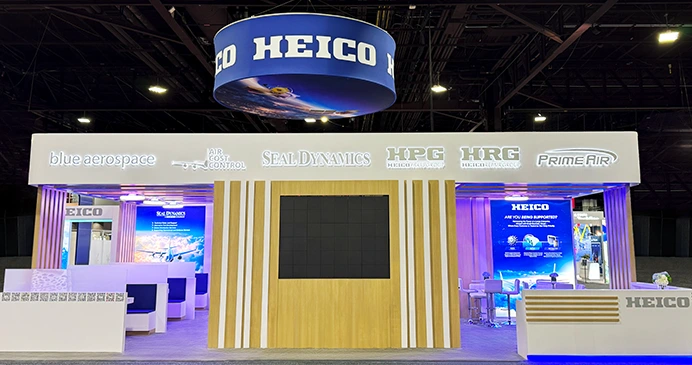
HR Exhibits Service, Inc.