How augmented reality is being used at trade shows
By superimposing digital data on real-world settings via smartphones, tablets, and AR glasses, augmented reality is revolutionizing trade fair experiences. AR technology is being used more and more in contemporary exhibit design to provide immersive brand storytelling, interactive product demos, and virtual prototypes that do not need the transportation of bulky equipment. This system collects real-time visitor interaction data while enabling exhibitors to display complicated items in small places, such as medical gadgets or industrial equipment. Leading events like CES, NAB Show, and IMTS have seen businesses use augmented reality (AR) to distinguish their exhibits, digitally expand their physical presence, and create unique experiences that generate qualified leads and quantifiable ROI.
Challenges in Traditional Exhibit Design and How Augmented Reality Solves Them
Space Limitations and Logistics Complexity
Even seasoned marketing managers are frustrated by the limitations of traditional exhibit design. Due to physical space constraints in large venues, your ability to display whole product lines is limited as you compete for exposure in a 10x10 or 20x20 footprint. At exhibitions like IMTS, where moving equipment for businesses like Etxetar and GURUTZPE entails significant drayage expenses and logistical challenges, we have seen manufacturing customers struggle to display heavy gear.
These difficulties are exacerbated by high expenses and intricate logistics. Startups and mid-sized exhibitors are especially affected by financial constraints brought on by shipping actual prototypes abroad, handling union labor needs, and negotiating venue rules. Visitors swiftly pass booths that don't capture their interest in a matter of seconds due to limited interaction with static displays.
How AR Provides Solutions?
By providing virtual improvements that increase visitor engagement without increasing the footprint, augmented reality overcomes these challenges. Attendees may explore product internals, observe full-scale machinery overlays, and adjust bespoke specs in real-time using AR-enabled tablets or glasses. By using digital components to replace expensive physical prototypes, this lowers total costs while providing immersive storytelling that gathers data for more insightful analytics.
AR demos at SupplySide Global, where we've collaborated with ingredient suppliers including Layn Natural Ingredients Corp., TCI Bio, and Fismer Lecithin, have enabled customers to highlight intricate molecular structures and formulation procedures without having to move lab equipment. The outcome? quantifiable increases in lead generation, brand exposure, and visitor engagement. Comparing these AR-enhanced booths to conventional displays, event analytics revealed 30% more qualified leads and 40% longer stay durations.
Core Components of Augmented Reality in Exhibit Design
Hardware and Software Integration
The proper mix of hardware and software designed for trade show venues is essential for the successful adoption of augmented reality. With the ability to rapidly access augmented reality experiences via smartphones and scan QR codes, mobile devices continue to be the most accessible entry point. For hands-free engagement, AR spectacles such as Microsoft HoloLens or lighter consumer versions are perfect for technical demos. In high-traffic locations, interactive kiosks with huge screens and built-in cameras allow numerous guests to watch shared augmented reality information at once. Effective exhibit design ensures seamless integration of these technologies, enhancing the overall visitor experience.
Prominent software platforms that bridge the gap between design intent and technological implementation, such Unity, Vuforia, and 8th Wall, enable smooth AR content production and deployment. With the use of these technologies, our design team is able to create experiences that work consistently across various devices and lighting situations, which are crucial elements in exhibition halls with fluctuating ambient light and WiFi connection.
Collaborative Design Process
Specialized designers and AR developers work together to generate concepts, create content, and integrate gear. At HR Exhibits Service, Inc., we start by comprehending your target audience's behavior and your product display objectives. After that, our team develops AR experience prototypes, tests them in settings that resemble show floors, and improves interactions in response to user input.
AR can be successfully used with both bespoke and modular display formats, giving companies the option to choose highly customized experiences or scalable prefab solutions based on project objectives and financial constraints. We have developed complex bespoke installations for corporate exhibitors at high-end events and deployed AR components in portable 10x10 modular systems for customers on a budget.
Current Trends and Benefits of Using Augmented Reality in Exhibit Design for 2026
Interactive Demonstrations and Real-Time Analytics
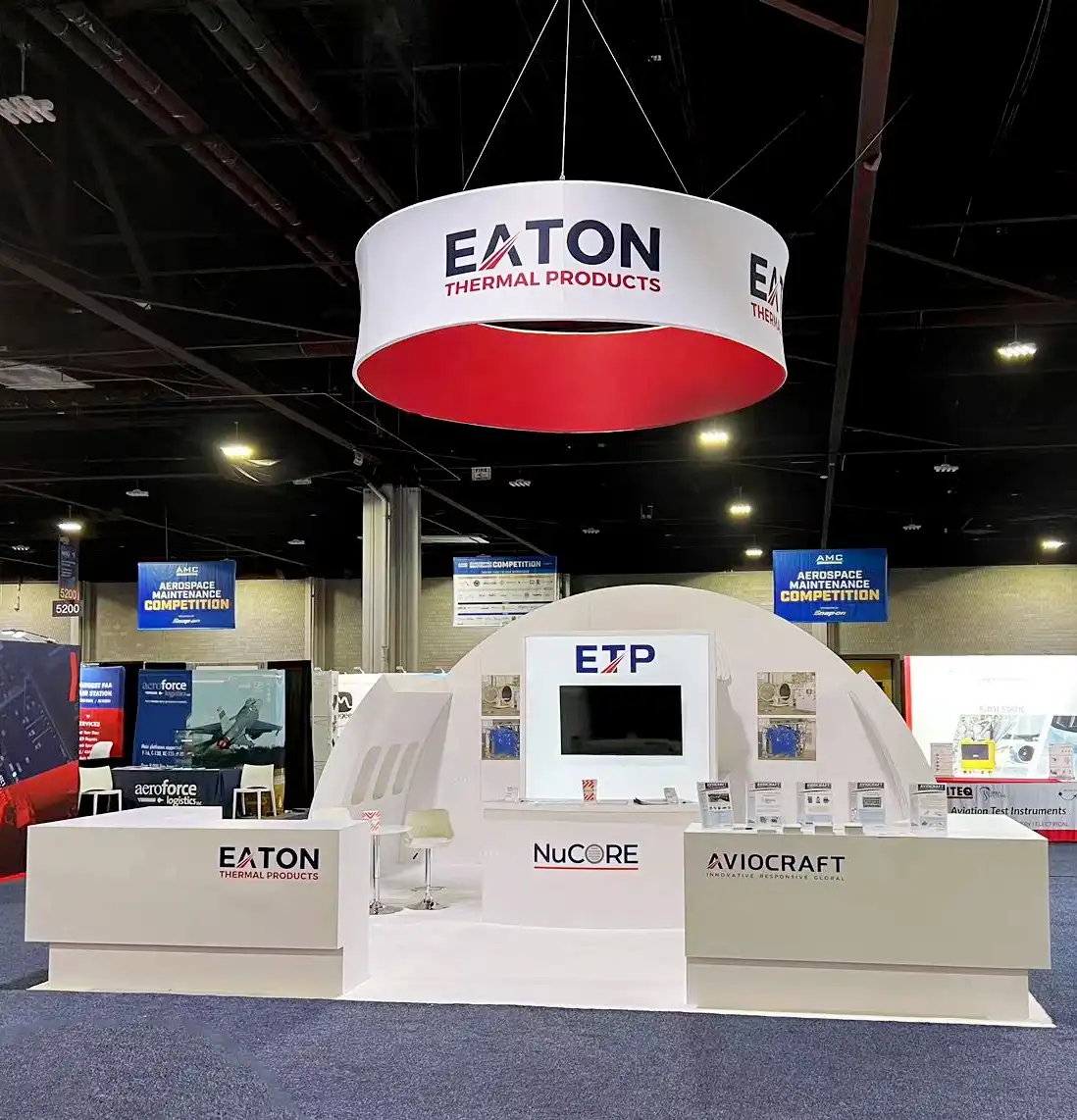
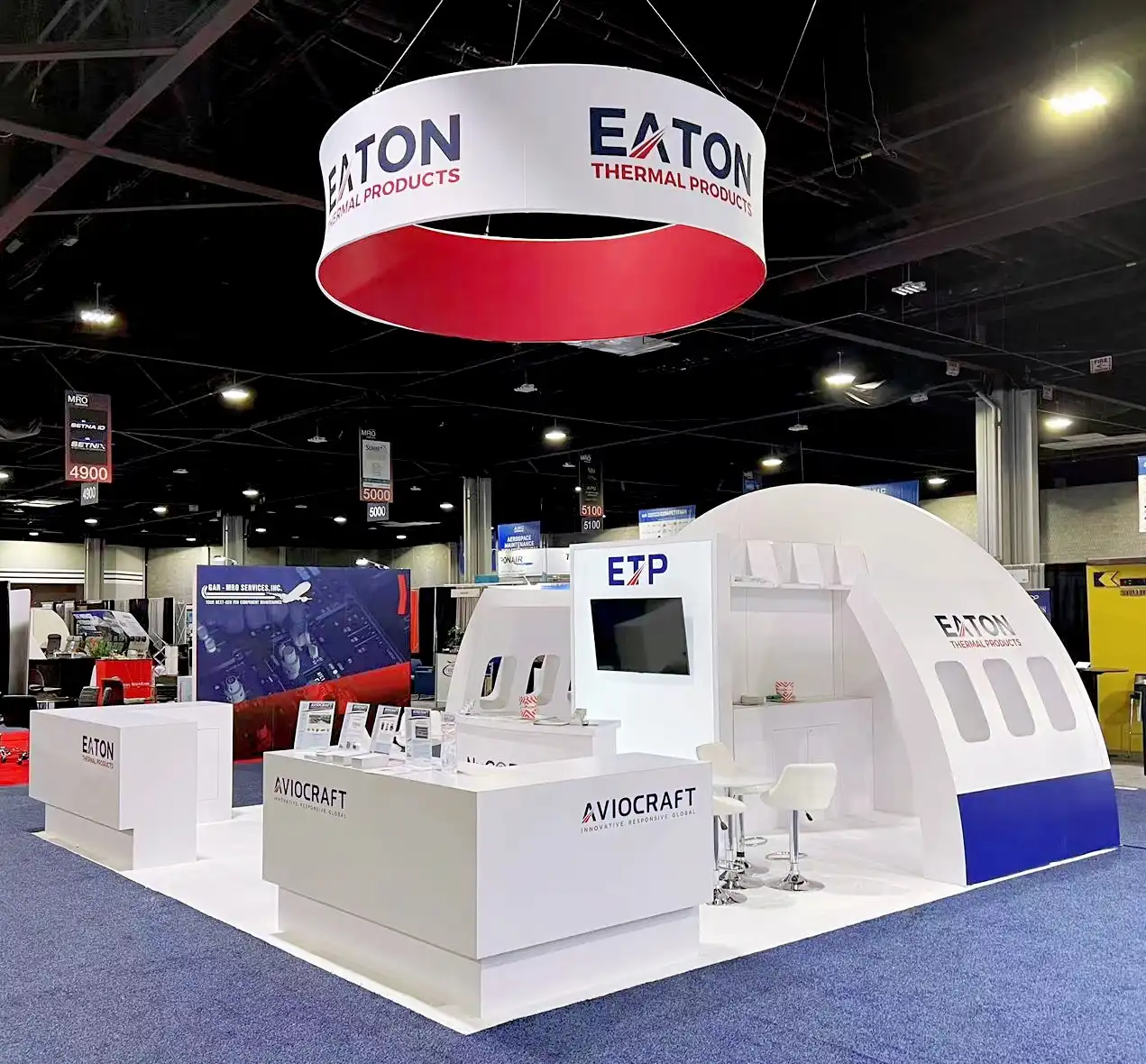
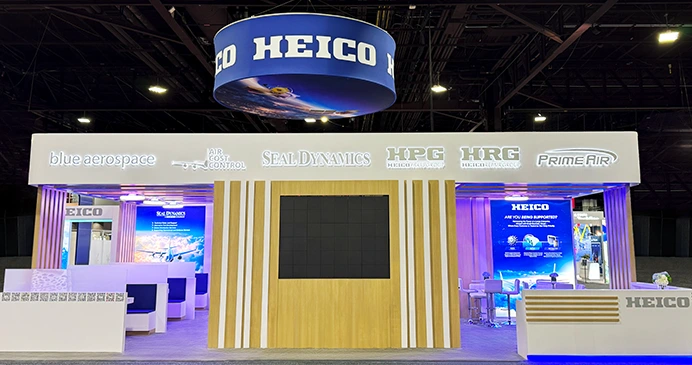
AR-powered exhibitions are leading the way in trade fair innovation in 2026. Visitors may interact with virtual items, alter setups, and see goods in different settings during interactive product demos. Without bringing real aircraft components to the trade floor, AR allowed guests to learn about aircraft component installations and maintenance methods at MRO Americas, where we've worked with aviation customers including HEICO Corporation, Unical Aviation Inc., and SIA Engineering Company.
Beyond consumer applications, virtual try-ons may be used in business-to-business (B2B) settings. For example, procurement teams can compare specs across various models side by side in augmented overlays, and engineers can see how industrial equipment fits into their facility layouts. By monitoring which product features sparked the most interest and how long visitors spent interacting with certain material, real-time visitor analytics provide previously unheard-of insights into attendance behavior.
Sustainability and ROI
Demand for environmentally friendly solutions that use fewer physical resources is being driven by sustainability. AR eliminates the need for redundant display elements, throwaway demo goods, and printed material. This is especially relevant to businesses that participate in sustainability-focused events like RE+, where we have helped customers like Sieyuan Electric Co., Ltd. demonstrate renewable energy solutions via digital-first exhibit design techniques.
Through improved lead quality, increased brand memory, and competitive distinctiveness, these advancements result in greater ROI for exhibitors and B2B procurement experts. AR's versatility enables customisation to address a variety of buyer personas, such as technical demos for engineers, ROI calculators for buying managers, and brand storytelling for C-suite guests. Future developments, such as predictive analytics that makes product recommendations based on visitor interactions and IoT-connected AR that shows real-time equipment performance data, are promised by AR integration with cutting-edge technologies like AI and IoT.
How to Implement Augmented Reality in Your Trade Show Exhibit Design: Step-by-Step Process
Define Objectives and Understand Your Audience
Effective AR implementation requires a methodical, staged strategy that starts with well-defined goals that are in line with marketing and sales objectives. Are you closing business on the exhibition floor, raising awareness, or showcasing sophisticated functionality? Based on these criteria, your AR approach is quite different.
It's equally important to know what your target audience prefers. At technical shows like as IMTS, engineers react to cutaway views of internal mechanics and comprehensive spec representations. Brand narrative and visual impact are preferred by marketing decision-makers at consumer-facing events like SEMA Show, where we have collaborated with Gtechniq. ROI calculators and supply chain representations integrated into augmented reality experiences are important to purchasing managers.
Select Technology Partners and Design Solutions
It's crucial to choose the right AR gear, software, and exhibit design partners based on industry expertise and technology compatibility. Seek for booth builders that have established technical agreements and expertise deploying AR. In order to ensure dependable functioning under real-world situations, we assess AR experiences prior to events at HR Exhibits Service, Inc.'s Las Vegas location.
Iterative testing and prototyping are used in the design process to improve user experience. Before completing content, we develop minimal viable experiences early on, test them with representative users, and take comments into account. This avoids expensive last-minute discovery that technology performs poorly on the exhibition floor.
Training, Logistics, and Performance Measurement
Thorough staff training guarantees that booth employees are capable of resolving technical problems, guiding guests through augmented reality experiences, and switching from digital interaction to sales talks. We advise practical training sessions where booth employees practice typical situations and technical issues using the real AR devices they'll be deploying, all in line with the overall exhibit design to ensure smooth transitions and effective engagement.
Backup gadgets, charging stations, WiFi backup plans, and technical help contacts are examples of logistical preparedness. Future AR installations will be continuously improved thanks to post-event performance analysis utilizing data analytics and visitor feedback. In comparison to non-AR benchmarks, metrics should monitor conversion rates, dwell duration, engagement rates, and lead quality scores.
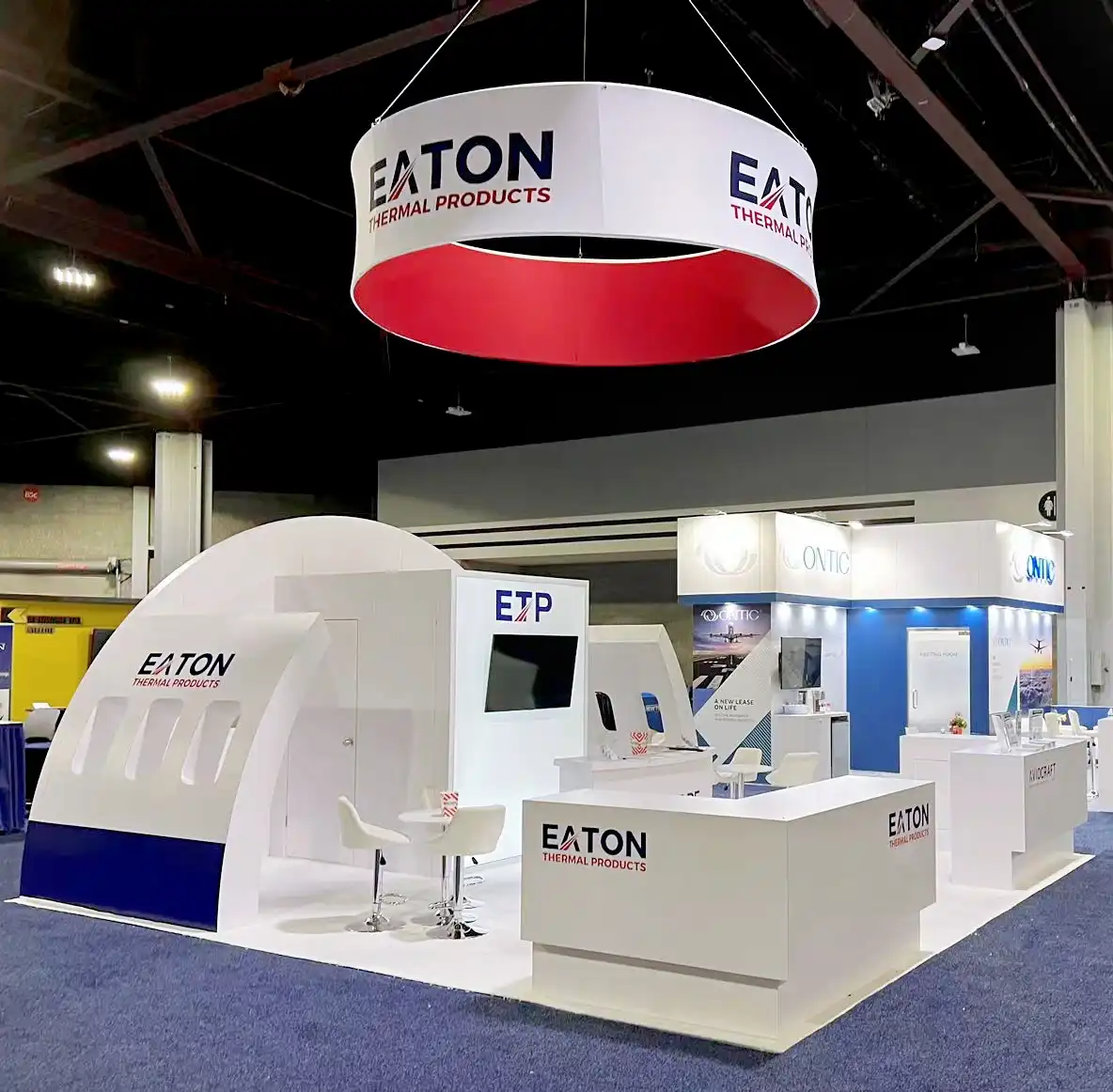
Comparing Augmented Reality Exhibit Design Solutions: Making the Right Choice for Your Business
Cost Analysis and ROI Considerations
Comparing the prices, effects, and scalability of conventional and AR-enhanced choices is necessary to choose the best AR solution. AR systems may offset the higher upfront physical installation expenses associated with traditional exhibitions for bespoke construction and graphics with continuous upgrades and upkeep of digital material. But unlike single-use physical items, AR material created for a single presentation can be utilized across many events with no further cost.
Compared to modular, prefab AR systems intended for flexibility and faster deployment, bespoke AR exhibitions may need a larger investment but allow personalization and unique branding. We have successfully implemented AR for customers of all budgets. At CES, where we've helped Seastar Corporation, AISPEX, Rexing, and Xtreme, tech firms often begin with smartphone-based augmented reality that can be accessible via QR codes, reducing hardware costs while still producing amazing experiences.
Evaluating Exhibit Design Partners
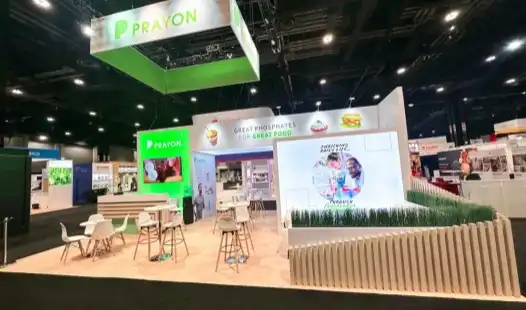
To ensure quality and return on investment, booth manufacturers with certifications, award-winning portfolios, and demonstrated AR capabilities must be evaluated. The AR needs for broadcasting equipment at NAB Show are quite different from those for ingredients at IFT FIRST, where we've worked with Prayon and Aditya Birla Group. Seek partners with knowledge in your particular business.
Making educated judgments that are suited to particular company demands is facilitated by requesting comprehensive proposals and case studies. Inquire about prospective partners' technical support system during performances, their familiarity with the particular architecture of your venue, and how they manage technical malfunctions. We at HR Exhibits Service, Inc. make sure you have professional help when you need it most by coordinating with reliable partners for events in North America and throughout the world and provide local support for exhibitors at Las Vegas exhibitions.
Conclusion
From experimental novelty, augmented reality has developed into a useful trade show tool that yields quantifiable commercial outcomes. Exhibitors' actual problems—space limits, logistical expenses, engagement issues, and distinction in crowded markets—are resolved by the technology. The barrier to entry is continuing to drop as AR technology becomes more widely available and software platforms grow more user-friendly, making this breakthrough accessible to exhibitors of all budgets.
From specialist exhibits like OTC and AAPEX to technological displays like CES and InfoComm, we have seen firsthand how augmented reality (AR) changes visitor experiences at significant industry events. Strategic implementation in line with well-defined goals, audience comprehension, and dependable technological relationships are essential for success. Think about how augmented reality (AR) might enhance your exhibit design, expand your demonstration possibilities, and provide unique interactions that turn booth visitors into business partners as you prepare to participate in forthcoming trade shows.
FAQ
Q1: What are the main benefits of integrating AR into trade show booths?
A: AR integration increases visitor engagement through interactive experiences that traditional static displays cannot match. Attendees spend more time at AR-enabled booths, interact more deeply with product information, and retain brand messages longer. The technology provides measurable data on visitor behavior and preferences, enabling better post-show follow-up. AR also solves practical challenges by virtually showcasing products too large or expensive to transport, reducing logistics costs while expanding demonstration capabilities.
Q2: How much does AR implementation typically cost for exhibition booths?
A: AR costs vary widely based on complexity and scale. Basic smartphone-based AR accessed through QR codes can start around $3,000-$8,000 for content creation, making it accessible for smaller exhibitors. Mid-range solutions with dedicated tablets and interactive kiosks typically range from $15,000-$40,000. Premium installations with AR glasses, custom hardware, and extensive content development can exceed $75,000. However, AR content can be reused across multiple shows, improving cost-effectiveness over time compared to single-use physical booth elements.
Q3: Can AR exhibits work effectively in both indoor and outdoor trade show settings?
A: AR exhibits adapt to both environments with appropriate design considerations. Indoor venues offer controlled lighting and reliable power, ideal for AR glasses and projection-based systems. Outdoor settings require brighter displays, weather-resistant hardware, and contingency connectivity solutions. Mobile device-based AR works well in both contexts, though screen visibility in direct sunlight may require shaded viewing areas. We tailor hardware selection and content design to specific venue conditions, ensuring consistent visitor experience quality regardless of environment.
Partner with HR Exhibits Service, Inc. for AR-Enhanced Exhibit Design Solutions
HR Exhibits Service, Inc. brings decades of trade show expertise and cutting-edge technology integration to exhibitors across manufacturing, medical, technology, construction, and food & beverage industries. Our Las Vegas-based factory and experienced team deliver comprehensive booth solutions—from initial concept through on-site execution—incorporating AR and other emerging technologies that differentiate your brand and drive measurable results.
We've supported companies at major exhibitions including CES, NAB Show, MRO Americas, OTC, InfoComm, IMTS, SupplySide Global, and many more, delivering custom and modular exhibit designs tailored to diverse industries and budgets. As an experienced exhibit design manufacturer, we provide local support for Las Vegas shows and coordinate seamlessly for events throughout North America and globally.
Whether you're a corporate marketing manager planning a large custom booth with strong branding requirements, a startup founder seeking creative solutions with high ROI focus, or a sales director needing professional design with reliable execution, we deliver tailored solutions that meet your specific needs. Contact our team at info@hrexhibits.com to discuss how AR-enhanced exhibit design can transform your next trade show presence and generate qualified leads that justify your marketing investment.
References
1. "Augmented Reality Applications in Trade Show Marketing: A Comprehensive Industry Analysis," Journal of Exhibition & Event Studies, Vol. 28, 2023.
2. Freeman Global Survey Report: "Technology Adoption Trends in Live Events and Exhibitions 2024," Freeman Company Research Division, January 2024.
3. "Measuring ROI of Immersive Technologies in B2B Trade Shows," International Association of Exhibitions and Events White Paper, 2023.
4. "Hardware and Software Requirements for Successful AR Deployment in Temporary Event Spaces," Trade Show Executive Technical Standards Publication, 2024.
5. "Sustainability and Digital Innovation in Exhibition Design: Industry Best Practices," Center for Exhibition Industry Research Annual Report, 2023.
6. "Visitor Engagement Metrics: Comparing Traditional vs. AR-Enhanced Trade Show Exhibits," Marketing Science Institute Trade Show Study Series, Vol. 15, 2024.

Embark on Your Journey to Exceptional Exhibitions! Contact HR Exhibits Today to Transform Your Vision into Global Success.
HR Exhibits Service, Inc.