Sustainable custom trade show exhibit design represents the future of responsible business marketing, combining environmental consciousness with powerful brand messaging. Modern exhibition stands now prioritize recyclable materials, energy-efficient lighting systems, and modular construction methods that minimize waste while maximizing visual impact. Companies worldwide are discovering that eco-friendly booth designs not only reduce their carbon footprint but also enhance their corporate reputation among environmentally aware clients and partners.
The Growing Importance of Green Exhibition Practices
Environmental responsibility has become a cornerstone of modern business strategy. Trade show organizers increasingly demand sustainable practices from exhibitors. Many major exhibition venues now implement strict environmental guidelines. Companies face mounting pressure from stakeholders to demonstrate genuine commitment to sustainability.
In order to fulfill these expectations, the design of bespoke display stands has progressed. Traditional alternatives are replaced with environmentally aware materials, which do not compromise the aesthetic appeal. Electronic displays and illumination systems that are interactive are powered by renewable energy. By reducing the amount of paper used, digital technologies also improve the level of interaction with visitors.
Industry leaders recognize that sustainable practices deliver measurable benefits. Cost savings emerge through reusable components and reduced waste disposal fees. Brand reputation strengthens among environmentally conscious consumers. Employee morale improves when companies align actions with values.
Sustainable Materials for Modern Trade Show Displays
Material selection fundamentally shapes environmental impact in custom trade show booth design. Bamboo emerges as a versatile alternative to traditional wood products. This rapidly renewable resource provides exceptional strength while maintaining aesthetic appeal. Recycled aluminum offers durability for structural elements without environmental compromise.
Biodegradable fabrics transform custom booth graphics into eco-friendly statements. Organic cotton and hemp-based textiles deliver vibrant printing results. These materials decompose naturally at end-of-life rather than contributing to landfill accumulation.
Reclaimed wood brings authentic character to trade show exhibit fabrication. Salvaged materials tell compelling stories while reducing demand for virgin resources. Properly treated reclaimed lumber meets structural requirements while showcasing environmental commitment.
Low-emission adhesives and finishes protect indoor air quality in custom trade show exhibit design. Volatile organic compound-free options safeguard both exhibitor health and visitor experience. These advanced formulations maintain bonding strength while eliminating harmful chemical outgassing
Energy-Efficient Lighting and Power Solutions
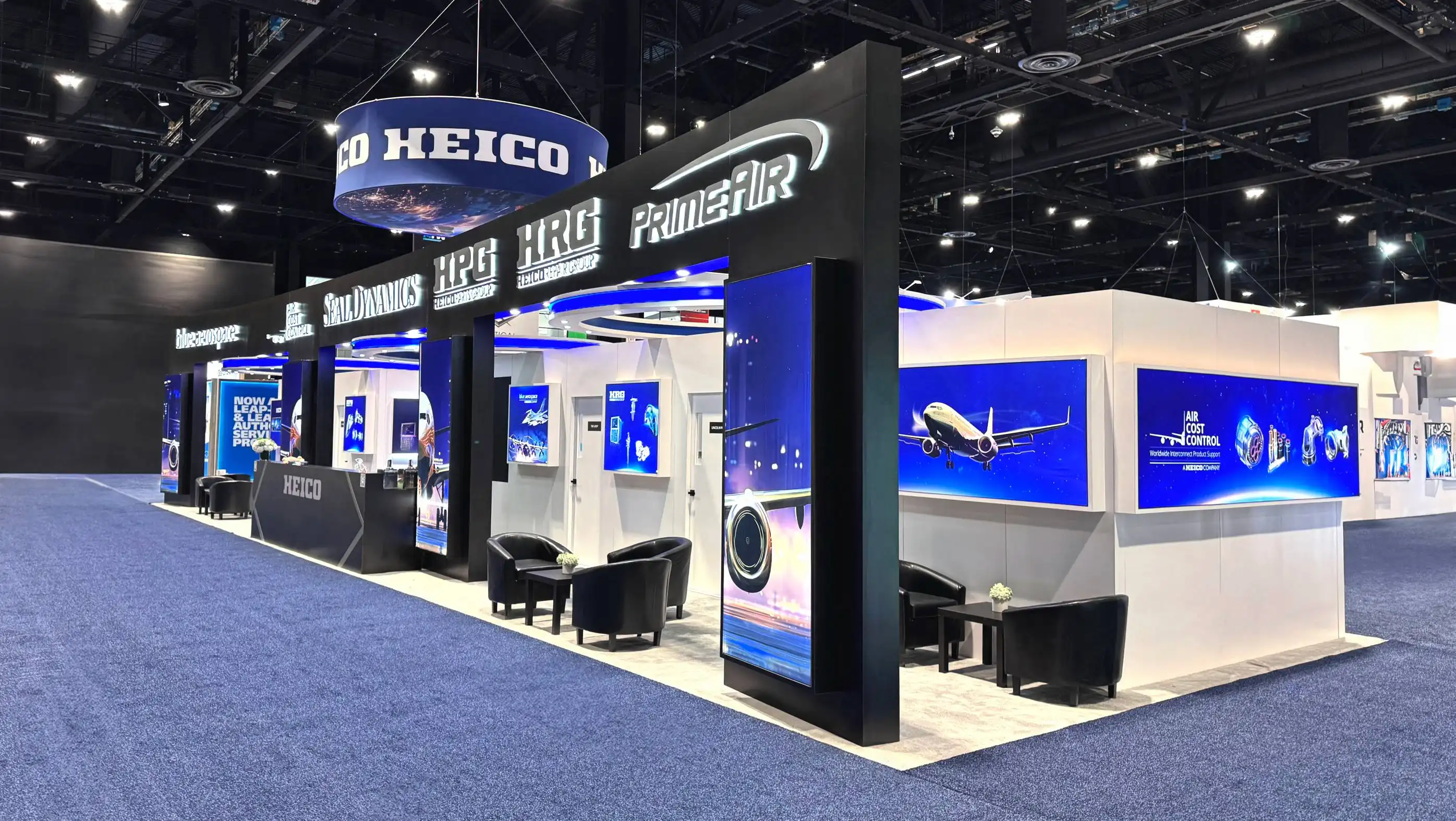
LED technology revolutionizes trade show booth lighting design through dramatic energy reduction. These systems consume up to 80% less electricity than traditional incandescent alternatives. Heat output decreases significantly, reducing cooling requirements in exhibition halls. Solar power integration enables completely carbon-neutral custom promotional displays. Portable solar panels charge device stations and power interactive elements. Battery backup systems ensure consistent operation throughout event duration.
Smart lighting controls optimize energy consumption based on visitor traffic patterns. Motion sensors activate displays only when needed. Programmable dimming systems adjust brightness throughout the day to minimize power draw. Kinetic energy harvesting transforms visitor interaction into electrical power. Floor tiles capture footstep energy to charge display systems. Hand-crank generators engage visitors while demonstrating renewable energy principles.
Modular and Reusable Design Strategies
Modular trade show exhibits maximize material utility across multiple events. Standardized connection systems enable endless configuration possibilities. Components adapt to various booth sizes and layouts without requiring new fabrication. Custom exhibit design services now prioritize longevity over short-term impact. Timeless aesthetic choices ensure designs remain relevant across multiple exhibition cycles. Quality construction methods extend component lifespan significantly.
Interchangeable graphic panels reduce printing waste while maintaining fresh branding. Digital displays eliminate static graphics entirely while offering unlimited content flexibility. Quick-change mounting systems enable rapid customization for different audiences.
Standardized shipping containers provide for the protection of modular components while also improving the efficiency of transportation. Foam inserts made to order protect things from being damaged in transportation. The elimination of cardboard garbage at destination sites is made possible by returnable packaging.
Waste Reduction and Recycling Strategies
Pre-event planning minimizes material waste through precise quantity calculations. Digital mock-ups eliminate physical prototyping requirements. Computer-aided design tools optimize material usage patterns to reduce offcuts. On-site waste segregation ensures proper material recovery. Clearly labeled collection stations guide disposal decisions, particularly within custom trade show exhibit design where diverse materials are used. Partnerships with local recycling facilities guarantee appropriate processing of separated materials.
Custom trade show signage utilizes recyclable substrates whenever possible. Aluminum composite panels separate easily for material recovery. Paper-based graphics use soy-based inks for compostability. Post-event material recovery programs extend component lifecycles beyond original applications. Structural elements find new purposes in permanent installations. Graphics materials support educational initiatives and community projects.
Digital Integration for Paperless Exhibitions
Interactive trade show exhibits eliminate traditional brochure distribution through digital alternatives. Tablet stations provide detailed product information while capturing visitor data. QR code systems enable instant information transfer to personal devices. Virtual reality experiences replace physical product demonstrations in space-constrained environments. Immersive technologies showcase products at full scale without transportation requirements. These solutions reduce booth footprint while enhancing visitor engagement.
The use of manual lead collection forms has been replaced by digital badge scanning. Immediately transferring contact information while preserving the integrity of the data is the goal of automated systems. There is a guarantee of instant access to data about prospects when using cloud-based storage. Real-time analytics optimize booth performance throughout exhibition duration. Heat mapping reveals high-traffic areas for strategic positioning. Engagement metrics guide staff deployment decisions for maximum effectiveness.
Transportation and Logistics Optimization
Lightweight construction materials reduce shipping volumes and associated carbon emissions. Advanced composites deliver structural strength at fraction of traditional weights. Shipping cost reductions often offset material premium expenses. Local sourcing strategies minimize transportation requirements for custom event booth design projects. Regional supplier networks reduce lead times while supporting local economies. Material availability research identifies viable alternatives in destination markets.
Consolidated shipping arrangements optimize container utilization across multiple clients, including for custom trade show exhibit design projects. Shared transportation reduces per-client carbon footprint significantly. Professional logistics coordination ensures timely delivery without compromise. Custom exhibit rentals eliminate client shipping requirements entirely. Local inventory availability reduces transportation to absolute minimum. Professional maintenance ensures rental components remain exhibition-ready continuously.
Measuring and Communicating Environmental Impact
Carbon footprint calculations quantify environmental benefits of sustainable design choices. Third-party verification ensures measurement accuracy and credibility. Standardized metrics enable comparison across different exhibition projects. Environmental promises made to stakeholders are validated via the use of sustainability certificates. The rules for environmentally responsible construction apply similarly to temporary display buildings. Compliance with environmental goals is verified via the use of professional environmental assessment.
Transparent reporting communicates achievements to exhibition audiences. Visible sustainability messaging reinforces brand values throughout visitor experience. Educational components explain environmental benefits to interested prospects. Return on investment calculations demonstrate financial benefits of sustainable practices. Long-term cost analysis reveals cumulative savings from reusable components. Environmental benefits translate into measurable business advantages.
Future Trends in Sustainable Exhibition Design
Emerging biotechnology materials promise revolutionary advances in sustainable construction. Mycelium-based composites offer renewable alternatives to synthetic materials. Laboratory-grown materials eliminate resource extraction entirely. Artificial intelligence optimizes material usage through predictive design algorithms. Machine learning identifies optimal configuration patterns for maximum efficiency. Automated systems reduce human error in sustainability calculations.
Circular economy principles reshape entire exhibition industry supply chains. Material passports track component lifecycles from creation through disposal. Closed-loop systems eliminate waste through continuous material circulation. Augmented reality technologies reduce physical material requirements for product demonstrations. Mixed reality environments overlay digital information onto minimal physical structures. These hybrid approaches maximize impact while minimizing resource consumption.
Conclusion
Sustainable exhibition design represents both environmental responsibility and strategic business advantage. Companies embracing eco-friendly approaches discover enhanced brand reputation, cost savings, and improved stakeholder relationships. Custom trade show exhibit design continues evolving toward greater sustainability through innovative materials, energy-efficient technologies, and circular economy principles. Success requires experienced partners who understand both environmental requirements and marketing objectives. The exhibition industry's sustainable future depends on immediate action from forward-thinking companies committed to responsible business practices.
Partner with HR Exhibits for Sustainable Exhibition Solutions
When it comes to environmentally responsible bespoke trade show booth design, HR Shows Service, Inc. is at the forefront of the industry. Environmental sustainability and great marketing efficacy are both included into our all-encompassing strategy. In order to ensure the smooth execution of environmentally friendly display projects across a wide range of markets and regulations, years of international expertise are required.
Team members who are professionals are aware of the specific issues that multinational organizations face while looking for environmentally friendly exhibiting solutions. We provide comprehensive services, beginning with the preliminary creation of the idea and continuing through the on-site administration and following the event material recovery. By keeping a consistent brand appearance while adhering to local environmental norms, our global viewpoint guarantees compliance with regulatory requirements.
Partnerships between manufacturers of custom trade show display design and manufacturers supply cutting-edge environmentally friendly materials and building processes. Advanced the management of projects systems maximize the usage of available resources while also adhering to stringent quality requirements. Reporting that is transparent offers comprehensive environmental impact evaluations for the purpose of evaluating business sustainability programs. Ready to transform your exhibition strategy with sustainable solutions that enhance brand reputation while reducing environmental impact? Contact us at info@hrexhibits.com to discuss your next eco-friendly custom portable exhibits project.
References
1. Within the year 2023, Green and Thompson published an article titled Sustainability of Materials in Modern Exhibitions Design: A Detailed Analysis." 45–62 in the Journal of Display Technology, volume 15, issue 3.
2. "Carbon Footprint Reduction Approaches for International Trade Shows," by Chen, L., et al., was published in Environmental Business Quarterly, volume 28, issue 4, pages 112-128, in the year 2022.
3. Rodriguez, A. & Williams, K. (2023). "Modular Design Principles for Eco-Friendly Exhibition Stands." Trade Show Innovation Review, 11(2), 78-94.
4. In 2022, P. Anderson published an article titled "Digital Integration and Resource Reduction in Modern Exhibitions Practices." The article was published in Exhibition Management Today, volume 19, issue 7, pages 34-49.
5. Kumar, S. & Brown, J. (2023). "Energy Efficiency in Trade Show Lighting: LED Technologies and Beyond." Sustainable Events Magazine, 8(1), 23-37.
6. Davis, M. et al. (2022). "Circular Economy Applications in Temporary Exhibition Construction." International Conference on Sustainable Business Practices Proceedings, 267-284.