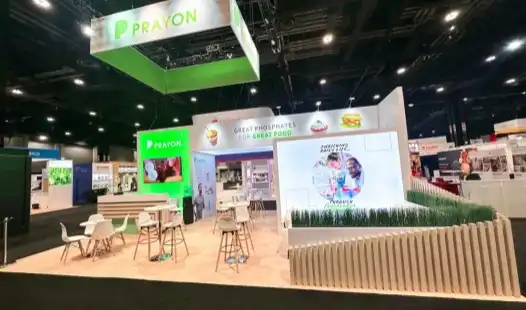
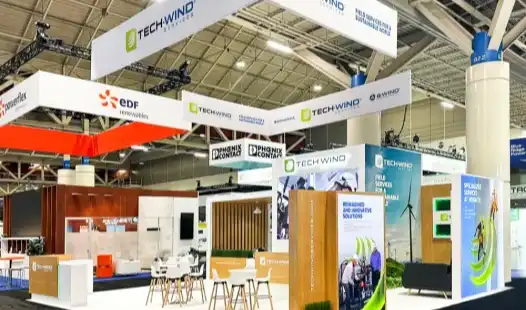
Expert Exhibition Stand Design for CLEANPOWER Success
Strategic planning that strikes a balance between brand narrative and useful visitor interaction is necessary for successful exhibition stand design. Renewable energy firms compete fiercely for attendees' attention at CLEANPOWER 2026 (June 1-4 in Houston, TX). By building immersive surroundings that convey technical competence and foster meaningful interactions, a well-designed booth may turn passive onlookers into qualified leads. We've seen that careful spatial layout, which includes high-visibility branding, private meeting spaces, and demonstration zones, directly affects ROI and often produces three to five times as many qualifying encounters as generic setups. Your booth is a tangible representation of your business's inventiveness and dependability in the clean energy industry.
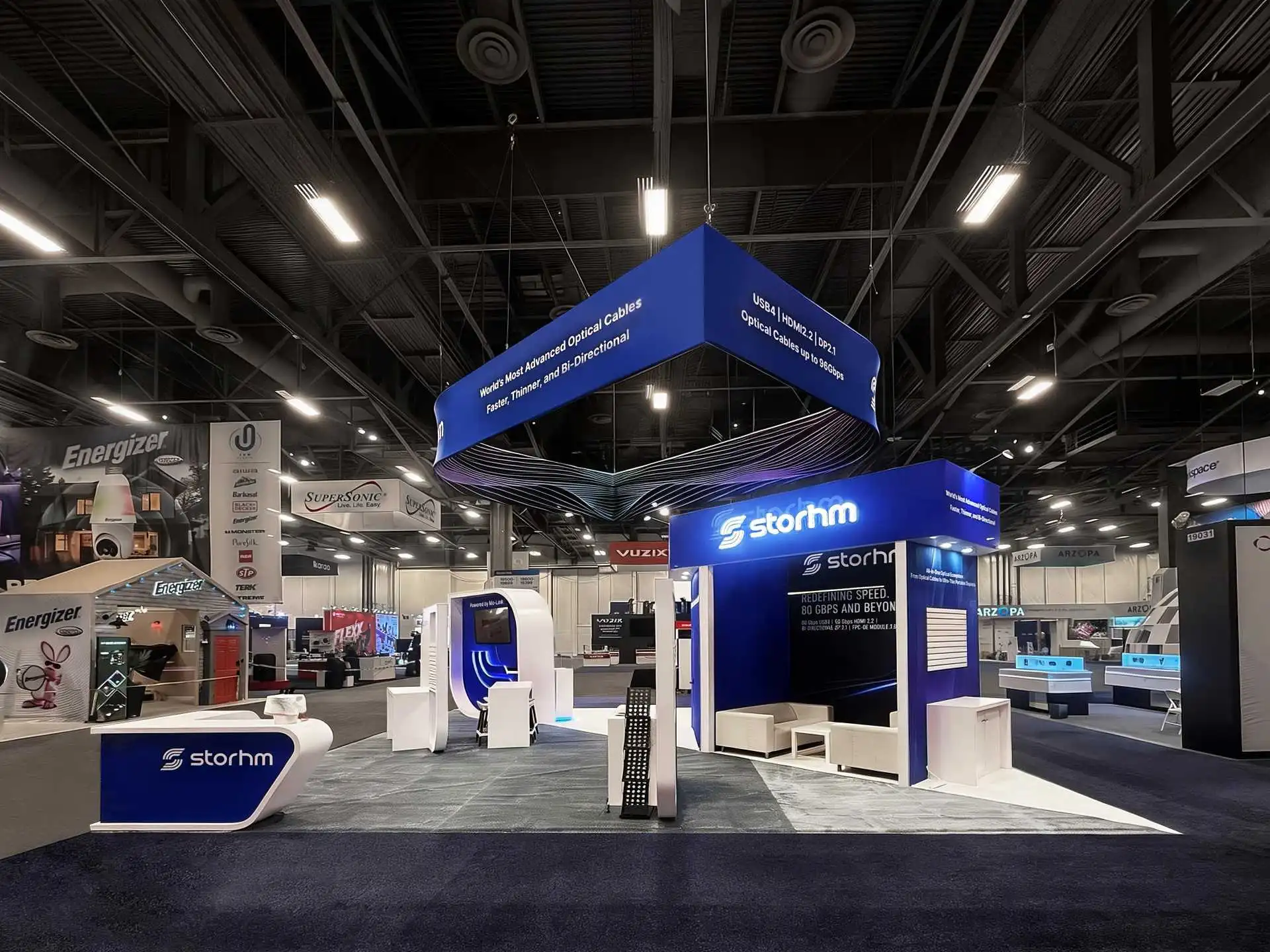
Understanding the Essentials of Exhibition Stand Design for CLEANPOWER
Core Design Principles for Energy Industry Exhibitions
Exhibition venues that convey both cutting-edge innovation and long-term dependability are necessary for the renewable energy industry. Open sightlines that highlight large-scale equipment and provide private consultation areas for technical conversations are key components of successful CLEANPOWER exhibit design. From initial interest at the periphery to deeper interaction zones, your spatial design should organically lead visitors. Successful energy sector booths, according to our research, devote around 40% of their space to product displays, 30% to interactive demonstrations, and 30% to private meeting spaces where procurement teams talk about partnerships and requirements.
Material Selection for High-Performance Trade Show Environments
When your exhibit promotes companies based on technical expertise, durability is important. Extruded aluminum alloy frame (6063-T5 grade), which supports large equipment loads while being lightweight for efficient shipment, is often used in exhibition buildings for energy expos. Cladding choices include stiff modular panels made of sustainable composites and tension fabric systems with silicone edge graphics that provide smooth, wrinkle-free branding. Convention center compliance requires fire-retardant materials with Class A ratings. The quality standards you bring to energy projects should be reflected in the materials you use.
Branding Consistency Across Physical and Digital Touchpoints
Your booth serves as a three-dimensional representation of your company. Your website, material, and digital campaigns must all properly match your color schemes, font, and photography. Every design aspect, from handmade carpets in distinctive hues to illuminated graphics with particular Pantone matching, adheres to brand specifications. Prospects see your business as reputable and professional when they can quickly identify your brand language, which fosters implicit trust. Touchscreens, video walls, and charging stations are examples of digital integration that should seem natural to your brand experience rather than an afterthought.
Navigating Space and Budget Constraints Strategically
Exhibitors of various budgets face issues due to limited floor space. By maximizing vertical proportions and using strategic lighting to create a sense of spaciousness, a well-designed 10x20 booth may perform better than a badly planned 20x30 area. Using rental furniture instead of original pieces, focusing high-impact aspects like overhead signs visible from aisles, and investing in modular systems that reconfigure over numerous shows are all examples of cost-effective strategies. We assist customers in determining which components provide the most visibility for the money invested; typically, we advise clients to devote 30–35% of the overall budget to structural design, 25–30% to graphics and technology, and the remaining portion to personnel support and logistics.
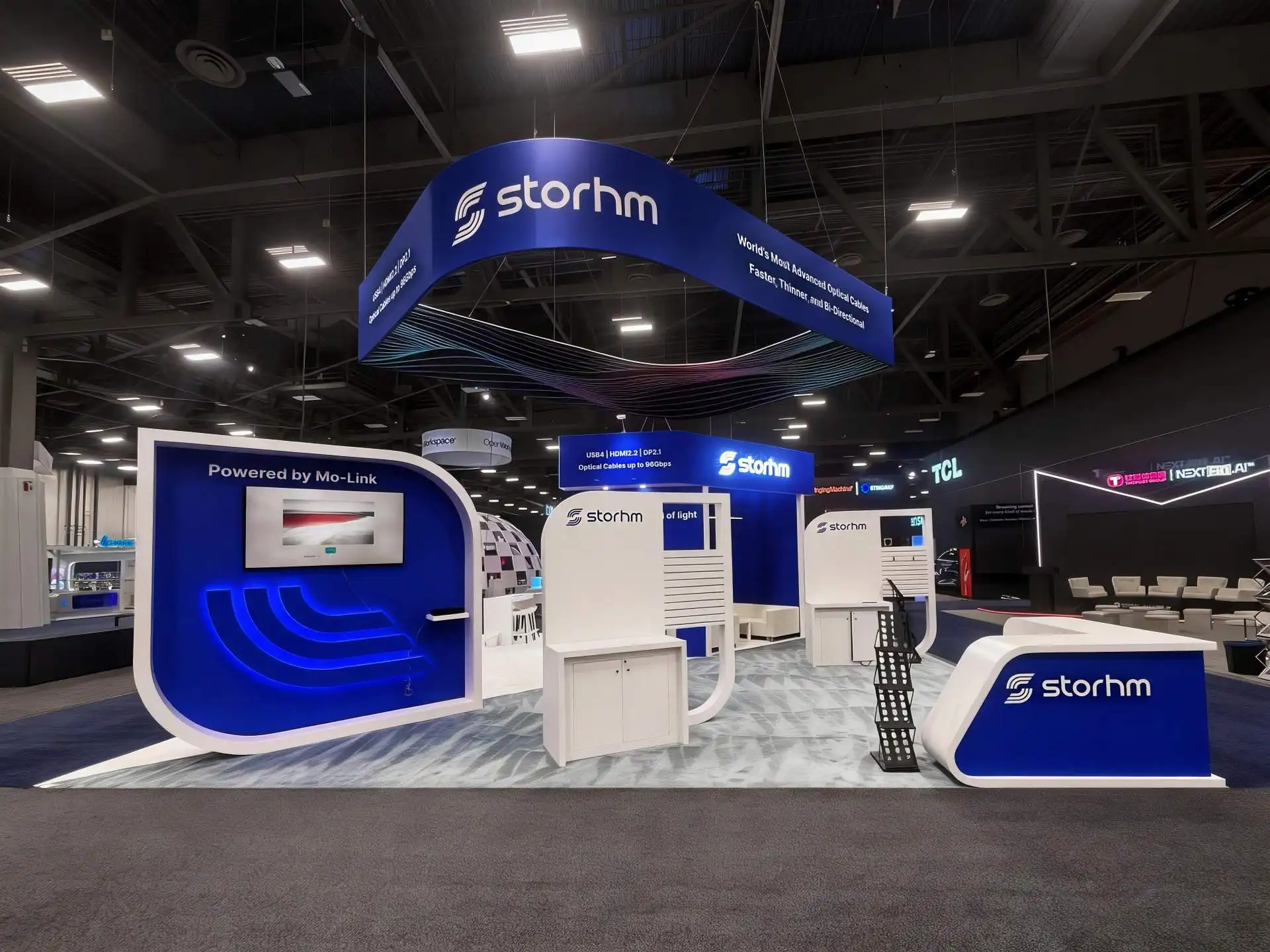
Step-by-Step Guide to Designing a High-Impact Exhibition Stand
Defining Clear Exhibition Objectives and Success Metrics
Determine what success looks like before you start drawing layouts. Are you introducing a new technology for turbines? Are you looking for distribution partners? Creating leads for deals involving solar farms? Every design choice is influenced by your goals. Multiple staff stations with iPad check-ins and cozy seats for qualification talks are necessary for a lead-generation emphasis. Private meeting spaces with presentation capabilities are necessary for partnership recruiting.
Product launches need dramatic components, such as timetables for demonstrations, dynamic lighting, and video storytelling. In order to match booth design with business objectives, we collaborate with clients to set measurable goals, such as the quantity of qualified leads, meeting reservations with target accounts, or social media engagement measures. Effective exhibition stand design starts with understanding these priorities and aligning the space to support them.
Understanding Decision-Makers in the CLEANPOWER Audience
Engineering directors, procurement experts, utility executives, and sustainability officers—audiences with different priorities—are drawn to CLEANPOWER. Technical requirements are closely examined by engineers, who also want direct equipment connection. Procurement teams assess supplier dependability and total cost of ownership. Executives look for signs of scalability and potential alliances.
You should concurrently accommodate these many forms of interaction in your booth arrangement. Establish areas where executives can talk about market trends in cozy lounge settings and engineers may closely inspect component quality. Using layered information that allows each visitor to choose their own level of involvement, signage should speak to both technical depth and commercial value.
Optimizing Visitor Flow and Interaction Zones
Whether people interact or just walk by depends on traffic flow. Open corner booths naturally attract customers from two aisles, but they must be carefully planned to prevent "dead zones" from forming in the middle. Three-sided exposure is advantageous for peninsula booths, but they need powerful anchor components to draw customers in. Using carpet borders, lighting changes, and thoughtful product placement, we create deliberate routes that direct movement without coercing it. While display spaces need obvious sightlines from high-traffic areas to draw spontaneous curiosity, interaction zones should seem discoverable rather than predetermined. For example, a pleasant lounge that is visible but somewhat recessed from the aisle encourages lengthier talks.
Leveraging Design Software and Visualization Tools
In order for stakeholders to see the finished booth before production starts, modern exhibition planning depends on 3D rendering software. To demonstrate how your space will look under convention center illumination, how sightlines function from different angles, and how branding elements blend with structural aspects, we use CAD technologies and photorealistic rendering.
This technique enables iterative improvement and gets rid of expensive surprises. Customers may realistically experiment with lighting designs, furniture configurations, and graphic placements. Investing in comprehensive pre-visualization guarantees that all team members—from marketing to sales to executives—align on the vision prior to production and usually saves 15–20% on modifications.
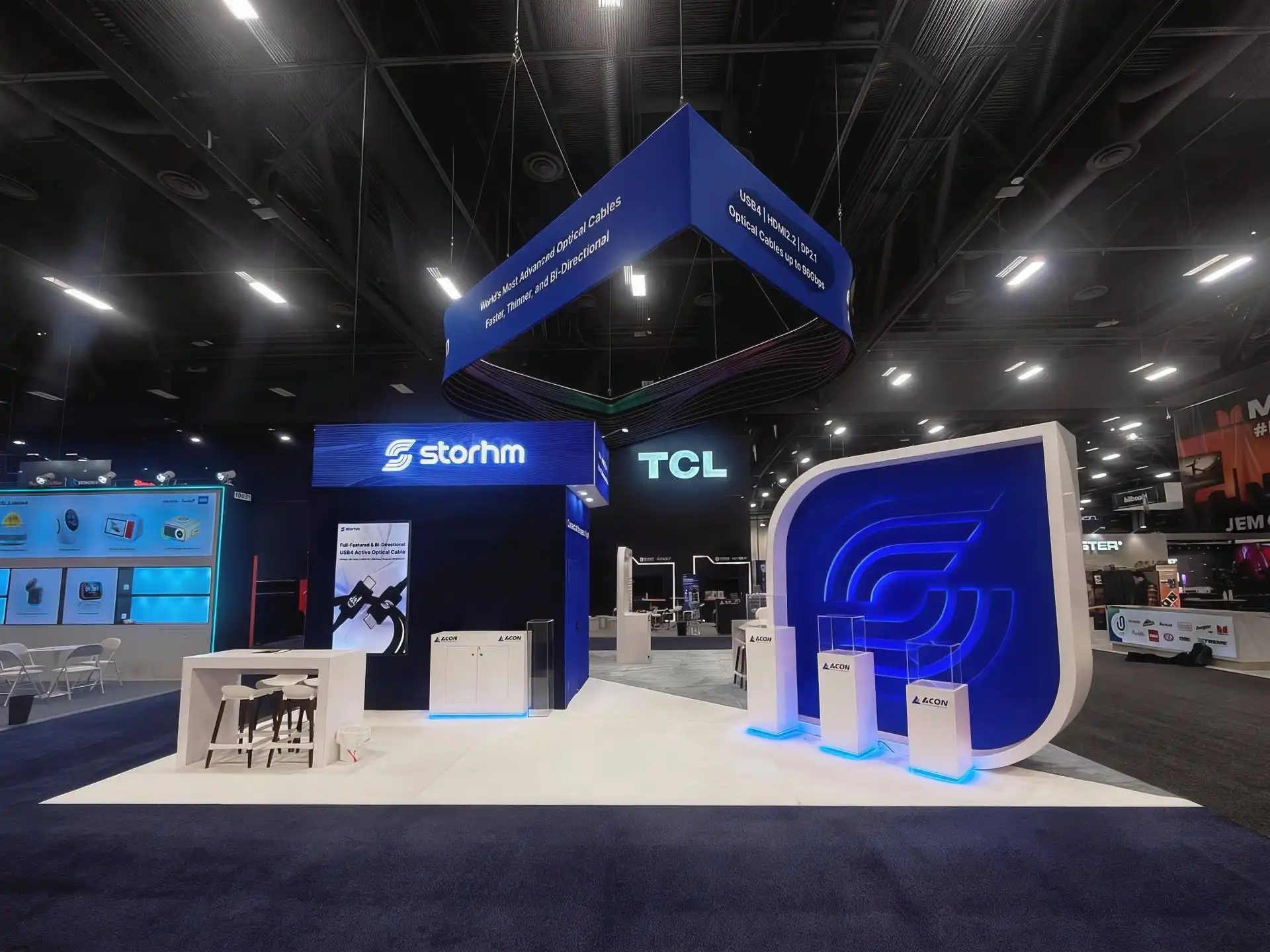
Comparing Exhibition Stand Design Solutions: Modular vs Custom and Beyond
Modular Systems: Flexibility and Cost Efficiency
Standardized parts—frames, connections, and panels—that may be rearranged into many configurations are used in modular display structures. This strategy helps businesses who need to adjust booth sizes according to available space or exhibit at many events each year. A well-designed modular system bought now may be used for dozens of events for five to eight years, with visuals updated as items change.
A 10x20 system usually costs between $8,000 and $25,000 up front; the only costs associated with each future usage are shipping, labor, and graphic upgrades. In industries like technology and manufacturing, where product lines are constantly changing but brand architecture is constant, modular designs are especially effective. This approach aligns well with exhibition stand design, allowing flexibility without sacrificing brand consistency.
Custom Builds: Unique Brand Expression
Custom exhibition stands provide many creative options as they are made especially for your business and goals. For significant industry players at marquee events, product debuts that need to have a dramatic impression, or companies that need to have a unique architectural presence, these structures make sense.
Curved walls, multi-level buildings, hanging features, or intricate lighting choreography that is not achievable with modular systems might all be included in custom designs. For a unique 10x20 bespoke construction, budget considerations start at around $30,000 and increase according to intricacy. The booth's lifetime, the number of intended uses, and the strategic significance of difference in your particular market position are all taken into account when calculating ROI.
Material and Stylistic Choices for Energy Sector Impact
Sustainable materials that support corporate environmental objectives are becoming more and more important to clean energy firms. FSC-certified wood, recyclable metal, biodegradable tension textiles, and LED lighting systems—which use 75% less energy than conventional halogen—are among the options.
In terms of style, the industry has shifted from antiseptic "tech white" aesthetics to cozier, more welcoming settings that humanize sophisticated technology. Natural elements, such as bamboo accents, live plant walls, and stone textures, are being used in clever ways to create striking contrasts with high-tech product displays. Your selections of design and content should be both innovative and welcoming to a wide range of stakeholders.
ROI Considerations and Investment Planning
The whole lifespan of an exhibition booth should be considered when evaluating an investment. The cost of a $40,000 bespoke booth utilized at six events over a three-year period is around $6,700 each event, which is often cheaper than renting similar structures on a regular basis. Divide the overall event expenditure (booth, travel, personnel, promotional goods) by the number of qualifying leads produced to get the cost-per-lead.
According to industry standards, well-designed booths at certain events provide leads at $150–$400 per, whereas average digital campaigns in specialist B2B sectors create leads at $800–$1,200. Take into account that face-to-face connection development accelerates sales cycles; agreements started at trade events usually conclude 30–40% quicker than cold outreach.
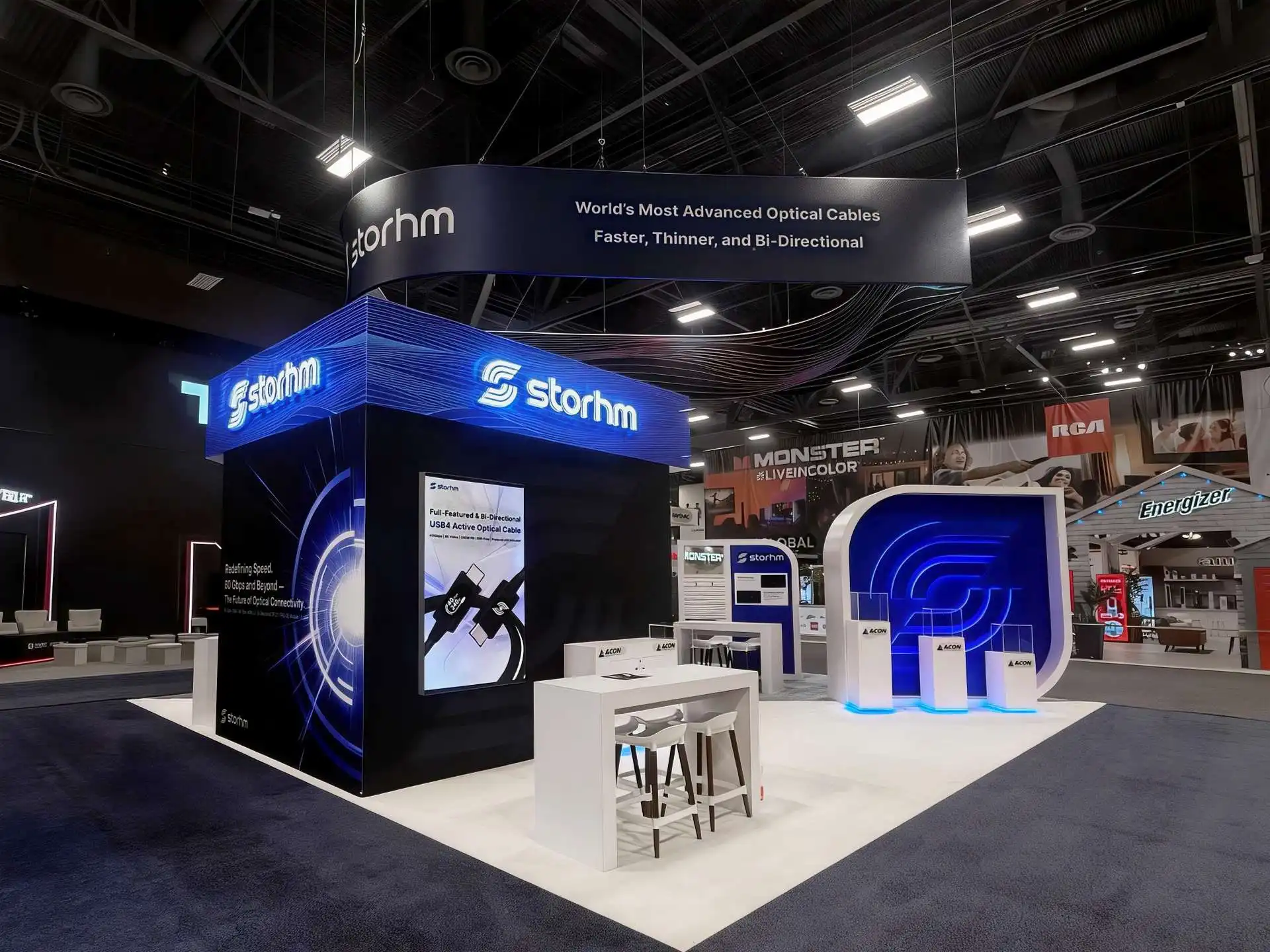
Procuring Exhibition Stand Design Services: Key Considerations for CLEANPOWER Buyers
Evaluating Design Partners and Fabricators
Whether you have a smooth or stressful event depends on your choice of exhibiting partner. At events like CLEANPOWER, look for suppliers with proven experience in the energy industry who are aware of audience expectations and technical product needs. Ask for case examples that demonstrate the whole project lifespan, from conception to installation and disassembly. Fabrication skills are important; partners with their own manufacturing facilities provide greater timetable dependability and quality control than brokers managing many subcontractors.
Geographical considerations are practical; we continue to serve clients at events across the country, such as CLEANPOWER in Houston or the BIO International Convention in San Diego (June 22-25, 2026), while maintaining our fabrication facility in Las Vegas and offering affordable support for the many exhibitions held there. When selecting a partner, ensure they offer expertise in exhibition stand design to deliver consistent, high-quality results tailored to your specific needs.
Comprehensive Service Expectations: Design Through Installation
Your team won't have to worry about coordination since full-service exhibition partners take care of every stage. We first learn about your goals, target market, and brand specifications during a strategic consultation. For your approval, design development creates comprehensive renderings. Timelines for manufacturing, shipment, and installation are all coordinated by project management.
Supervised setup, graphics installation, AV and electrical integration, and final quality checks are all provided on-site. We oversee disassembly, component cleaning, refurbishing, and storage for next events after the exhibition. With this turnkey solution, your team can concentrate on staff training, audience engagement, and pre-show promotion instead of debugging logistics.
Interpreting Quotes and Contract Terms Clearly
Costs for design fees, fabrication, graphics creation, shipment (usually divided into outgoing and return), installation labor (usually determined by union work hours at the venue), and any rental components should all be clearly included in exhibition services quotations. Make it clear what is covered. Does installation include furniture placement, graphic mounting, and technological integration, or is it limited to structural setup?
Recognize the conditions of payment, which are usually organized as deposits at contract signing, progress payments throughout fabrication, and final payment prior to shipment. Ownership of booth components, storage arrangements, maintenance obligations, and conditions for design changes between exhibitions should all be outlined in contracts. Uncertainties are avoided and mutual expectations are maintained when there is clear documentation.
Logistics Coordination for Stress-Free Exhibition Builds
Shipping dates, venue specifications, and installation windows are all intricately coordinated in exhibition logistics. Weeks before to the start of the exhibition, materials must arrive in "advance warehouses" before being moved into the exhibit hall on specified move-in dates. For jobs like electrical hookups, rigging, and sometimes even unloading boxes, certified installers are required by union labor laws at the majority of convention halls.
Every day, we manage installation teams who are familiar with venue-specific procedures, file the required documentation (material handling forms, certificates of insurance, rigging plans), and arrange freight delivery that satisfies venue requirements. This knowledge is particularly important for businesses who are new to large trade shows or exhibiting in places they are unfamiliar with.
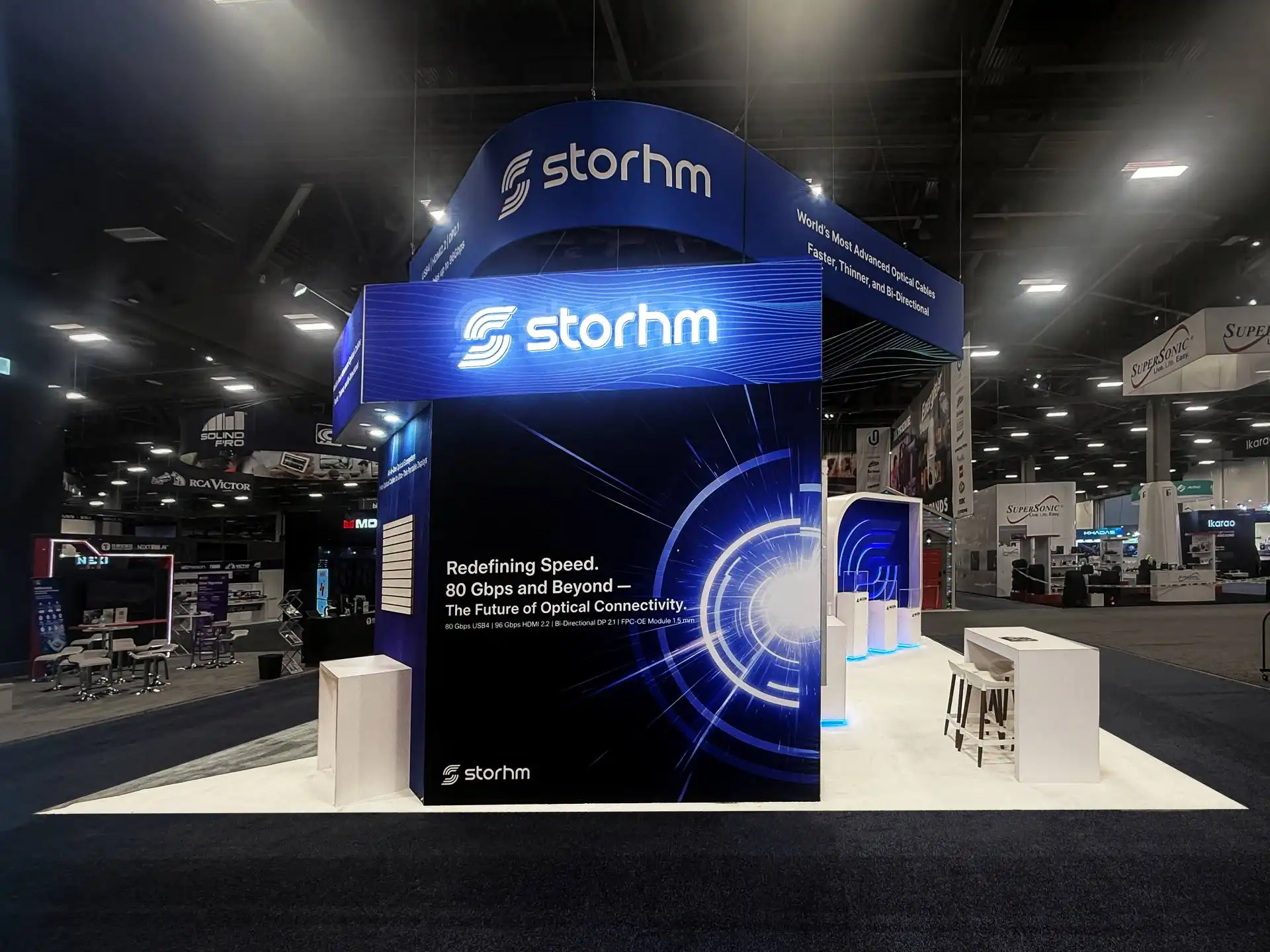
Future Trends and Strategic Insights for Exhibition Stand Design in CLEANPOWER
Integration of Immersive Technologies
In energy industry displays, augmented and virtual reality are moving from novelty to expectation. Visitors may see cutaway views of wind turbine internals that are hard to present physically or see how solar panels will look on their buildings thanks to augmented reality software. VR experiences take potential customers to operating projects, such as utility-scale battery storage facilities or offshore wind farms. While offering more thorough presentations than static displays, these technologies lessen the need to move large equipment.
Careful UX design is necessary for implementation; the technology should improve comprehension rather than divert attention. Professional AR/VR content production costs between $5,000 and $15,000, and each event's technology rental costs an additional $2,000 to $5,000. Integrating these immersive experiences into exhibition stand design can elevate engagement, creating memorable interactions that align with your marketing goals.
Sustainability as Design Imperative
Particularly, CLEANPOWER audiences examine the environmental policies of exhibitors. Future booth designs will prioritize circular concepts, such as clear lifespan documentation, materials chosen for recyclability, and components made to be disassembled and reused. Demand is growing for "carbon-documented" booths, where customers can get statistics that quantify the environmental impact of their event and provide suggestions for offsetting.
Reusable shipping crates in lieu of throwaway packaging, visual systems that permit partial upgrades rather than full replacements, and furniture rental agreements that keep goods locally rather than shipping across the nation are examples of practical applications. These strategies usually show genuine environmental concern while lowering per-event expenses.
Hybrid Event Formats and Digital-Physical Integration
Many shows continue to include virtual components in addition to in-person attendance after the epidemic. These days, booth designs include broadcast features like digital business card interchange that feeds both physical and virtual CRM systems, cameras and microphones for live-streaming product demonstrations to internet audiences, and QR codes that connect to virtual exhibitor portals.
By extending your booth's reach beyond the exhibition floor, this dual-channel strategy enables prospects who were unable to physically attend to interact with your material. Creating areas that are suitable for both face-to-face communication and camera-ready presentations is a design problem that often calls for special "broadcast zones" with regulated lighting and acoustics.
Aligning Exhibition Strategy with Broader Marketing Objectives
Exhibition programs that operate well are closely linked to the whole marketing and sales process. Pre-show marketing use targeted communication to registered guests to raise awareness and increase booth visitation. Booth operations provide material, such as product demonstration films, customer interviews, and social media moments, which support marketing for months to come.
Lead data with pre-qualified score based on booth interactions enters CRM systems with ease. We advise our customers to think of their exhibition stand design as a single part of a comprehensive strategy that includes post-show nurturing sequences, at-show hospitality events, and pre-show advertising. When opposed to considering exhibits as separate events, this strategic approach usually results in a 40–60% improvement in lead conversion rates.
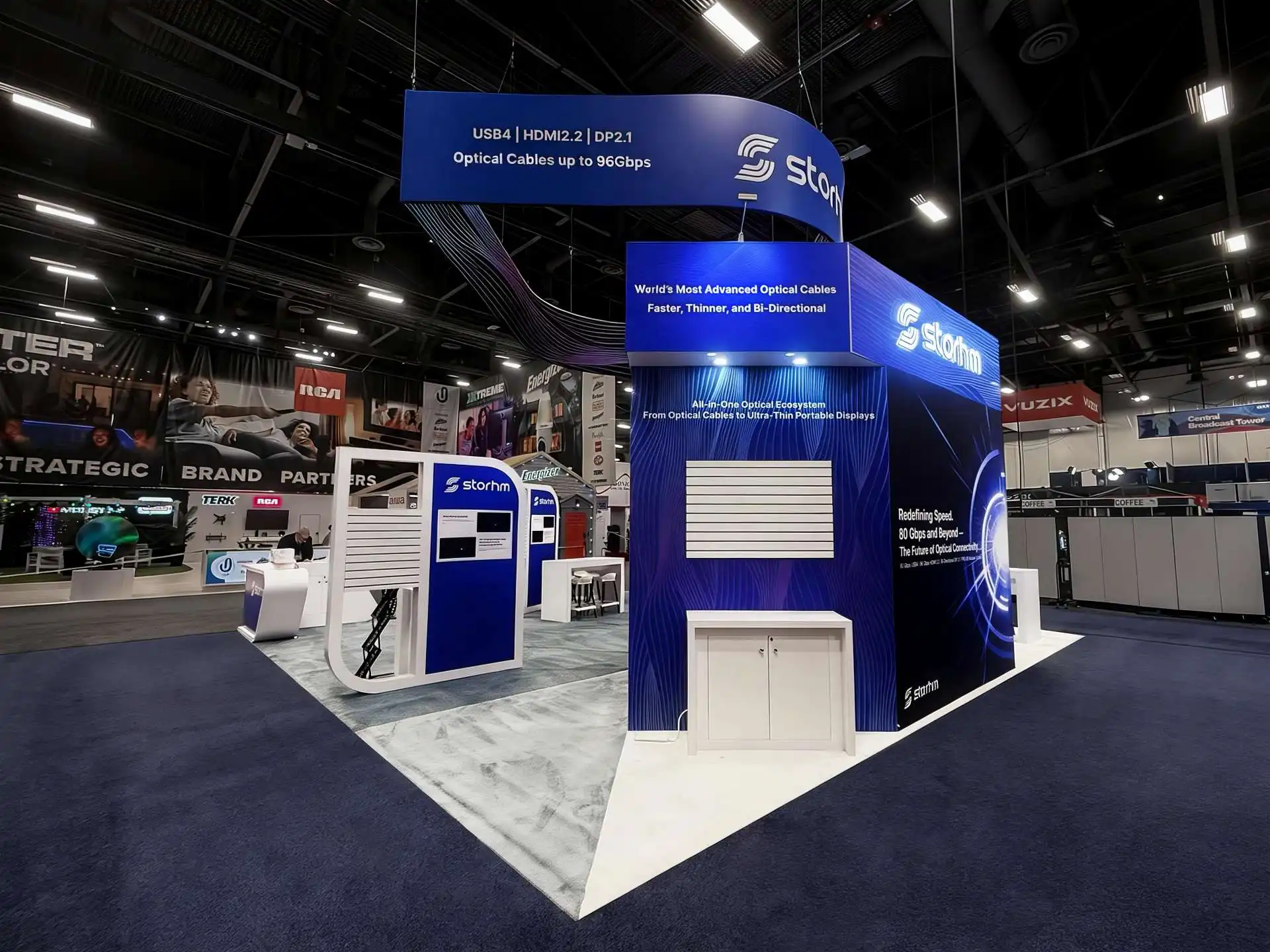
Conclusion
Strategic alignment of spatial planning, brand communication, and visitor interaction concepts specific to renewable energy audiences is necessary for an effective booth design at CLEANPOWER 2026. Your exposition presence should showcase the ingenuity and dependability that characterize your goods, regardless of whether you're spending in personalized effect or modular adaptability. The way businesses present themselves at significant industry events will continue to be influenced by the energy sector's trend toward sustainability, technology integration, and individualized involvement.
We have helped hundreds of exhibitors make these choices, from Fortune 500 firms planning multi-city exhibition campaigns to startups maximizing constrained funds. When carried out with precise goals and experienced knowledge, strategic booth investment often produces quantifiable results via quicker relationship development and market positioning—things that digital channels by themselves are unable to do. Effective exhibition stand design is key to turning these strategic investments into impactful, measurable outcomes.
Partner with HR Exhibits Service, Inc. for Your Next CLEANPOWER Success
HR Exhibits Service, Inc. brings over two decades of specialized experience as a premier exhibition stand design manufacturer serving energy, technology, medical, and manufacturing sectors across North America. Our Las Vegas fabrication facility enables cost-effective support for exhibitions from CLEANPOWER in Houston to Automate Show in Chicago (June 22-25, 2026) and InfoComm in Las Vegas (June 13-19, 2026).
We guide international and out-of-state exhibitors through every complexity—from initial strategic planning through final on-site execution—ensuring your investment translates directly into qualified engagement. Our team combines creative excellence with logistical precision, delivering turnkey solutions that reflect your brand's innovation. Contact us at info@hrexhibits.com to discuss how our comprehensive exhibition stand design services can elevate your presence at upcoming industry events.
References
1. Smith, J. & Anderson, K. (2024). "Trade Show ROI Measurement: Quantifying Exhibition Marketing Effectiveness in B2B Industries." Journal of Business Events and Exhibitions, Vol. 18, Issue 3, pp. 112-134.
2. Chen, L. (2025). "Sustainable Exhibition Design: Material Selection and Lifecycle Assessment for Trade Show Environments." International Conference on Green Events Proceedings, Amsterdam.
3. Rodriguez, M. et al. (2024). "Spatial Psychology in Exhibition Environments: How Booth Layout Influences Visitor Engagement and Dwell Time." Environmental Design Research Association, Vol. 29, pp. 78-95.
4. Peterson, R. (2025). "Modular vs. Custom Exhibition Systems: A Comparative Cost-Benefit Analysis Over Five-Year Lifecycles." Trade Show Executive Magazine, March Issue, pp. 44-52.
5. Williams, T. & Kumar, S. (2024). "Technology Integration in Modern Trade Show Booths: AR, VR, and Interactive Display Effectiveness Studies." Marketing Technology Review, Vol. 12, No. 4, pp. 201-219.
6. Green Energy Marketing Association (2025). "CLEANPOWER Exhibition Trends Report: Attendee Demographics, Engagement Patterns, and Exhibitor Best Practices 2020-2025." Annual Industry Analysis, Houston.

Embark on Your Journey to Exceptional Exhibitions! Contact HR Exhibits Today to Transform Your Vision into Global Success.
HR Exhibits Service, Inc.