Custom Expo Stands for SEMA 2026: How to Maximize Your Booth Space
If you're planning to exhibit at SEMA 2026 (November 3–6, Las Vegas, NV), you already know the competition for attention on that show floor is real. Custom expo stands give your brand a physical identity that generic rentals simply cannot match. A well-designed exhibition booth does more than look attractive — it directs visitor flow, separates product zones, and positions your team to close qualified conversations. Whether you represent a large automotive brand or a startup entering the aftermarket space, investing in a purpose-built trade show booth is one of the most direct ways to earn measurable ROI at an event of this scale.

Understanding Custom Expo Stands: What They Are and Why They Matter
More Than a Display Structure
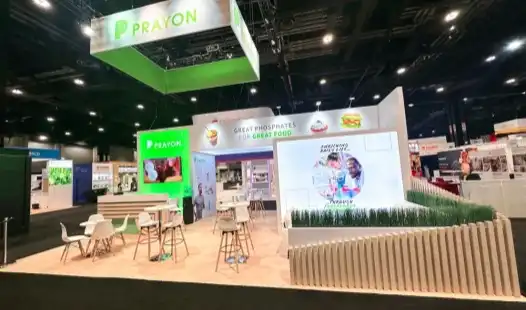
A unique expo stand is a setting that was designed to help your brand reach its goals. Unlike ready-made rental units, these booth structures are custom made to fit your product dimensions, how visitors will interact with it, and your brand's visual language. Every part, from the shape of the frame to the design panels, shows that choices were carefully made.
What Design Flexibility Actually Means
If you have full design control over your booth, you can add things like raised floors to keep cables organized, built-in LED lighting with a CRI above 90 to show product colors accurately, private consultation areas, and plans with more than one level. Each part is placed to do a certain job. That level of accuracy is important at SEMA, where performance car parts fight for attention over millions of square feet.
Why Procurement Teams Should Pay Attention
Professionals in operations and procurement can save money in the long run by buying custom stands instead of renting them over and over again. The Center for Exhibition Industry Research (CEIR) says that exhibitors who spend money on custom booth environments get more qualified leads than those who use standard rental displays. The initial cost is higher, but the cost of each event goes down by a lot over time.

How to Design Custom Expo Stands for Maximum Space Utilization at SEMA 2026
Work With Zones, Not Just Square Footage
The best way for SEMA vendors to plan their floor space is to think about zones instead of open areas. Well-designed custom expo stands use this zoning strategy. When built with conscious zoning, a 20x20 booth can be used for more than one thing: it can be a place to show off products, a place for live demonstrations, and a private meeting room. Building with modular parts lets you split up the area without making it feel too crowded.
Multi-Level Layouts and Vertical Space
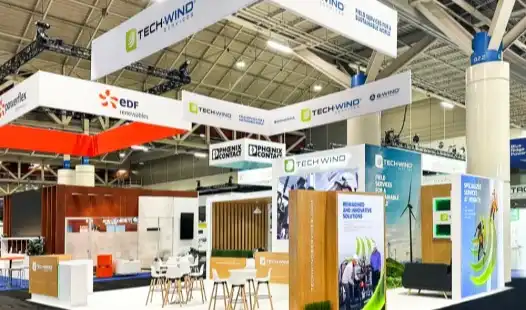
The layout of SEMA's convention center rewards exhibitors who build up. With a two-story booth, your brand will be at eye level from far away, bringing in customers before your competitors do. The lower level is where a lot of people talk about products, and the upper level is where serious buyers meet in private. This method makes better use of the same area.
Lighting, Materials, and Sustainability
Environmentally friendly booth building is no longer just a trend; for many corporate exhibitors, it's now a requirement. Aluminum extrusion frames that are light (usually made of 6063-T5 metal) are easier to move and cost less to drayage. Silicone Edge Graphics (SEG) that use dye-sublimated tension fabric can make images that are clear and sharp with little waste. With LED lighting systems, less energy is used, and the light that shines on product displays is even and flattering. These choices of materials work well and are better for the environment.

Comparing Custom Expo Stands to Other Stand Options: Making the Right Choice for SEMA 2026
Custom vs. Modular: Understanding the Trade-Offs
Modular systems offer reconfigurability and lower per-event costs when used across a multi-show calendar. They work well for mid-size exhibitors attending four or more events per year. Custom stands, by contrast, are designed for a specific brand expression and spatial footprint. The brand consistency they produce is difficult to replicate with modular systems.
Here is a practical breakdown of how these options differ for SEMA-level participation:
- Custom stands deliver full brand exclusivity and tailored spatial layouts. They support heavier AV loads, built-in storage, and private meeting zones. Best suited for flagship events and large exhibitors with strong brand standards.
- Modular stands offer flexibility for multi-event calendars at lower cost. Reconfiguration is possible, but visual output rarely matches a custom build. Suitable for mid-budget exhibitors attending regional shows alongside SEMA.
- Pop-up displays are portable and fast to install. They lack structural depth and are best reserved for small footprints or supplementary brand touchpoints rather than primary SEMA booths.
Understanding these distinctions helps procurement managers make a decision that fits both the budget and the brand's objectives at SEMA.
Long-Term ROI Considerations
When calculating ROI, factor in transport costs, installation labor, drayage fees, and storage between shows. Well-engineered custom expo stands follow a clear production timeline. A custom stand with a 6x6m footprint typically requires 8–12 weeks of lead time from concept to delivery. That timeline includes design iteration, CAD engineering, fabrication, and pre-build quality checks. Planning early protects both your schedule and your investment.

Procuring Custom Expo Stands for SEMA 2026: Streamlining Your Purchase Process
Starting the Quote Process Correctly
When your brief is clear, the procurement process goes faster. Make sure you know how big your booth is, what kinds of products you'll be selling, how many people you expect to walk by, and if you need any AV or electrical help. When suppliers get full project plans, they can make quotes faster and more accurately. Requests that aren't clear cause back and forth that takes weeks.
Selecting a Supplier With Local Capabilities
Working with a seller based in or near Las Vegas is more convenient for SEMA vendors. Local manufacturing and help on-site cut down on shipping costs, speed up last-minute changes, and give your team direct access to installation crews who know how the Las Vegas Convention Center works. When planning purchases, this geographical factor is often not given enough weight.
Timeline and Compliance
In the U.S., SEMA's show manual has strict rules about booth height, hanging sign permits, fire-retardant material certifications (NFPA 701), and electrical compliance. Your seller needs to know about these rules and be able to give you material safety data sheets (MSDS) if you ask for them. By adding these compliance checks to the procurement schedule, setup delays that cost a lot of money can be avoided.

Leveraging Trends and Innovations in Custom Expo Stands for Future-Proof SEMA Participation
Smart Booth Technologies
High-performing SEMA custom expo stands now come with interactive digital screens, touchscreen product configurators, and data collection tools that are built in. These technologies do more than just bring people to your show; they also qualify leads in real time by keeping track of how engaged people are, which your sales team can use right away after the show.
Reusable Structures Across Multiple November Events
There are a lot of big trade shows in November 2026. Other events in November besides SEMA (November 3–6 in Las Vegas) are AAPEX (November 3–5 in Las Vegas), RE+ (November 16–19 in Las Vegas), Supercomputing SC26 (November 16–19 in Chicago, IL), and IAAPA Expo (November 16–19 in Orlando, FL). Exhibitors who go to more than one of these events can get a lot out of modular-compatible custom structures. These are designs that ship quickly, can be reconfigured quickly, and keep the same look in different venue footprints.
Partnering With Experienced Fabricators
How well your booth is put together will directly depend on how experienced your maker is. If a supplier has worked on projects on a large scale for SEMA before, they know the brand, logistics, and structure needs that make the difference between a booth that works and one that doesn't.
Conclusion
SEMA 2026 is a great chance to build brand awareness in front of a very qualified audience of auto enthusiasts. Your booth is the place where people first see your goods, where you sell it, and where people make their first impression. Investing in custom expo stands that are planned with spatial intelligence, built to meet standards, and backed by local installation experts has a direct effect on the talks you have on the show floor. Plan ahead of time, give your seller full instructions, and pick a partner who has done this before and can deliver on time.
FAQ
How early should I start planning my SEMA 2026 booth?
The usual lead time for a custom booth is between 8 and 12 weeks. For SEMA (November 3–6, 2026), you should start your brief by the end of July so that your provider has enough time to create, make, and do quality checks before the build. Planning ahead of time also lets changes be made without rushing the production process.
What fire safety standards apply to trade show booths in the U.S.?
s at U.S. shows like SEMA must meet the fire safety guidelines set by NFPA 701. Material safety data sheets (MSDS) should be given by your supplier for all structural and fabric parts. Before you finish your build, you should always make sure it follows SEMA's official show manual.
Can the same booth structure work at multiple November 2026 shows?
Yes, unique designs that work with modular systems can be changed for AAPEX, RE+, SC26, and IAAPA Expo all in the same month. The important thing is to plan for reconfiguration from the start, picking frame systems and graphic panels that can be changed to fit different footprint sizes without having to rebuild the structure.
What is raised flooring used for in trade show booths?
Electrical, HDMI, and water lines can run under the booth surface thanks to the raised floor. This hides the wire runs, keeps people from tripping, and gives the show floor a clean, professional look.
Ready to Build Your SEMA 2026 Booth? Contact HR Exhibits Service, Inc.
HR Exhibits Service, Inc. is a company in Las Vegas that makes custom expo stands and has a workshop and installation team in Las Vegas. We help vendors at SEMA, AAPEX, RE+, and other big U.S. trade shows by designing, building, and setting up their booths on-site. We handle the whole process, from the first brief to the final takedown, so your team can focus on selling. info@hrexhibits.com | hrexhibits.com to talk about your 2026 booth project.
References
1. Center for Exhibition Industry Research (CEIR). The Role of Exhibition in the Marketing Mix. CEIR, 2022.
2. Exhibit Designers and Producers Association (EDPA). State of the Exhibit Industry Report. EDPA, 2023.
3. Specialty Equipment Market Association (SEMA). SEMA Show Exhibitor Manual and Floor Guidelines. SEMA, 2024.
4. National Fire Protection Association. NFPA 701: Standard Methods of Fire Tests for Flame Propagation of Textiles and Films. NFPA, 2021.
5. Trade Show Executive. Trade Show Trends and Exhibitor Spending Benchmarks. Trade Show Executive Media, 2023.
6. Event Marketer. The Exhibitor Survey: Booth Design, Budget Allocation, and ROI Measurement. Event Marketer, 2023.

Embark on Your Journey to Exceptional Exhibitions! Contact HR Exhibits Today to Transform Your Vision into Global Success.
HR Exhibits Service, Inc.