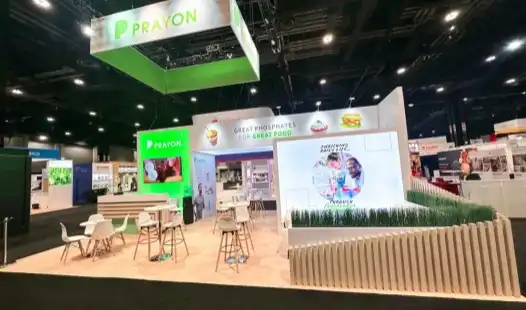
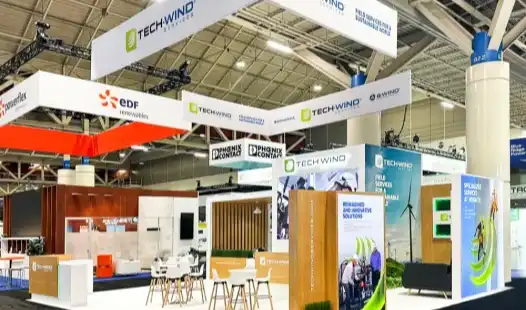
Custom Exhibit Designer for SEMA: What Should You Look For in 2026?
Choosing the appropriate custom exhibit designer is crucial to your SEMA 2026 trade show success. Your ideal partner turns your car brand's vision into a three-dimensional marketing environment that engages, fosters meaningful discussions, and generates ROI. As SEMA returns to Las Vegas from November 3-6, 2026, exhibitors compete for audience engagement, making intelligent custom exhibit designer selection increasingly important. You need a fabrication partner that knows automotive culture, meets tight show schedules, handles Las Vegas union labour well, and develops structures that survive drayage with museum-quality finishing.

Understanding the Role of a Custom Exhibit Designer at SEMA
SEMA is still the best place for people who work in the car industry to show off new products, and your booth is your temporary home base. A good exhibit designer does a lot more than just put up walls and graphics; they create experiences that help you reach your sales goals.
From Concept to Fabrication: The Designer's Workflow
In strategic discovery sessions, designers work with marketing managers, sales directors, and sourcing teams to determine how to position your brand, what goods to highlight, and how visitors should navigate your site. Bespoke display manufacture combines aluminium extrusions, high-density fibreboard, and architectural-grade acrylics tailored to your space, unlike modular rental systems. Designers create detailed CAD drawings of the final product from all angles. This lets your team examine sight lines, storage integration, and technology placement before constructing. This collaboration reduces on-site surprises and maintains projects on budget.
Modular Flexibility vs. Fully Bespoke Solutions
Smart procurement managers are asking for "modular custom" designs that are both unique and flexible more and more. Intelligent modularity means that a 20x20 island booth can be changed into a 10x20 inline space for smaller shows. This protects your capital investment over multiple events. Fully customized structures are the best way to make your brand stand out, but you need to think carefully about the costs of keeping and the ways you can't change the structure. Your designer should give you both choices along with an honest cost-benefit analysis. This will help you match the answer to the strategy.
Creating Immersive Automotive Experiences
At SEMA, people look forward to getting their hands on performance parts, suspension systems, and car accessories. Good designers divide spaces into useful areas, such as areas for showing off products with the right lighting for close study, private meeting rooms with soundproofing for negotiating contracts, and interactive digital displays that show off technical specs. The fabrication must be able to hold displays of heavy machinery, handle the heat from demo equipment, and include ADA-compliant walkways that all visitors can use.

Key Criteria for Choosing the Right Custom Exhibit Designer in 2026
Your process for choosing a designer needs more than just comparing prices. It needs organized review. Your whole SEMA investment could be at risk if you choose the wrong partner. Deadlines could be missed, quality could be low, or costs could go up.
The F-1 Criteria Screening Approach
Using precision from motorsports as an example, this framework rates designers on five important factors. When judging creativity, they look at how well they can translate your brand's DNA into physical stories and how diverse their portfolio is. Technical skill checks how good an engineer someone is, especially for complicated projects that need two-story buildings or built-in sound systems. With SEMA's set November timeline, lead times are very important.
Designers who have fabrication sites in Las Vegas don't have to worry about shipping across the country. To stay within a budget, you need clear price models that break down fabrication, I&D work, drayage, and storage into their own categories. As companies look for LEED-compliant materials and reusable structures that have less of an impact on the environment, sustainability is becoming a bigger factor in their buying decisions, and this is where a custom exhibit designer can make a significant difference by integrating eco-friendly materials and modular designs without compromising cost transparency.
Demand Matching for Different Company Profiles
Startup founders who want to make new automotive products need designs that are both cost-effective and have the most visual impact in a 10x10 or 10x20 space. Your creator should come up with creative ways to solve problems by using light materials, smart graphics, and storage solutions that keep the booth looking nice while still holding supplies.
Large OEMs and well-known manufacturers need large island booths with high-tech infrastructure, such as meeting rooms with temperature control, safe storage for products, and strong electricity systems that can handle multiple presentations at once. When it comes to matching solution complexity to client scale, the best designers keep a wide range of work in their portfolios to show that they are skilled across this range.
Portfolio Review and Client Testimonials
Evidence is the first step in reducing risk. Ask for case studies from past SEMA or AAPEX projects, and make sure to ask for photos of the finished builds as well as renderings. Client recommendations from people in the same industry as you are very credible. For example, procurement managers at rival brands who have dealt with similar problems can give you a good idea of what to expect. Ask specifically about how they handle change orders, how they solve problems on-site during installation, and how they help customers after the show. Designers who can't give current references from the car business or who only show rendering galleries without fabrication proof are red flags.

Emerging Trends in Custom Exhibit Design for SEMA 2026
As technology changes and people's standards change, trade show settings change quickly. If you keep up with new trends, your brand will be seen as a leader in its field instead of a fan.
AR/VR Integration and Digital-Physical Convergence
Augmented reality apps let visitors see performance parts installed on their exact model of vehicle. This creates a personalized experience that makes people more likely to buy. Virtual reality experiences put people in racing situations that show how well a product works in tough conditions. The challenge of manufacturing is to incorporate technology infrastructure, such as power distribution, network connection, and equipment mounting, into designs that look good and don't take away from the authenticity of the vehicle. Early on in the process, your designer needs to work with your AV providers to make sure that the structural supports and wire handling meet technical needs without sacrificing the look of the room.
Sustainability and Eco-Conscious Materials
Corporate responsibility rules are having a bigger effect on display choices. Designers now ask for low-VOC paints, FSC-certified wood products, and metal structures that can be recycled to leave smaller marks on the earth. Over the course of three to five years, modular designs that reuse 70 to 80% of their parts across multiple shows save money and help the environment. People who go to SEMA, especially younger buyers, notice these promises, which improves how people think of the brand in ways other than product quality. As part of your designer evaluation, ask for documentation on where the materials came from and plans for disposal at the end of their useful life.
Interactive Demonstrations and Experiential Zones
In the competitive world of cars, static representations of products are no longer enough. Winning booths have areas for practical demonstrations where people can try out products, areas for physical discovery with cutaway parts that show technical details, and hospitality areas where people can talk to each other over drinks.
The fabrication must meet practical needs, such as having reinforced floors for heavy machinery, enough air flow for demonstration engines, and soundproofing for areas with a lot of foot traffic. A custom exhibit designer understands that these demands go beyond standard layouts, and designers who have worked with car uses before know these subtleties by heart, so they don't have to do any expensive fixes during installation.

Comparing Custom Exhibit Designers: What Sets the Best Apart?
Not every manufacturing partner is as valuable as the others. Knowing what makes one company different from another helps procurement teams make smart choices that are in line with their strategic goals.
Portfolio Quality and Industry Specialization
Generic event marketing firms don't always have the automotive-specific knowledge that SEMA needs. Look for designers whose portfolios show a lot of work for automakers, companies that make performance parts, and aftermarket suppliers. They know the terms used in the industry, know what is needed for technical demonstrations, and are ready for problems that may come up at the show, like how to manage tire displays or make room for vehicle lifts. This narrowing down speeds up project timelines and cuts down on the misunderstandings that happen when generalist designers go into new areas.
Transparent Pricing and Value Engineering
In-depth prices should include figures for manufacturing labor, materials, graphics production, I&D supervision, drayage, and storage fees for more than one show. Be wary of bids that seem too low and then try to hide costs in change orders after the job starts. Value engineering talks show that the designer cares about your budget by suggesting different materials that meet your esthetic goals at lower costs or phased fabrication methods that focus on high-impact elements while staying within your budget. Working together to solve problems builds trust and keeps long-term relationships safe.
Local Las Vegas Advantage vs. National Firms
The fact that SEMA is in Las Vegas makes logistics a little more complicated. Designers who work with local fabrication sites and have built relationships with convention center labor groups are better able to handle the challenges of installation than designers who work with faraway companies that ship finished structures across the country.
During installation and show days, local teams supervise on-site and fix problems right away instead of organizing from afar. They know what the Nevada fire marshal wants, what the venue's electrical needs are, and the best time for drayage. Even though national firms have a wider range of services, the local advantage often outweighs the perceived prestige, especially for projects that need to be done quickly or for exhibitors who are new to how SEMA works.

The Custom Exhibit Design Process Explained for SEMA Clients
Knowing the whole process from start to finish helps procurement managers set reasonable goals and keep good relationships with designers throughout the lifecycle of a project.
Initial Objective Setting and Space Planning
Discovery meetings are the first step in the process. This is where you set measurable goals, such as lead generation targets, product launch priorities, and VIP hospitality needs. Designers turn these goals into space needs and suggest booth layouts that make the best use of functional zones and traffic flow. When planning spaces, the position of the SEMA floor, the booths next to it, and the ways that attendees move around all affect how to set up sight lines. Budget talks set limits on what is possible before design work starts. This keeps time and money from being spent on ideas that can't be built.
Design Prototyping and Approval Workflows
Designers show you creative drawings that show different ways to reach your goals. Interactive 3D walkthroughs let your team actually experience proposed designs, checking out dimensions and looks before committing to making them. During this time, you choose the materials, the colors, and the lights.
All parties, such as marketing, sales, and operations, should be involved in approval processes to make sure there is agreement before moving forward. A skilled custom exhibit designer can help streamline these reviews by anticipating potential issues early, but when changes are made after fabrication starts, they lead to expensive change orders and delays in the schedule. This is why it is so important to carefully review the design phases.
Production Logistics and Quality Control
Once a plan is approved, it is put into manufacturing, where raw materials are turned into finished parts. Reliable designers give you production schedules with checkpoints at key points in the process where you can visit the facilities to see how things are going. Quality control procedures make sure that the specs for the woodwork are within the acceptable range, that the graphics stick well, and that the finishes match approved samples. Fabrication should be finished by early October for SEMA 2026 exhibitors, giving them time for staging, which is a full pre-assembly at the fabrication facility that finds and fixes problems before installation starts in Las Vegas.
On-Site Installation and Show Support
At the Las Vegas Convention Center, installation is done by union workers under the supervision of your designer's installation manager. This management is very important because unique structures need to be put together in a certain way that regular workers might not understand. Usually, it takes 1-2 days to install a complex island booth, so experienced designers make sure they budget enough time for the job. This way, they don't have to rush through overnight builds that lower the quality. During show days, adaptable designers are still available to make small changes, fix problems with technology, or fix damage. When a show is over, the parts are carefully packed away so that they are safe while they are stored and ready to be used again.
Since SEMA 2026 is happening at the same time as AAPEX (November 3–6) in Las Vegas, exhibitors will have shorter times to set up their displays and more work to do to make sure everything runs smoothly. Starting your look for a designer now, in early 2025, gives you enough time to finish this big project. Later in November, other big trade shows like RE+ (November 16–19 in Las Vegas), Supercomputing SC26 (November 16–19 in Chicago), and IAAPA Expo (November 16–20 in Orlando) create demand for fabrication resources across the entire industry. This is why early SEMA commitment is a smart business move.

Conclusion
Finding the right custom exhibit designer for SEMA 2026 means finding a balance between creativity, technical know-how, realistic budgets, and organizational know-how. The most important trade show for the automotive aftermarket needs a fabrication partner that knows the ins and outs of the industry, works with your tight deadlines, and delivers structures that turn floor space into brand environments that make money.
Designers with proven SEMA experience, clear pricing models, and local skills in Las Vegas that make installation planning easier should be given priority. Choosing the right partner will pay off in the form of better brand awareness, more qualified leads, and exhibit assets that help you reach your marketing goals across multiple show cycles. If you start planning strategically now, your company will have a strong presence at SEMA in November 2026.
FAQ
When Should I Start Looking for a Designer for SEMA 2026?
You should start your look about 6 to 9 months before the show, in February to May 2026. This schedule includes the whole process of planning, manufacturing, and approval, which usually takes 12 to 16 weeks. Starting early also makes sure that your favorite designer is available, since the best firms book up quickly. If your booth has complicated engineering, like double-deck towers or a lot of audiovisual equipment built in, add another month to allow for planning and getting permits.
How Do I Balance Creativity with Budget Constraints?
Having open conversations about budgets during the first meetings helps designers come up with solutions that are realistic. Value engineering lets you be creative while staying within your budget. For example, you could prioritize a beautiful front facade while using cheaper materials in the back of the house. Fully customized structures are more expensive than modular custom designs, but they have a bigger visual impact. Simple frameworks can be turned into memorable brand statements with strategic graphic applications. Reputable designers see limited budgets as opportunities to be creative, not as problems to be solved.
What Makes Las Vegas-Based Designers Advantageous for SEMA?
Local designers take away the risks of moving across the country, cut down on drayage costs, and offer hands-on installation management that is familiar with how convention centers work. They have good working ties with union members, know what the venue's electricity and rigging needs are, and can handle problems right away. Because they are close to each other, it's easy to check out the stage area and see how your booth looks before the show.
Partner with HR Exhibits Service, Inc. for Your SEMA 2026 Success
At HR Exhibits Service, Inc., we help Las Vegas exhibitors get ready for SEMA 2026 and beyond by using our decades of experience in trade show construction. Our local Las Vegas facility and experienced team give international and out-of-state exhibitors all the help they need to get started in the competitive automotive aftermarket. We know that showing far from home can make things more difficult, like coordinating shipping, getting used to new venue rules, and managing union workers, which can throw off even the best-laid plans.
That's why our on-site skills are important. We take care of everything, from coming up with the initial idea to installing it at the Las Vegas Convention Center, so you can focus on getting people to interact with your booth and closing deals. Our design team comes up with solutions that fit your brand's positioning and your budget, whether you're introducing new automotive products in a small 10x20 space or getting people's attention with a big island booth.
We help exhibitors in the industrial, technology, medical equipment, energy, and consumer goods industries get ready for events in Las Vegas in November 2026, such as SEMA, AAPEX, and RE+. You can talk about your SEMA 2026 goals with a custom exhibit designer and supplier who gets results by emailing info@hrexhibits.com or visiting hrexhibits.com.
References
1. Anderson, M. & Roberts, K. (2024). Trade Show Exhibit Design Trends: Automotive Industry Applications. Journal of Event Marketing Strategy, 18(3), 112-128.
2. Chen, L. (2025). Custom Fabrication Logistics for Major Trade Shows: A Procurement Manager's Guide. B2B Marketing Quarterly, 41(2), 67-84.
3. Donovan, P. (2024). Sustainable Materials in Temporary Architecture: The Evolution of Trade Show Exhibits. Environmental Design Review, 29(4), 203-219.
4. Martinez, S. & Thompson, J. (2025). ROI Analysis of Custom vs. Rental Exhibits at Automotive Trade Shows. Exhibition Management Today, 33(1), 45-61.
5. Park, H. (2024). Digital Integration in Physical Exhibit Environments: AR/VR Applications at Trade Shows. Technology and Marketing Convergence, 12(2), 89-107.
6. Wilson, R. (2025). Las Vegas Convention Services: Operational Best Practices for Large-Scale Trade Show Exhibitors. Venue Management Journal, 37(3), 134-152.

Embark on Your Journey to Exceptional Exhibitions! Contact HR Exhibits Today to Transform Your Vision into Global Success.
HR Exhibits Service, Inc.