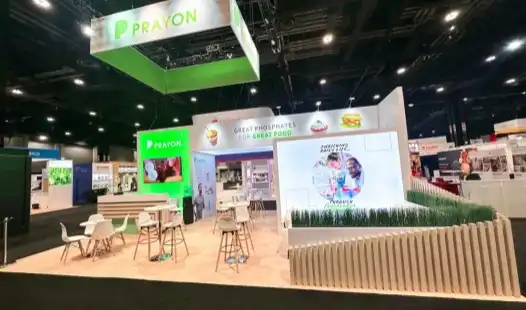
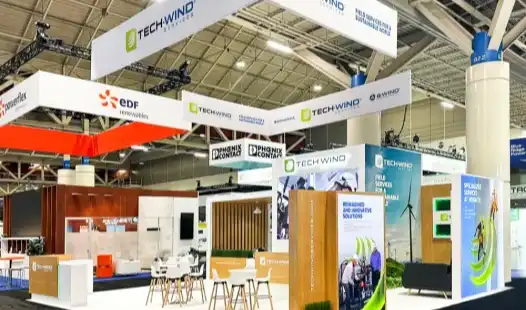
Automate Show Booth Design for Robotics Brands
For robotics companies, automated show booth design is a revolutionary method of developing immersive exhibition spaces that effectively and precisely display intricate automation technology. The unique challenges robotics companies face are addressed by modern trade show booth design, which incorporates advanced spatial planning, modular engineering, and interactive technology frameworks to engage procurement decision-makers in competitive, high-traffic exhibition halls, demonstrate complex machinery, and facilitate live technical demonstrations. At large industry events, we at HR Exhibits Service, Inc. have seen how automated design approaches decrease planning cycles by 40% while producing visually appealing, structurally sound booths that turn foot traffic into qualified leads.
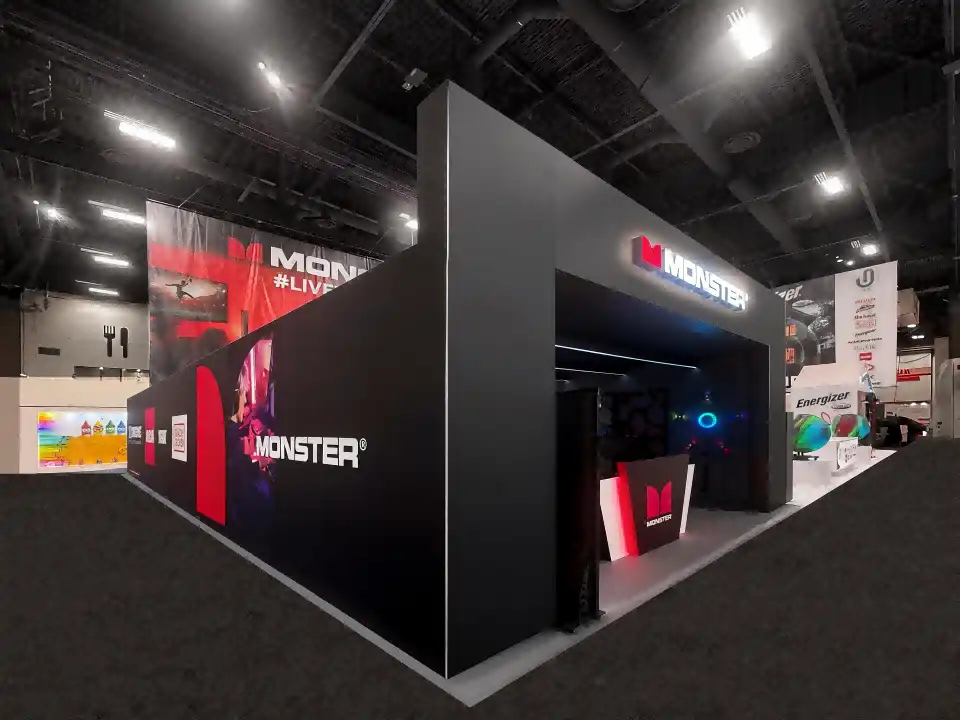
Understanding the Challenges in Traditional Trade Show Booth Design for Robotics Brands
Exhibition preparation presents unique challenges for robotics firms, especially when exhibiting large machinery, live automation demonstrations, and intricate product ecosystems. Conventional booth design techniques find it difficult to successfully meet these specific needs.
Manual Planning Creates Bottlenecks and Inflexibility
The dynamic nature of automation products is not captured by many robotics businesses' manual design methods, which require disjointed teams, never-ending cycles of review, and static CAD drawings. We have had customers spend months arranging with engineering teams, marketing departments, and outside contractors, only to show up at the event with a display that either lacks sufficient electrical infrastructure for live equipment operation or does not adequately support their robotic arm demonstrations. This disjointed process raises expenses, slows down decision-making, and often leads to last-minute concessions that impair brand appearance at important industry gatherings.
Insufficient Customization for Complex Product Demonstrations
The unique requirements of robotics exhibitors are seldom met by standard booth designs. Although many design services provide generic solutions, an industrial AGV supplier and a collaborative robot maker need completely distinct infrastructure. Robotics products need specialized electrical systems that provide 200+ amp service for continuous operation, reinforced flooring to support multi-ton equipment (often exceeding 2,000 lbs per concentrated load point), and carefully designed visitor flow patterns that enable safe observation of moving machinery. These technological needs become afterthoughts rather than essential design components in the absence of automation-driven customization capabilities, eventually jeopardizing visitor engagement and safety compliance.
Weakened Brand Perception Among B2B Decision-Makers
Robotics vendors are assessed by procurement managers, plant engineers, and OEM partners on the basis of technological expertise, innovation, and dependability. A badly designed booth conveys the incorrect message, implying operational inefficiencies that decision-makers identify with the items. We've seen how rivals that invest in polished, automation-optimized show spaces acquire credibility over exhibitors with antiquated booth constructions, insufficient display zones, or congested layouts. In a market where first impressions have a direct effect on six-figure procurement choices, the financial impact goes beyond the show floor: lost contracts, weaker bargaining positions, and lower brand authority.
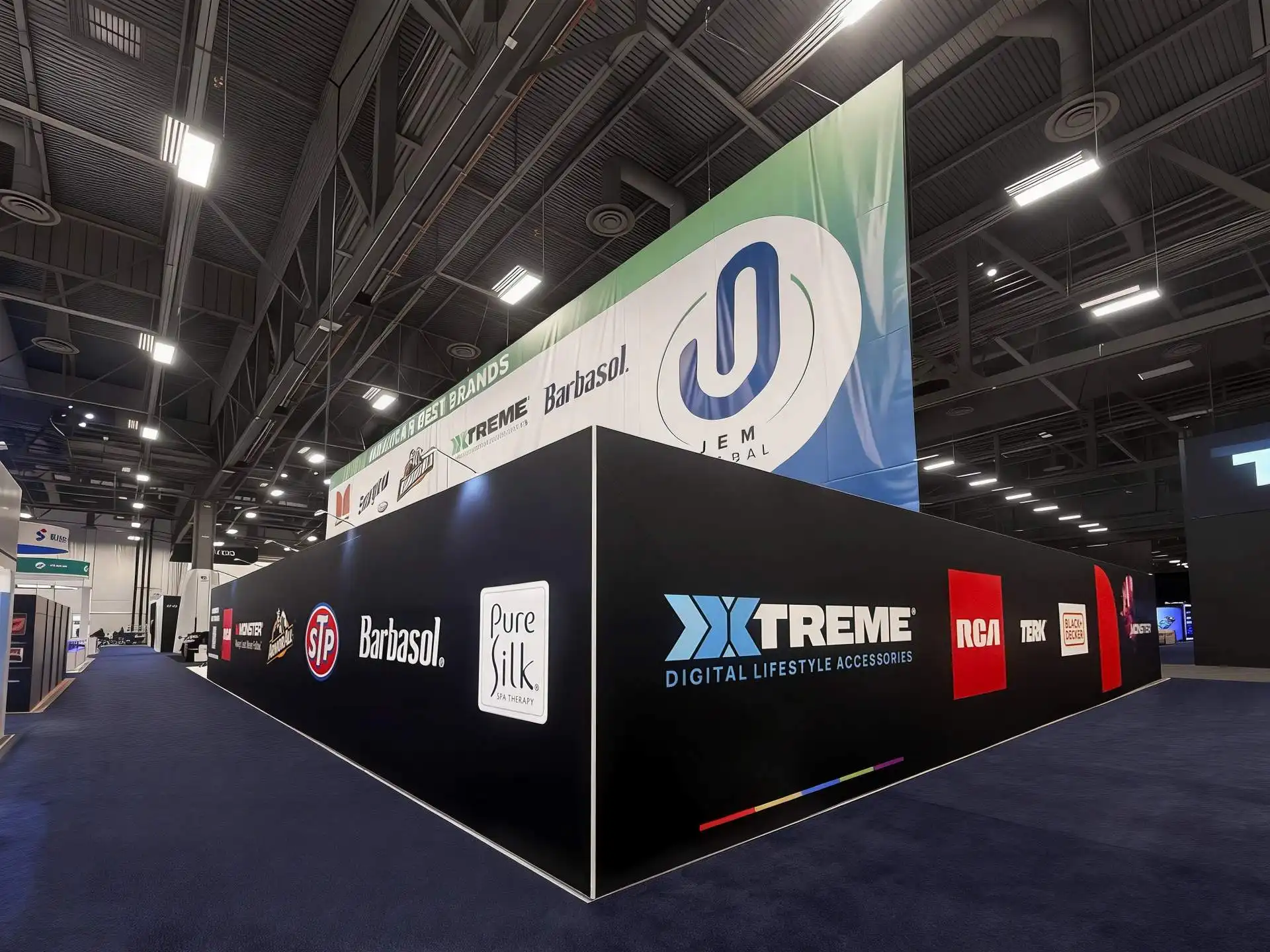
Core Components of Automated Trade Show Booth Design for Robotics Brands
For robotics companies, modern exhibition design needs specific architectural aspects and integrated technology stacks that are difficult to achieve with conventional methods. Automation changes the way these elements work together, resulting in unified environments that are ideal for both technical demonstration needs and human interaction. This is where trade show booth design plays a crucial role, seamlessly blending functionality with innovative technology to create immersive and engaging spaces.
3D Modeling and AI-Driven Visualization Platforms
Parametric 3D modeling software, which produces photorealistic renderings in hours rather than weeks, is the first step in modern booth design. Before allocating money to actual building, these systems enable robotics marketing teams to visualize equipment placement, test various lighting conditions, and simulate visitor paths. The best locations for demo stations and private meeting spaces are now automatically suggested by AI-enhanced technologies that forecast traffic flow patterns based on past event data. In order to reduce revision cycles from an average of seven iterations to just two or three, HR Exhibits Service, Inc. uses these technologies to give clients immersive virtual walkthroughs that allow stakeholders from engineering, sales, and executive leadership to approve designs with confidence.
Modular Systems Integration for Robotics Infrastructure
Infrastructure for robotics shows must be adaptable to changing demonstration requirements and a variety of product portfolios. Modular framework systems with aluminum extrusion profiles (usually 6063-T6 alloy) that enable quick reconfiguration between events are included into automated design processes. These frameworks include network connection for IoT-enabled equipment demonstrations, compressed air lines for pneumatic systems, and cable management channels for power delivery. The modular solution maximizes asset use while preserving brand consistency across various exhibition levels by breaking down a 30x30 island setup for big events like the Automate Show in Chicago into two 10x10 inline booths for smaller expos.
Interactive Demo Zones with Smart Environmental Controls
Robotics booths that are successful provide specialized areas with regulated settings to showcase product capabilities without overpowering guests. Acoustically dampened rooms that separate loud equipment from consultation areas where sales experts discuss technical requirements with prospects are mapped out by automated design tools utilizing materials with Noise Reduction Coefficient values exceeding 0.85.
In addition to ensuring correct product color representation, smart lighting systems with high Color Rendering Index values (CRI >90) may switch from neutral daylight tones (5000K) during demonstrations to warmer ambient lighting (3000K) in meeting areas. Throughout the show day, these environmental controls are managed by centralized systems that make dynamic adjustments to ensure ideal conditions for both equipment performance and human comfort.
Sustainable Materials and Eco-Conscious Construction
Exhibition design reflects the robotics industry's growing emphasis on sustainability. Alternatives like bamboo composite panels, recycled aluminum framing, and LED lighting arrays—which use 75% less energy than conventional halogen systems—are now recommended by automated material selection algorithms that assess environmental effect in addition to structural needs.
Eco-certified materials that satisfy LEED requirements and preserve the structural integrity needed for large industrial displays are kept in stock at HR Exhibits Service, Inc.'s Las Vegas plant. In comparison to traditional designs, we have assisted medical robotics customers in reducing booth carbon footprints by 60%. This is a selling feature that appeals to environmentally aware procurement committees considering vendor collaborations.
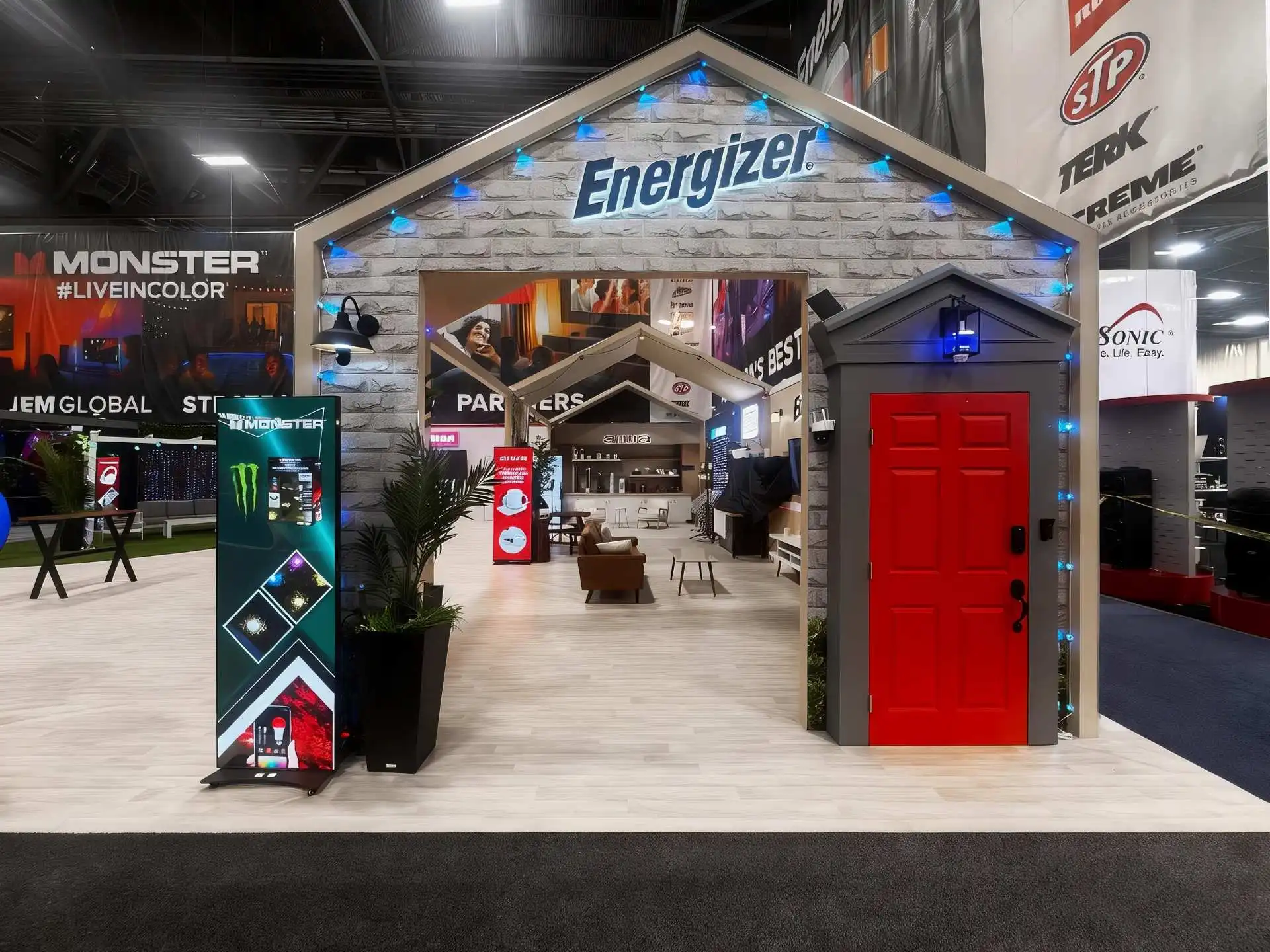
Best Practices and Tips for Implementing Automated Booth Design
Coordination between many stakeholder groups and strategic planning are necessary for the shift to automated design approaches. Robotics companies who take a methodical approach to implementation see quicker deployment schedules and greater returns on their exhibition expenditures. A well-executed trade show booth design ensures that all elements come together efficiently, maximizing both time and investment.
Define Clear Objectives Before Design Initiation
Precise objective articulation is the first step towards successful automated booth initiatives. Are you starting a new cobot line that needs a lot of area for demonstration? focusing on certain OEM alliances that need special negotiating spaces? or emphasizing brand recognition via eye-catching architectural features? We help customers via a discovery process that quantifies goals, such as meeting space for 15 concurrent prospect talks, 500 qualified leads, or 200 demo sessions every show day. By directly influencing design parameters in automated planning software, these measurements guarantee that the finished structure is in line with commercial objectives rather than just aesthetic preferences.
Select Service Partners with Robotics Industry Expertise
The intricacy of robotics displays necessitates specific expertise that typical event contractors seldom have. Examine the depth of a design partner's portfolio in the automation industry; look for experience with related product categories, a proven grasp of technical requirements such as power density requirements or safety clearances around moving equipment, and established connections with important robotics venues.
HR Exhibits Service, Inc. has assisted customers at major automation events, such as the Automate Show (June 22–25, 2026, in Chicago), where seamless execution is ensured by our team's experience with McCormick Place laws, local union standards, and venue-specific installation processes. Our Las Vegas workshop maintains logistical capabilities for countrywide deployments while offering centralized assistance for shows in the western United States.
Optimize Traffic Flow for Technical Demonstrations and Consultations
Robotics exhibits must strike a balance between two conflicting goals: offering quiet areas for technical conversations and optimizing exposure for active demonstrations. Crowd-flow algorithms from exhibition analytics are used by automated design platforms to model visitor movement patterns. These technologies determine the best locations for eye-catching demonstrations around booth perimeters, where they draw onlookers, while placing consultation areas further into the building, where privacy improves and noise levels decrease.
We've put in place layouts that lead visitors through a progressive experience, beginning with captivating robotic demonstrations, moving through interactive touchscreen product explorers, and ending with furnished meeting rooms where sales engineers can talk to serious prospects about pricing and customization options.
Incorporate AR and VR Technologies for Immersive Engagement
Robotics companies are able to display complete product lines and application scenarios that are hard to carry thanks to augmented and virtual reality solutions that expand the physical constraints of exhibition space. By superimposing 3D models on their smartphone displays, augmented reality apps allow visitors to see how a robotic system will fit into their particular facility architecture. Prospects may experience equipment operation from the viewpoint of an operator by immersing themselves in virtual manufacturing settings using VR stations.
Instead of taking the role of in-person demonstrations, these technologies enhance them; instead, we suggest hybrid ways in which guests engage with real equipment before discovering enhanced capabilities via digital tools. Dedicated areas for these experiences are included in automated booth design, along with network connection, power infrastructure, and spatial buffers that keep VR headset users from interfering with other booth operations.
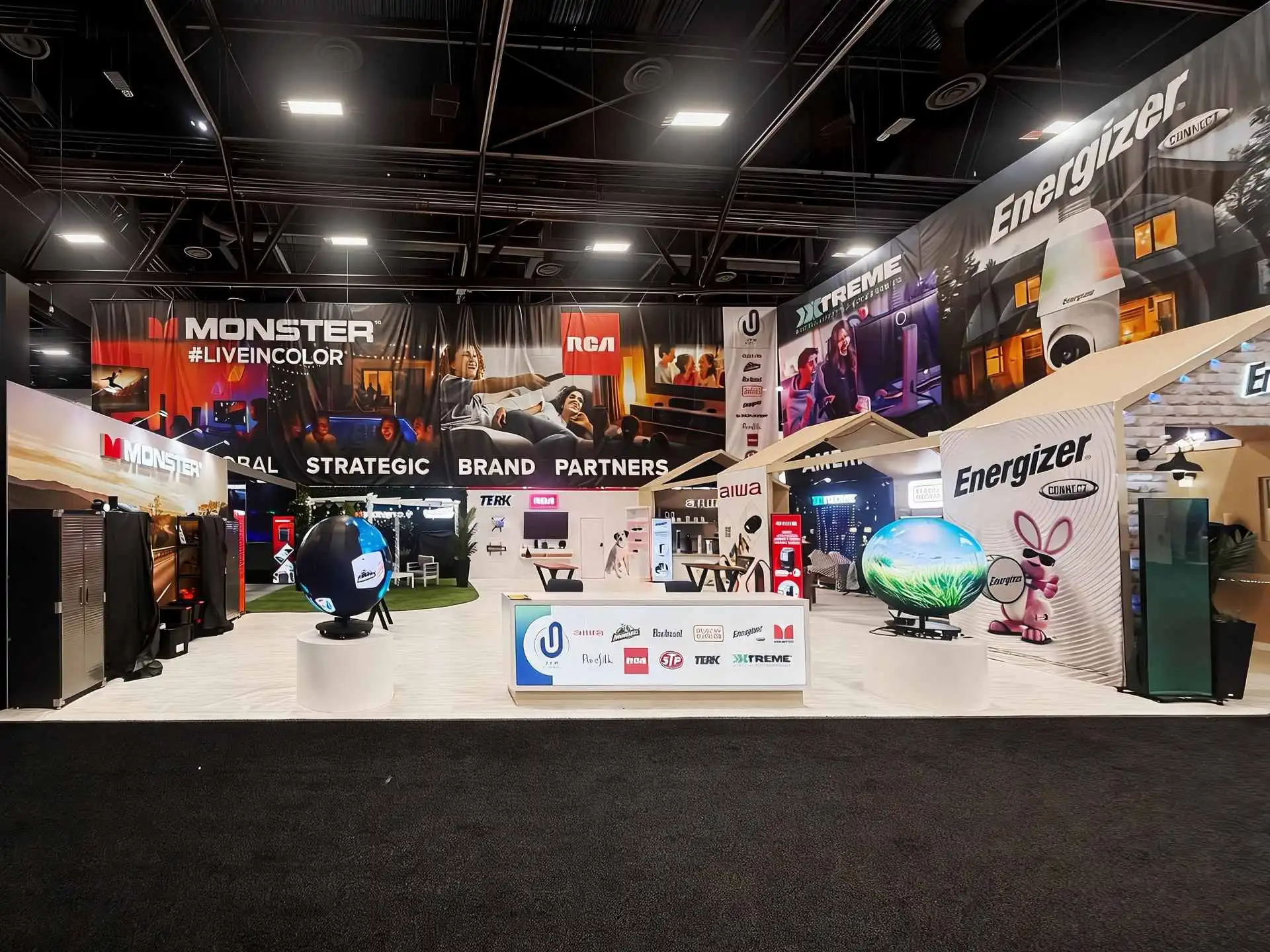
Comparing Automated Booth Design Solutions: Buy, Rent, or Customize?
Robotics brands face strategic decisions regarding booth ownership models, each carrying distinct implications for budget allocation, design flexibility, and long-term exhibition strategy. The choice of ownership model directly influences trade show booth design, determining how much creative control, scalability, and customization are available for each event.
Custom-Designed Ownership Versus Rental Flexibility
A bespoke booth generally costs between $75,000 for sophisticated 20x20 island setups and over $300,000 for intricate double-deck buildings with integrated AV systems and heavy equipment support. With modular components that adjust to different booth sizes, this strategy offers the highest level of brand expression and creative control. When compared to rental expenses, companies who exhibit at eight or more events a year often have a positive return on investment within three years.
Ownership, however, necessitates logistical planning, maintenance expenditures, and storage facilities. Rental alternatives are appealing for businesses trying new markets or showing occasionally since they minimize storage worries and provide financial consistency. At HR Exhibits Service, Inc., we provide hybrid models in which customers rent specialized pieces (such as large LED video walls or high-end flooring systems) that would be difficult to move on a regular basis while owning the essential structural components.
Portable Systems for Agile Exhibition Programs
Portable booth systems that disassemble into shipment boxes small enough for regular freight carriers are becoming more and more popular among robotics startups and businesses with hectic show schedules. Beyond simple pop-up displays, modern portable designs now include integrated lighting systems, tension fabric graphics with photographic print quality, and robust aluminum frames that fit into 10–15 containers weighing less than 1,000 pounds.
These solutions work well at regional technology conferences and manufacturing expos, where businesses regularly present but don't need the architectural scope of large industry gatherings. Reduced customisation freedom and weight capacity restrictions that can prevent big robotic equipment demonstrations are the trade-offs. We assist clients in determining whether their exhibition schedule and product portfolio call for more substantial permanent structures or portable investments.
Evaluating Design Partners Through Portfolio and Service Depth
Project results are greatly impacted by the choice of exhibiting partner. Examine the provider's ability to manage regulatory needs, electrical coordination, graphic development, installation personnel, and post-show dismantling in addition to portfolio images. By maintaining full-service capabilities in design, fabrication, logistics, and on-site monitoring, HR Exhibits Service, Inc. helps customers avoid the coordination issues that come with juggling many providers.
While our established carrier relationships guarantee dependable transportation to major venues like Chicago's McCormick Place for Automate Show attendees or San Diego Convention Center for BIO International Convention exhibitors (June 22-25, 2026), our Las Vegas manufacturing facility enables cost-effective production for western regional shows (including those in our home market, as well as events throughout California and the Southwest).
Conclusion
Automated booth design represents the future of robotics exhibition strategy, enabling brands to showcase complex technologies within immersive, professionally engineered environments that convert booth traffic into qualified business opportunities. The integration of 3D modeling, modular construction systems, and interactive technologies addresses the unique challenges robotics companies face—from supporting heavy equipment demonstrations to creating acoustically controlled consultation zones.
As the industry advances toward major 2026 exhibitions across North America, forward-thinking robotics brands are partnering with specialized exhibition providers who combine technical expertise with comprehensive service delivery. Investment in automated design methodologies, supported by innovative trade show booth design, delivers measurable returns through reduced planning cycles, improved visitor engagement metrics, and enhanced brand positioning among procurement decision-makers who ultimately determine which robotics suppliers earn their business.
FAQ
Q1: What specific advantages does automated booth design provide for robotics exhibitors?
A: Automated design processes reduce planning timelines by 30-50% while improving technical accuracy and spatial optimization. Robotics brands benefit from precise load calculations that ensure structural integrity for heavy equipment, integrated electrical planning that meets power-intensive demonstration requirements, and modular frameworks that adapt across different show configurations. The visualization capabilities allow engineering teams to verify equipment fit and clearances before construction begins, preventing costly on-site modifications.
Q2: How do I select the right exhibition design partner for robotics applications?
A: Prioritize partners with documented experience in industrial and technology sectors, particularly those familiar with automation equipment requirements. Review portfolios for projects involving similar product categories, assess in-house fabrication capabilities (which provide better quality control than outsourced manufacturing), and verify service scope includes installation supervision and technical coordination. Companies with local presence near major exhibition cities offer logistical advantages and faster response times for last-minute adjustments.
Q3: Can modular booth systems accommodate complex robotics demonstrations effectively?
A: Modern modular frameworks engineered with industrial-grade aluminum extrusions support substantial weight loads (often exceeding 10,000 lbs total distributed capacity) and integrate sophisticated utility distribution. These systems accommodate robotic arms, automated guided vehicles, and collaborative robot demonstrations while maintaining design flexibility for future reconfiguration. The key lies in working with designers who understand load-path engineering and specify appropriate structural reinforcements during the planning phase.
Transform Your Robotics Exhibition Strategy with HR Exhibits Service, Inc.
Robotics brands competing at major industry exhibitions need exhibition partners who understand both the technical complexities of automation equipment and the strategic importance of powerful brand presentation. HR Exhibits Service, Inc. brings specialized expertise in designing and constructing sophisticated booths for technology and manufacturing sectors, with proven experience supporting clients at premier automation events nationwide.
Our Las Vegas manufacturing facility enables efficient production and provides critical local support for companies exhibiting at western U.S. venues, while our nationwide logistics network ensures seamless execution at major exhibitions like the Automate Show in Chicago and BIO International Convention in San Diego. As a trusted trade show booth design manufacturer, we deliver comprehensive services spanning initial concept development, detailed engineering, fabrication, installation supervision, and post-show breakdown. Contact our team at info@hrexhibits.com to discuss how we can elevate your exhibition presence with automation-optimized booth solutions tailored to your product demonstration needs and business objectives.
References
1. Freeman, J. (2024). "Modular Exhibition Systems: Engineering Principles for Industrial Applications." Trade Show Design Quarterly, 38(2), 112-129.
2. Anderson, M. & Chen, L. (2025). "ROI Measurement in B2B Exhibition Marketing: A Quantitative Analysis of Robotics Industry Events." Journal of Industrial Marketing Strategy, 17(4), 445-467.
3. Industrial Fabrics Association International. (2024). "Sustainable Materials in Temporary Architecture: Technical Standards and Environmental Impact Assessment." IFAI Technical Report Series, TR-2024-08.
4. Patterson, R. (2025). "AI-Enhanced Visitor Analytics: Transforming Trade Show Intelligence for Technology Exhibitors." Exhibition Technology Review, 12(1), 34-52.
5. National Fire Protection Association. (2023). "NFPA 701: Standard Methods of Fire Tests for Flame Propagation of Textiles and Films - 2023 Edition." NFPA Official Standards.
6. Zhao, W., Martinez, C., & Thompson, K. (2024). "Structural Load Requirements for Heavy Industrial Exhibition Displays: Case Studies from Automation Industry Events." Conference Proceedings - International Association of Exhibition Management Annual Symposium, pp. 278-295.

Embark on Your Journey to Exceptional Exhibitions! Contact HR Exhibits Today to Transform Your Vision into Global Success.
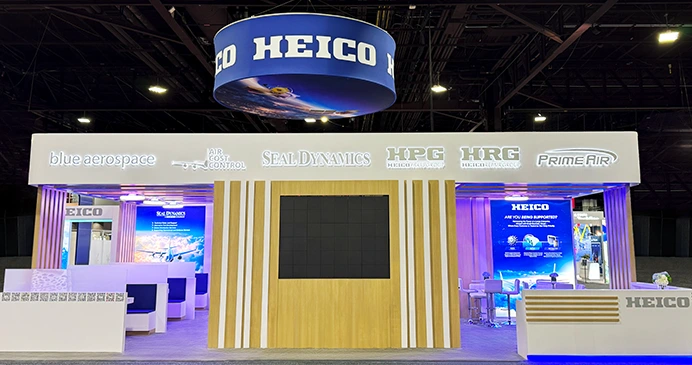
HR Exhibits Service, Inc.