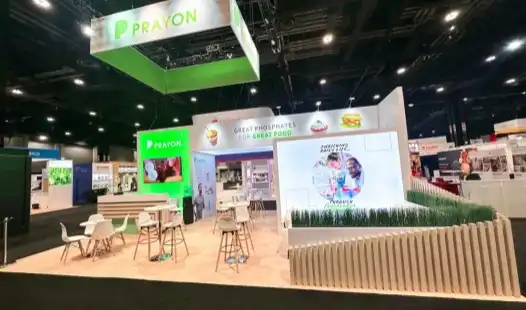
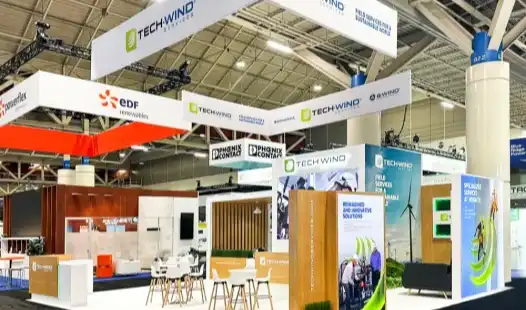
A Guide to High-tech Exhibition Booth Design in 2026
The landscape of exhibition booth design is rapidly evolving, driven by advances in technology and changing expectations for B2B engagement. Modern trade show environments demand sophisticated approaches that integrate cutting-edge innovations with strategic marketing objectives. As we approach 2026, the convergence of artificial intelligence, immersive technologies, and sustainable materials is reshaping how companies conceptualize their presence at major industry events like CES, NAB Show, and IMTS.
The evolution of exhibition booth design reflects broader shifts in business communication and customer engagement patterns. Traditional static displays are giving way to dynamic, interactive environments that capture attention and facilitate meaningful connections between brands and their target audiences. This transformation presents both opportunities and challenges for procurement professionals who must balance technological innovation with budget constraints and logistical considerations.
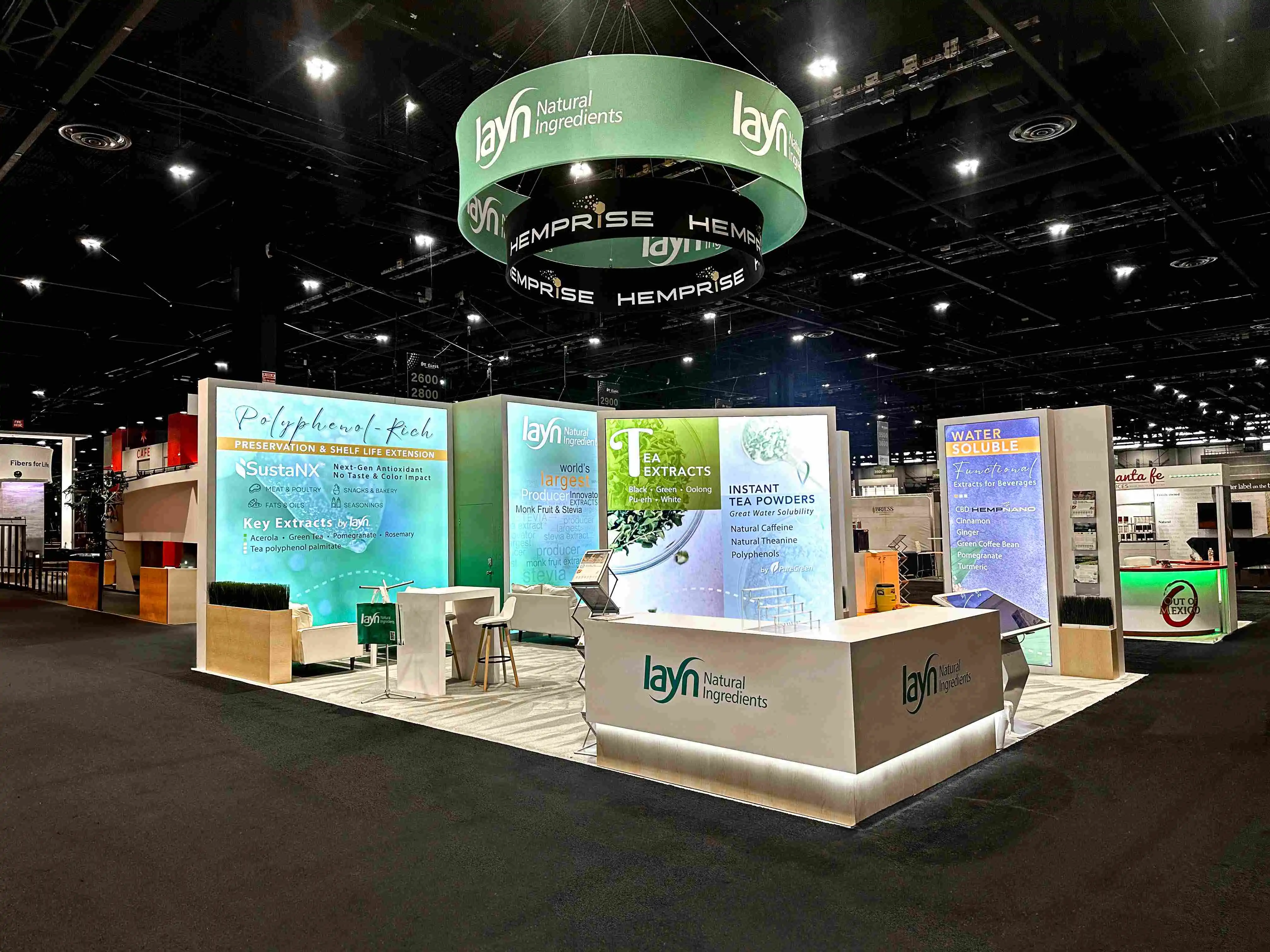
Understanding High-Tech Exhibition Booth Design in 2026
In the year 2026, high-tech display booths are a representation of the seamless integration of cutting-edge technology that provide immersive experiences for visitors. These advanced settings make use of technologies like as augmented reality (AR), virtual reality (VR), and the Internet of Things (IoT) in order to turn conventional display areas into dynamic brand ecosystems.
Immersive Technology Integration
Incorporating augmented reality (AR) and virtual reality (VR) technology allows exhibitors to demonstrate their goods and services in ways that were previously unthinkable due to the limitations of physical space. Visitors have the opportunity to engage in virtual product demos, investigate digital surroundings, and interact with intricate technical requirements via the use of user-friendly interfaces. Companies operating in the industrial and medical industries, where rich product visualization improves knowledge and engagement, stand to profit the most from these technologies.
Personalized information delivery, gesture recognition, and voice activation are some of the features that have been added to interactive digital displays, which have progressed beyond basic touchscreen operations. The ability of these systems to make real-time adjustments in response to the actions and preferences of visitors enables them to provide one-of-a-kind experiences that are meaningful to certain prospects. Utilizing intelligent analytics, engagement metrics may be captured, which provides significant information that can be used for lead qualifying and follow-up tactics.
Sustainable Innovation and Smart Systems
When it comes to the building of contemporary booths, environmental sensitivity is the driving force behind the choice of environmentally friendly materials and energy-efficient technology. The brightness and color temperature of smart lighting systems are automatically adjusted depending on the parameters of the surrounding environment and the patterns of visitor movement. The environmental effect is reduced as a result of these advances, which also result in the creation of places that are more comfortable and engaging for meaningful business interactions.
Digital signage solutions make it possible to offer dynamic material that may be remotely updated from a distant location during the course of the event. Because of this versatility, exhibitors are able to promote a variety of items, modify their pitch in accordance with the demographics of their audience, or display online social media feeds and testimonials in real time.
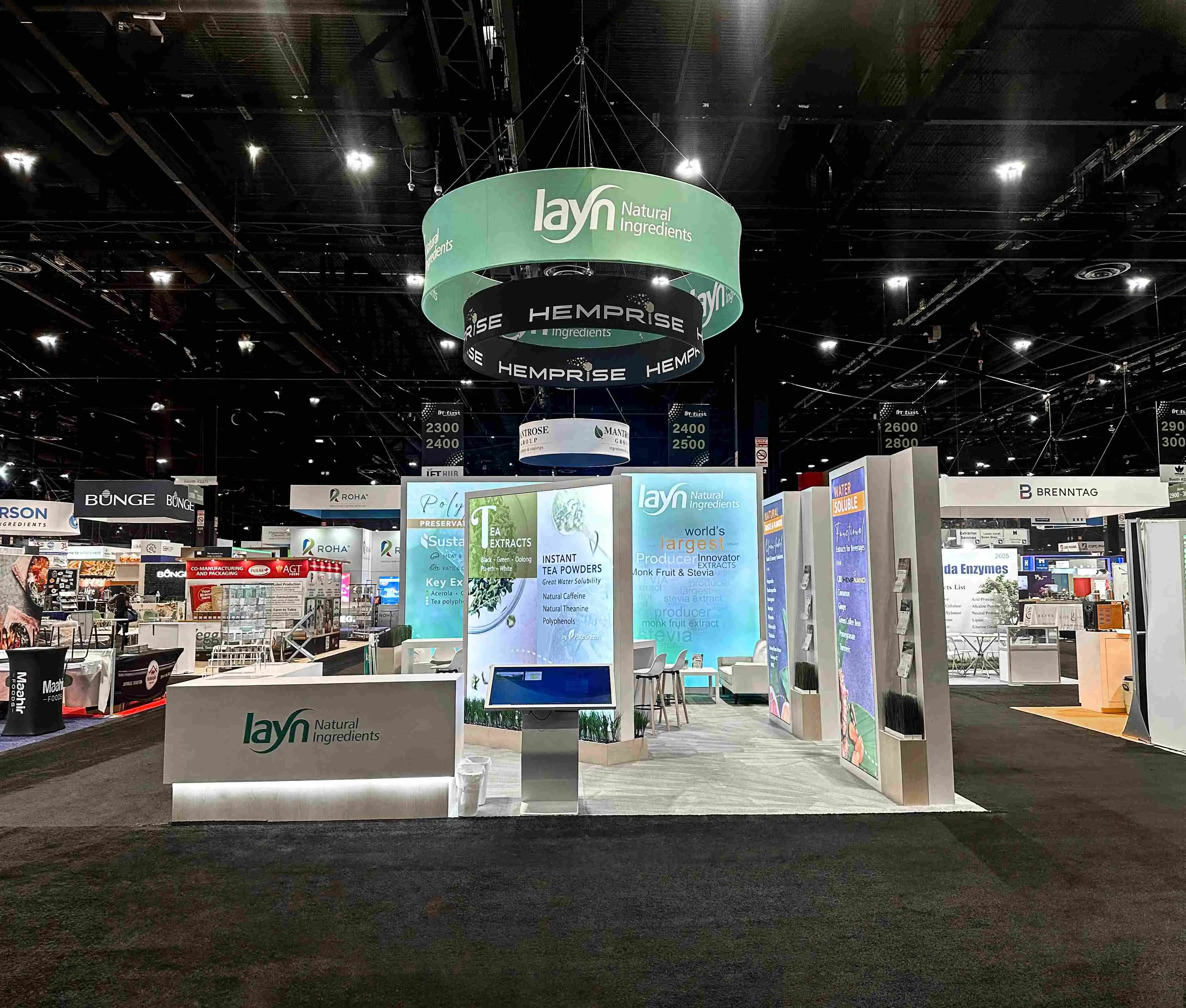
Key Components and Best Practices for Designing a High-Tech Exhibition Booth
In order to create spaces that are conducive to natural visitor flow and fruitful business talks, effective booth design combines careful spatial planning with the integration of innovative technical components. The strategic optimization of the arrangement provides accessibility while also increasing the effect of high-tech elements within the limits of the available square footage. This is a key aspect of exhibition booth design, where functionality and innovation must work in harmony to maximize the impact of the display.
Spatial Architecture and Visitor Experience
Booth layouts that are considered modern include an emphasis on open sightlines that entice visitors into engaging zones while still keeping clear paths that allow for easy mobility. The smart arrangement of interactive features results in the creation of natural gathering areas that stimulate exploration without producing congestion. Sound-dampening technologies are included into private meeting places in order to assist in the facilitation of discreet business talks within the context of busy trade show settings.
Lighting design is an essential component in the process of creating an environment for a brand and drawing attention to important display components. LED systems provide exact color management and energy efficiency, in addition to providing dynamic programming that may adjust to various times of the day or unique presentation needs. Glare on digital displays may be eliminated via the use of professional lighting design, which also creates pleasant ambient circumstances that promote longer visitor interaction.
Technology Infrastructure and Connectivity
In order to meet the power and connection needs of modern digital systems, robust infrastructure design is required. Solutions that use raised flooring allow for the management of cables to be disguised while also supporting the weight of heavy equipment and ensuring that visitors may enter the area safely. When merging server equipment with high-performance screens that emit a significant amount of heat, climate control issues become quite important.
Systems that provide wireless connection allow for numerous people to connect at the same time while yet preserving the security requirements that are necessary for business-related demos. By protecting against interruptions that might harm technology-dependent presentations during crucial business interactions, backup power systems provide protection against such disruptions.
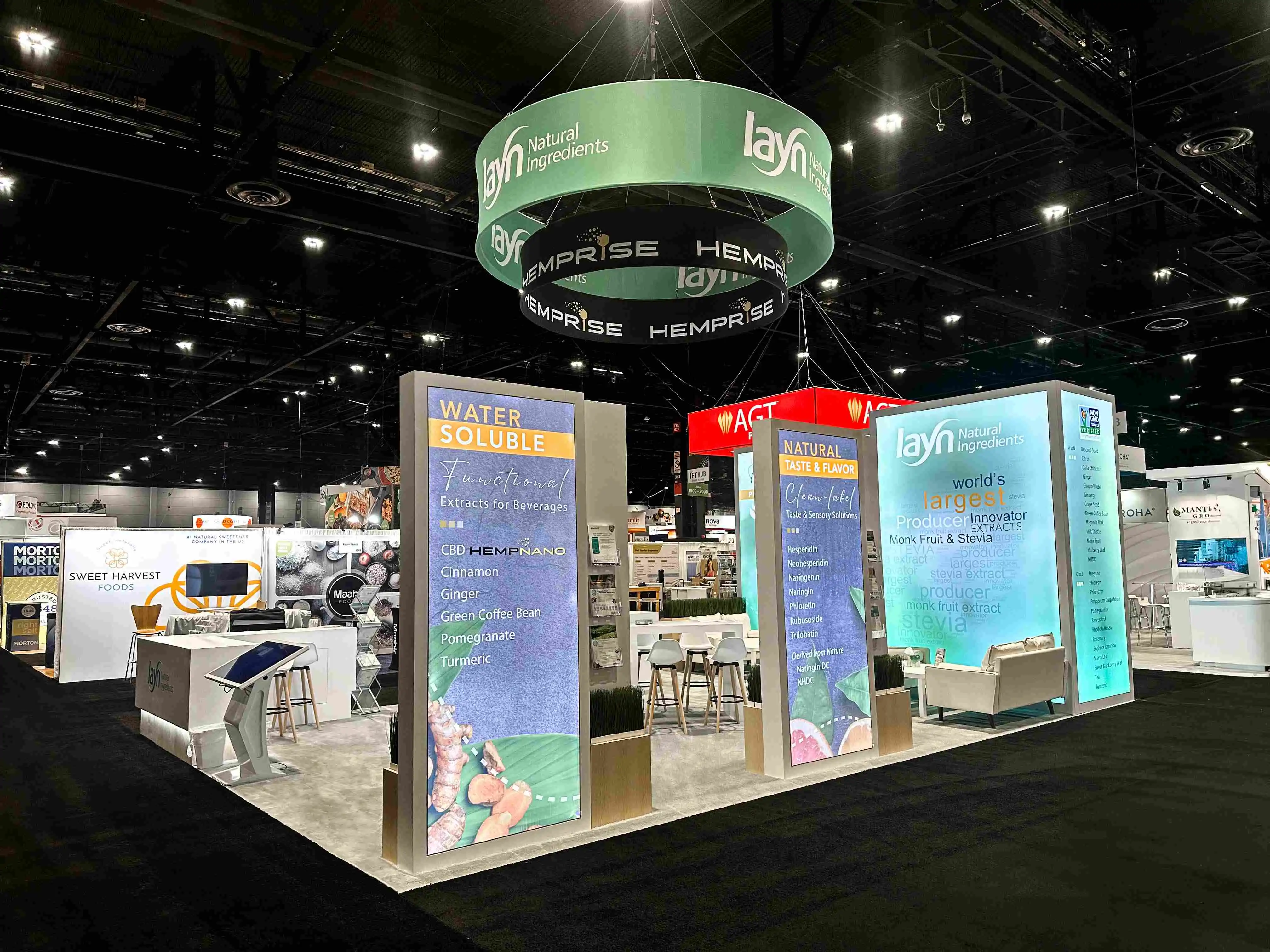
Comparing Exhibition Booth Design Solutions: Custom vs Modular and More
The decision between bespoke booth solutions and modular booth solutions is influenced by a number of parameters, such as the amount of money available, the frequency of the event, the needs for brand placement, and the logistical considerations involved. There are specific benefits associated with each strategy, and these benefits correspond with the various strategic goals and requirements of the firm.
Custom Design Solutions
When it comes to creative freedom and potential for brand distinction, custom booth designs provide a limitless amount of options. The perfect integration of one-of-a-kind architectural features, specific equipment mounting methods, and proprietary technological combinations is made possible by these solutions. Companies that take part in high-profile events such as the Consumer Electronics Show (CES) or the National Association of Broadcasters (NAB Show) sometimes opt for unique designs in order to create a dominating presence and facilitate sophisticated product demos. This level of innovation is a hallmark of exhibition booth design, where custom features are tailored to showcase a brand's uniqueness and enhance its impact at major industry events.
Custom solutions are particularly effective at meeting unique needs, such as the exhibition of heavy machinery, the provision of climate-controlled conditions for delicate equipment, or the integration of complicated audio-visual components. A precise optimization of visitor flow patterns and the construction of discrete functional zones that assist various areas of the sales process are both made possible via the design process.
Modular System Advantages
Companies who participate in several events throughout the year may benefit from the flexibility and cost-effectiveness offered by modular booth solutions. These systems provide standardized components that can be rearranged to accommodate a variety of space sizes and layout needs, all while preserving a consistent appearance of the brand. In addition to being able to be extended or changed in response to changing requirements, high-quality modular systems connect smoothly with high-tech features.
The logistical benefits of modular systems include the standardization of shipping containers, the simplification of setup processes, and the reduction of storage needs between events. In particular, the estimates of total cost of ownership are greatly impacted by these aspects, especially for foreign exhibitors who are responsible for handling complicated logistical chains.
Procuring High-Tech Exhibition Booth Design Services: A Practical Guide
The selection of the most suitable partner for exhibition booth design requires an exhaustive assessment of the technical skills, industry expertise, and service breadth of the potential partner. Successful partnerships begin with the expression of goals in a clear and concise manner, followed by an in-depth evaluation of the credentials and track records of the suppliers.
Supplier Evaluation Criteria
Manufacturing companies with extensive experience in booth design display knowledge in a wide range of industry verticals, including the manufacturing and technology sectors, as well as the medical and energy industries. The availability of a diverse portfolio demonstrates flexibility and a comprehension of the various needs of the market. References from previous projects provide valuable insights into the skills of project management, quality standards, and levels of customer satisfaction.
It is important to have technical talents that include competency in design tools, engineering experience for structural needs, and familiarity with venue rules across a variety of regional markets. For businesses who are going to be exhibiting at global events, having international experience is very necessary since the local construction regulations and logistical processes are going to be quite different.
Pricing Structures and Contract Considerations
In transparent pricing models, the services of design, manufacture, shipping, installation, and support are clearly differentiated from one another. It is possible to accurately prepare a budget and avoid unanticipated expenditures throughout the execution of a project if one has a solid understanding of cost structures. When deciding between rental and buy choices, it is necessary to do a thorough analysis based on the frequency of events, storage capacities, and long-term strategic intentions.
The provisions of the contract have to address matters pertaining to intellectual property rights, modification processes, and liability coverage. In order to prevent delays that might put event participation at risk, it is important to have clear timeframes and milestone criteria defined. On-site support, technical help, and post-event logistics management are all included in comprehensive service agreements, particularly when it comes to exhibition booth design, ensuring that every phase of the process is covered for seamless execution and successful outcomes.
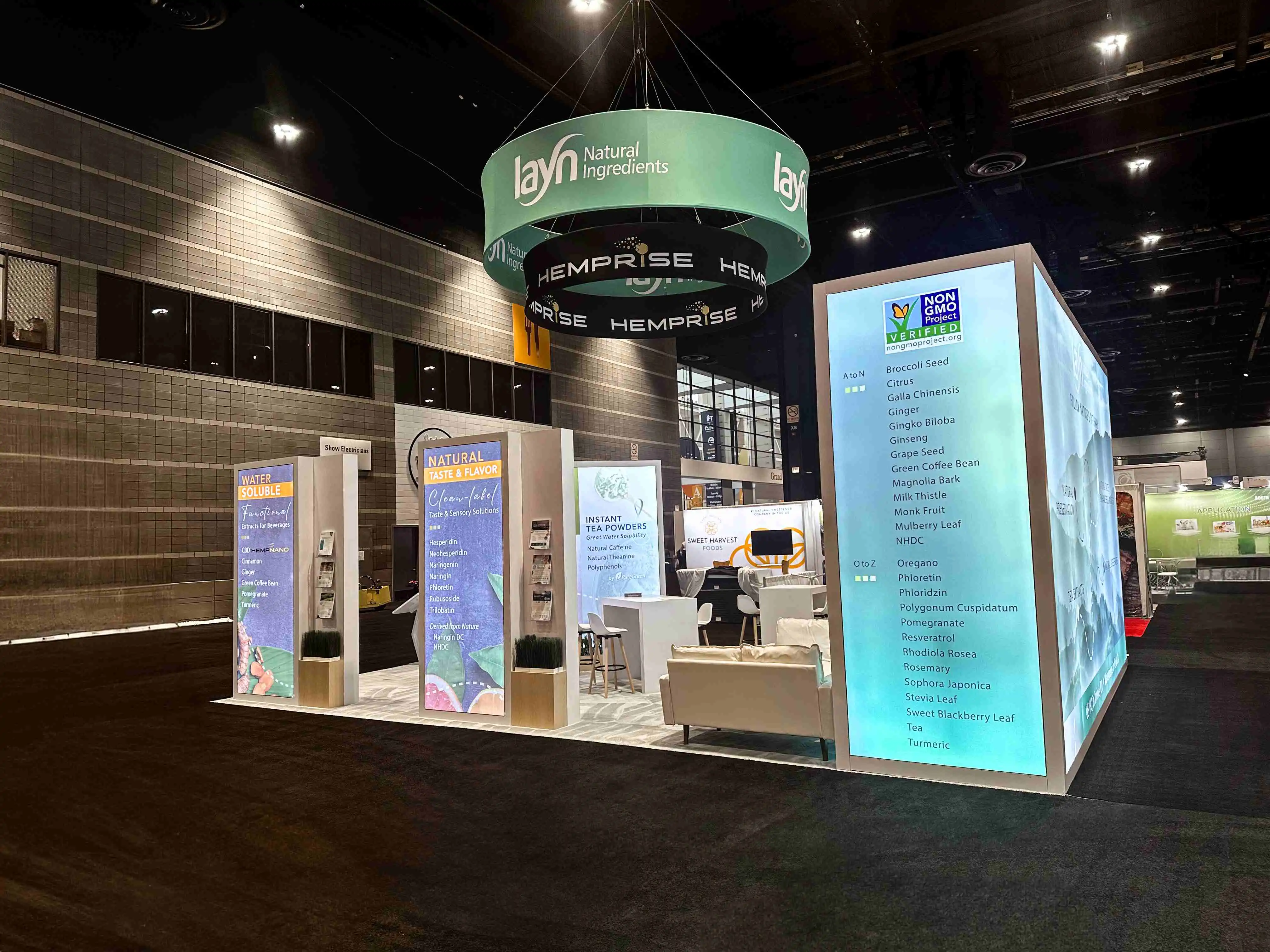
Future Outlook: How High-Tech Exhibition Booth Design Will Evolve Post-2026?
The future of exhibition booth design is clearly pointing in the direction of an increasingly complex combination of data-driven customization capabilities, adaptive technology, and artificial intelligence. Because of these improvements, habitats that are static will be transformed into ecosystems that are responsive and can adapt to the tastes and behaviors of individual visitors.
AI-Driven Personalization and Analytics
The use of artificial intelligence will make it possible to conduct real-time analysis of visitor interaction patterns, which will allow the automated modification of content distribution and ambient circumstances in order to maximize the quality of the experience. Using behavior analysis, machine learning algorithms will be able to identify high-value prospects, which will allow for more efficient lead qualifying and follow-up prioritizing.
In order to determine the most effective layout configurations, content strategies, and technology implementations, predictive analytics will be used to analyze historical data from many events. This will allow for the design choices to be informed. These insights will make it possible to use data-driven optimization, which will continually enhance KPIs such as return on investment and visitor pleasure.
Hybrid Event Integration
The environment of the future will be characterized by a seamless integration of digital and physical involvement, which will be achieved via the use of sophisticated streaming technologies, virtual reality connection, and possibilities for distant contact. In order to retain the intimacy and impact of face-to-face contacts, exhibition booths will double as broadcast studios, allowing them to expand their reach beyond the individual visitors who are physically there.
The ability to rapidly reconfigure between purely physical, hybrid, and completely virtual event forms will be made possible via adaptive modular configuration technologies. This adaptability assures that the event will continue to be relevant across ever-changing event environments while simultaneously optimizing the use of their investments across a variety of participation situations.
Conclusion
High-tech exhibition booth design in 2026 represents a sophisticated convergence of technology, sustainability, and strategic marketing that transforms traditional trade show participation into dynamic brand experiences. The integration of AR/VR technologies, smart systems, and data analytics creates opportunities for enhanced visitor engagement and improved ROI measurement. Success requires careful balance between innovation and practicality, supported by experienced design partners who understand both technical capabilities and business objectives. As the industry continues evolving toward AI-driven personalization and hybrid event formats, forward-thinking companies will benefit from flexible approaches that accommodate emerging technologies while maintaining focus on meaningful business relationship development.
FAQ
Q1: What technologies should I prioritize when designing a high-tech exhibition booth in 2026?
A: Focus on technologies that directly support your business objectives and audience engagement goals. AR/VR capabilities provide immersive product demonstrations, particularly valuable for complex manufacturing or medical equipment. Interactive digital displays with analytics capture visitor engagement data while IoT sensors optimize environmental conditions. Smart lighting systems adapt to different presentation needs while supporting energy efficiency goals. Prioritize technologies that integrate seamlessly with your sales process rather than implementing features solely for novelty value.
Q2: How do I choose between custom and modular booth design solutions?
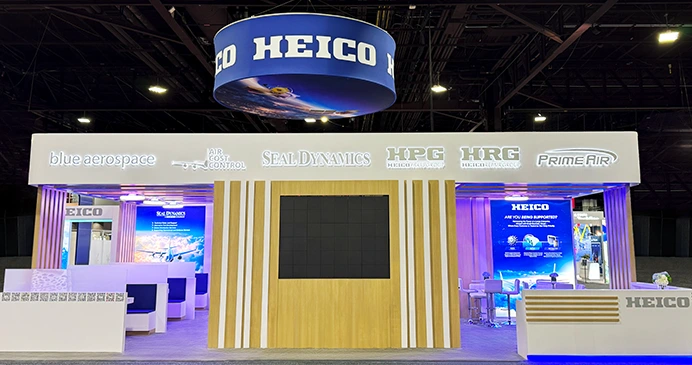
A: Evaluate your participation frequency, budget constraints, and brand positioning requirements. Custom designs offer unlimited creative flexibility and unique brand differentiation, making them ideal for flagship events or companies requiring specialized equipment integration. Modular systems provide cost-effectiveness for multiple annual events, simplified logistics, and configuration flexibility. Companies like Seastar Corporation and HEICO Corporation have successfully utilized both approaches depending on specific event objectives and strategic priorities.
Q3: What should I look for when selecting an exhibition booth design manufacturer?
A: Assess technical capabilities, industry experience, and service scope comprehensively. Look for manufacturers with demonstrated expertise across your industry vertical, whether technology, medical, manufacturing, or energy sectors. Portfolio diversity indicates adaptability and understanding of different market requirements. International experience becomes crucial for global events, as venue regulations and logistics vary significantly between markets. Evaluate project management capabilities, quality standards, and client references to ensure reliable execution.
Ready to Transform Your Trade Show Presence with HR Exhibits Service, Inc.
HR Exhibits Service, Inc. stands as your trusted exhibition booth design manufacturer, combining innovative technology integration with proven industry expertise. Our Las Vegas-based facility serves global clients across manufacturing, medical, technology, and energy sectors, delivering custom and modular solutions that maximize trade show ROI. With extensive experience at premier events including CES partnerships with Seastar Corporation and Rexing, NAB Show collaborations with Vela and Radio.Cloud, and IMTS projects featuring Etxetar and GURUTZPE, we understand the unique requirements of diverse industries. Contact us at info@hrexhibits.com to discuss your next high-tech booth project and discover how our comprehensive services transform your exhibition objectives into measurable business success.
References
1. Johnson, Mark R. "Technology Integration in Modern Exhibition Design: A Comprehensive Analysis of AR/VR Implementation." International Trade Show Research Journal, 2024.
2. Chen, Lisa Wang. "Sustainable Materials and Energy Efficiency in Contemporary Booth Construction." Green Building Design Quarterly, 2024.
3. Rodriguez, Carlos M. "ROI Measurement and Analytics in High-Tech Exhibition Environments." Marketing Technology Review, 2024.
4. Thompson, Sarah J. "Custom versus Modular Exhibition Solutions: A Procurement Professional's Guide." B2B Event Management Today, 2024.
5. Davis, Michael K. "AI-Driven Personalization in Trade Show Environments: Future Trends and Implementation Strategies." Digital Marketing Innovation, 2024.
6. Williams, Jennifer L. "International Exhibition Logistics and Regulatory Compliance: Best Practices for Global Exhibitors." Global Trade Show Management, 2024.

Embark on Your Journey to Exceptional Exhibitions! Contact HR Exhibits Today to Transform Your Vision into Global Success.
HR Exhibits Service, Inc.