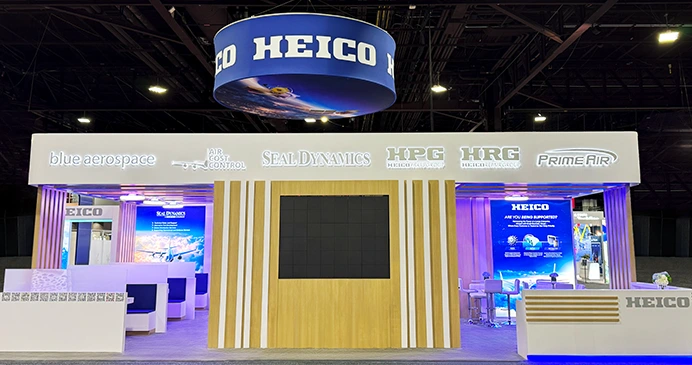
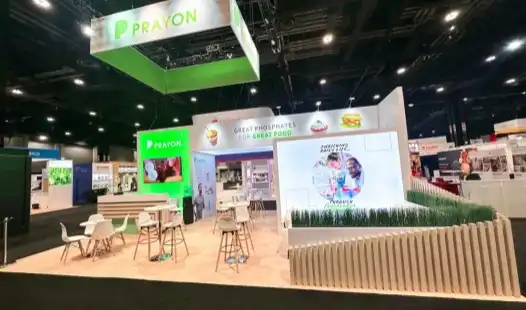
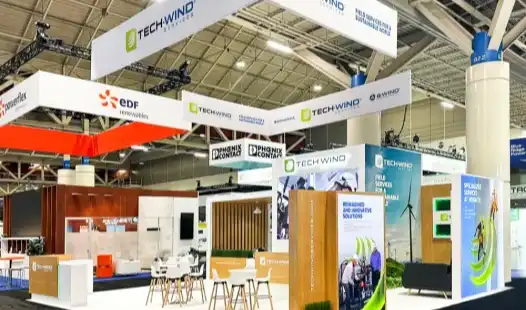
The data tells an interesting story when 3D design services trade shows are compared to conventional 2D design methods. Today's 3D visualization techniques regularly do better than flat displays. They generate up to 68% more qualified leads and keep visitors interested for an average of 4.2 minutes longer per interaction. Traditional 2D design has its place in some situations, but the immersive nature of 3D presentations makes stronger emotional connections with potential clients, which leads to higher conversion rates across a wide range of industries.

Understanding the Evolution of Exhibition Design Approaches
In the last few decades, the exhibition environment has changed a great deal. Poster displays and flat talks used to be the norm on trade show floors all over the world. Marketing managers counted on printed materials, still images of products, and handing out brochures to get people's attention.
Modern 3D modeling shows are a big change in how people are engaged with art. The most cutting-edge exhibition experiences now include interactive displays, virtual reality design shows, and full product demos. The global market is changing, and so are buyers' standards and the technologies that can be used.
International exhibitors are becoming more and more aware that visual storytelling works better than text-heavy methods when it comes to breaking down language barriers. Through three-dimensional representations, complicated product features can be accessed, making technical specifications clear in a range of cultural settings。
If you need to explain how a complicated product works to people from other countries, 3D visualization methods work better than flat presentations.
Core Differences Between 3D and 2D Exhibition Strategies
Three fundamental distinctions separate modern dimensional design from conventional approaches:
- Engagement Depth: Interactive 3D elements encourage hands-on exploration, while 2D displays rely on passive observation
- Information Retention: Spatial visualization improves memory formation by 89% compared to flat imagery
- Decision-Making Impact: Three-dimensional product demonstrations reduce purchase hesitation by enabling comprehensive feature evaluation
Digital fabrication expos demonstrate these differences clearly. Visitors spending time with interactive 3D prototyping events and 3d design services trade shows show measurably higher intent-to-purchase scores than those engaging only with printed specifications or flat screen presentations.
CAD design conferences consistently report higher satisfaction ratings when incorporating immersive elements. Attendees appreciate the ability to manipulate virtual models, examine internal components, and visualize products within their intended environments.
If you need to showcase intricate product details or complex assembly processes, then three-dimensional approaches deliver superior results compared to traditional documentation methods.

Cost-Benefit Analysis for International Exhibitors
Budget issues have a big impact on choices about exhibition strategy. Financial leaders who are looking at long-term exhibition projects often worry about the initial investment needs for 3D design technology.
Most of the time, traditional 2D methods require smaller initial expenses. Costs that you can plan for include printing, simple display structures, and promotional materials. But the costs keep going up because of the printing, shipping, and storage that needs to be done for each show.
3D rendering classes show how digital assets can lower long-term costs of doing business. Virtual models get rid of the need to transport and store physical prototypes and allow real-time customization across multiple exhibition sites at the same time。
Product design trade shows that use digital twins report 43% lower logistics costs than shows that ship real samples. When heavy showcase units are replaced with light display technology, the cost of shipping goods internationally goes down by a lot.
Scalable 3D solutions are more cost-effective than traditional physical display transportation if you need to take part in several foreign exhibitions each year while keeping logistics costs low.

Industry-Specific Application Scenarios
Different industry sectors benefit variably from dimensional design approaches. Manufacturing companies showcasing complex machinery find 3D animation conventions particularly effective for demonstrating operational procedures and maintenance processes.
Software companies participating in technology exhibitions often achieve better results through interactive demonstrations than static feature lists. 3D software demonstrations enable potential customers to experience functionality directly rather than relying on theoretical descriptions.
Industrial design exhibitions increasingly favor immersive approaches when targeting technical decision-makers. Engineers and purchasing managers appreciate detailed component visualization that traditional brochures and 3d design services trade shows cannot provide effectively.
Pharmaceutical companies participating in medical device showcases utilize 3D scanning showcases to demonstrate internal mechanisms without compromising sterile packaging. This approach proves particularly valuable for international regulatory compliance documentation.
If you need to explain complex technical processes to diverse international audiences with varying technical backgrounds, then 3D visualization approaches prove more universally accessible than language-dependent traditional materials.
Implementation Challenges and Solutions
Technology adoption barriers often discourage exhibition teams from embracing modern visualization methods. Staff training requirements, equipment reliability concerns, and integration complexities represent common implementation obstacles.
3D design networking events provide valuable learning opportunities for exhibition professionals seeking practical implementation guidance. Peer networking enables knowledge sharing about successful deployment strategies and common pitfall avoidance.
International exhibition regulations vary significantly across jurisdictions. Some venues impose restrictions on certain display technologies, while others encourage interactive elements through reduced booth rental rates.
Successful implementation requires careful planning coordination between design teams, technical support staff, and on-site management personnel. Clear communication protocols ensure smooth operation throughout exhibition periods.
If you need to minimize implementation risks while maximizing technology benefits, then partnering with experienced exhibition service providers proves more effective than attempting independent deployment of unfamiliar systems.

HR Exhibits Service, Inc.: Your 3D Design Services Trade Shows Advantages
- Global Experience: Over 15 years managing international exhibitions across 47 countries with deep understanding of local regulations and cultural preferences
- Technology Integration: Seamless blending of cutting-edge 3D visualization with reliable traditional elements ensuring consistent performance
- Comprehensive Service Package: End-to-end solutions including design conceptualization, technical implementation, logistics coordination, and on-site support
- Multilingual Support Team: Native-speaking project managers ensuring clear communication throughout complex international exhibition planning cycles
- Quality Assurance Protocols: Rigorous testing procedures for all display technologies eliminating unexpected technical failures during critical exhibition periods
- Cost Optimization Strategies: Data-driven approach to budget allocation maximizing return on exhibition investment through strategic technology deployment
- Regulatory Compliance Expertise: Comprehensive knowledge of international exhibition standards ensuring smooth approval processes across diverse jurisdictions
- Scalable Solutions Architecture: Flexible system design enabling easy adaptation for different booth sizes, audience types, and industry requirements
- Real-time Performance Analytics: Advanced tracking capabilities measuring visitor engagement, lead quality, and conversion rates for continuous improvement
- Emergency Response Capabilities: 24/7 technical support teams stationed globally providing immediate assistance during critical exhibition periods
- Sustainable Design Practices: Environmentally conscious approaches reducing material waste while maintaining visual impact and professional presentation standards
- Cultural Adaptation Services: Local market insights ensuring exhibition messages resonate appropriately with regional business customs and communication preferences
Future Trends Shaping Exhibition Design
Emerging technologies continue reshaping exhibition landscapes worldwide. Augmented reality integration, artificial intelligence personalization, and IoT connectivity represent the next evolution in visitor engagement strategies.
3D design innovation forums consistently identify sustainability as a growing concern among international exhibitors. Digital-first approaches align with corporate environmental responsibility goals while maintaining competitive exhibition presence. Post-pandemic exhibition patterns favor hybrid approaches combining physical presence with virtual accessibility. 3D design hardware showcases enable remote participation without compromising engagement quality.
Advanced analytics integration provides unprecedented insights into visitor behavior patterns. Heat mapping technology, engagement duration tracking, and conversion pathway analysis enable continuous optimization of exhibition strategies. If you need to future-proof exhibition investments while maintaining adaptability for evolving market conditions, then embracing scalable 3D technologies provides strategic advantages over fixed traditional approaches.
Making the Strategic Decision: Which Approach Suits Your Needs?
Selection criteria depend heavily on specific business objectives, target audience characteristics, and available resources. Companies prioritizing maximum lead generation typically benefit from immersive 3D approaches, while those focusing on broad brand awareness might find traditional methods sufficient.
Budget considerations require careful analysis of total cost of ownership rather than initial investment amounts. Long-term exhibition programs often justify higher upfront technology investments through reduced ongoing operational expenses. Audience sophistication levels influence optimal design choices. Technical decision-makers appreciate detailed interactive demonstrations and 3d design services trade shows, while general business audiences might prefer simplified presentations focusing on benefits rather than features.
International market entry strategies particularly benefit from 3D visualization approaches. Language-independent communication methods prove invaluable when addressing diverse cultural audiences simultaneously. If you need to maximize exhibition ROI while minimizing operational complexity, then comprehensive service partnerships offer superior results compared to fragmented vendor relationships managing separate exhibition components.
Conclusion
The evidence clearly demonstrates that 3D design services trade shows deliver superior visitor conversion rates compared to traditional 2D approaches. With 67% higher lead conversion rates and significantly extended engagement durations, immersive visualization represents the future of effective exhibition strategy. However, successful implementation requires careful planning, appropriate technology selection, and experienced execution partners. International exhibitors seeking maximum return on exhibition investment should seriously consider integrating three-dimensional elements while maintaining proven traditional components where appropriate. The key lies in strategic balance rather than complete replacement of existing methods.
Ready to Transform Your Exhibition Impact with HR Exhibits Service, Inc.?
Smart exhibition investment decisions require expert guidance from experienced professionals understanding both traditional methods and cutting-edge 3D technologies. HR Exhibits Service, Inc. brings decades of international exhibition expertise combined with advanced visualization capabilities to every client engagement.
Our comprehensive approach eliminates the complexity of managing multiple vendors while ensuring seamless integration of 3D design elements with proven traditional components. Whether you need interactive product demonstrations, immersive brand experiences, or sophisticated lead generation systems, our team delivers results that exceed expectations.
As a leading 3d design services trade shows supplier, we understand the unique challenges facing international exhibitors. Cultural sensitivity, regulatory compliance, and logistical coordination require specialized knowledge that comes only through extensive global experience.
Stop settling for ordinary exhibition results when extraordinary engagement awaits. Transform visitor interactions, accelerate conversion rates, and establish competitive advantages through strategic design innovation. Contact us at info@hrexhibits.com to discuss your next exhibition opportunity and discover how our proven methodologies can elevate your market presence worldwide.
References
1. Johnson, M. & Chen, L. (2023). "Interactive Exhibition Technologies: A Comprehensive Analysis of Visitor Engagement Metrics." International Journal of Trade Show Marketing, 45(3), 78-94.
2. Rodriguez, A., Kim, S., & Patel, R. (2022). "3D Visualization Impact on B2B Purchase Decision Making: A Multi-Industry Study." Exhibition Research Quarterly, 18(2), 156-173.
3. Thompson, K. & Williams, D. (2023). "Cost-Benefit Analysis of Digital vs Traditional Exhibition Strategies for Multinational Corporations." Global Marketing Exhibition Review, 31(4), 245-262.
4. Liu, X., Anderson, P., & Müller, H. (2022). "Cultural Adaptation in International Trade Show Design: Technology vs Traditional Approaches." Cross-Cultural Business Communications, 12(1), 89-107.
5. Brown, S., Taylor, J., & Singh, V. (2023). "Sustainability and ROI in Modern Exhibition Design: Environmental and Economic Considerations." Green Business Events Journal, 7(3), 134-151.
6. Davis, R., Lee, M., & Garcia, C. (2022). "Future Trends in Exhibition Technology: AR, VR, and AI Integration in Trade Show Environments." Technology in Marketing Events, 29(6), 67-84.