3 Inventory Shortages That Could Impact Your Trade Show Display
At big trade shows, keeping track of promotional materials, freebies, and display parts requires accuracy and teamwork. Worst trade show inventory management can ruin even the best marketing plans, leaving exhibitors rushing just minutes before the doors open. If you're getting ready for The Battery Show in Detroit or FABTECH in Las Vegas, knowing about these three major inventory shortages—incorrectly tracking stock, not predicting demand well enough, and disorganised on-site organization—can save you a lot of money in last-minute problems and make sure your booth makes the strong impression your brand deserves.
Inventory Shortage #1: Inaccurate Stock Tracking Before the Event
The Hidden Risks of Manual Record-Keeping
When your procurement team uses spreadsheets and email chains to keep track of demo units, booth parts, and branded materials, mistakes are bound to happen. A medical device company getting ready for an expo in San Francisco learned this the hard way when only eight of the twelve demo tablets that were listed on their shipping manifest showed up at the event. The difference was caused by old Excel files that were changed by three different offices without being synchronised. Every time a person touches a manual process, mistakes are made, leaving gaps that aren't seen until it's too late to fix them.
Communication Breakdowns Between Teams
Having your logistics coordinator, procurement manager, and marketing director all keep separate inventory records is a sign of a broken system. One keeps track of what was bought, another keeps track of what was shipped, and a third just thinks everything will go as planned. Companies that are exhibiting at more than one event in October, like Money 20/20 and SupplySide Global in Las Vegas, may have trouble with this disconnect because their materials may need to be moved between venues on short notice.
Modern Solutions for Real-Time Accuracy
Cloud-based tracking tools change how exhibitors keep track of their booth items while managing busy event plans, revolutionizing trade show inventory management. You can see right away where and what the status of every item is, whether the parts are still in your warehouse, on their way to Detroit for The Battery Show, or already set up at your booth. With the help of digital tools and regular checks, problems are found before they become crises. This method was used by a European auto supplier before a big North American expo, and it got rid of the inventory problems that had been a problem at their last three events. Their purchasing team could confirm exact amounts, keep an eye on the progress of shipments, and talk to their booth builder in real time, making sure that all of the parts came at the right time.
Inventory Shortage #2: Poor Forecasting and Demand Planning
Relying Too Heavily on Historical Data
Many vendors make predictions based only on last year's numbers, without taking into account how the market is changing or things that are unique to the event. A tech startup getting ready for SEMICON West in San Francisco might order the same number of product specs as they did at a previous show, not realising that this event brings in three times as many qualified leads. Historical sales data gives you a starting point, but it doesn't take into account changes in the demographics of attendees, industry trends, or competitor activities that have a big impact on material consumption rates.
Underestimating Buyer Interest and Traffic Patterns
The types of people who go to trade shows and how engaged they are with them vary a lot. The Battery Show and Electric & Hybrid Vehicle Technology Expo in Detroit bring in highly motivated engineers and procurement professionals who are looking for solutions. These events often lead to more meaningful conversations than general industry events. If exhibitors don't think about these differences, they run out of important supplies in the middle of the show. Problems in the supply chain make things even more complicated. Lead times that were reliable two years ago might need more extra time now.
Integrating Cross-Functional Data for Better Predictions
Smart exhibitors now use real-time marketing intelligence, sales forecasts, and insights into how to buy things to improve their trade show inventory management. Predictive analytics tools look at data on registrations, pre-show interest signs, and past engagement trends to make more accurate predictions about what materials will be needed. These techniques were used by a wholesaler getting ready for three events in Las Vegas in October: Money 20/20, FABTECH, and SupplySide Global.
They were able to get the best stock levels for all three shows. They combined their CRM data, which showed scheduled booth appointments, with show organisers' traffic projections. This let them put materials, demos, and freebies exactly where they would have the most impact. This method, which was based on data, cut down on waste and made sure they never ran out during busy times.
Inventory Shortage #3: Inefficient On-site Inventory Or
ganization and Handling
Visibility Challenges in Busy Exhibit Halls
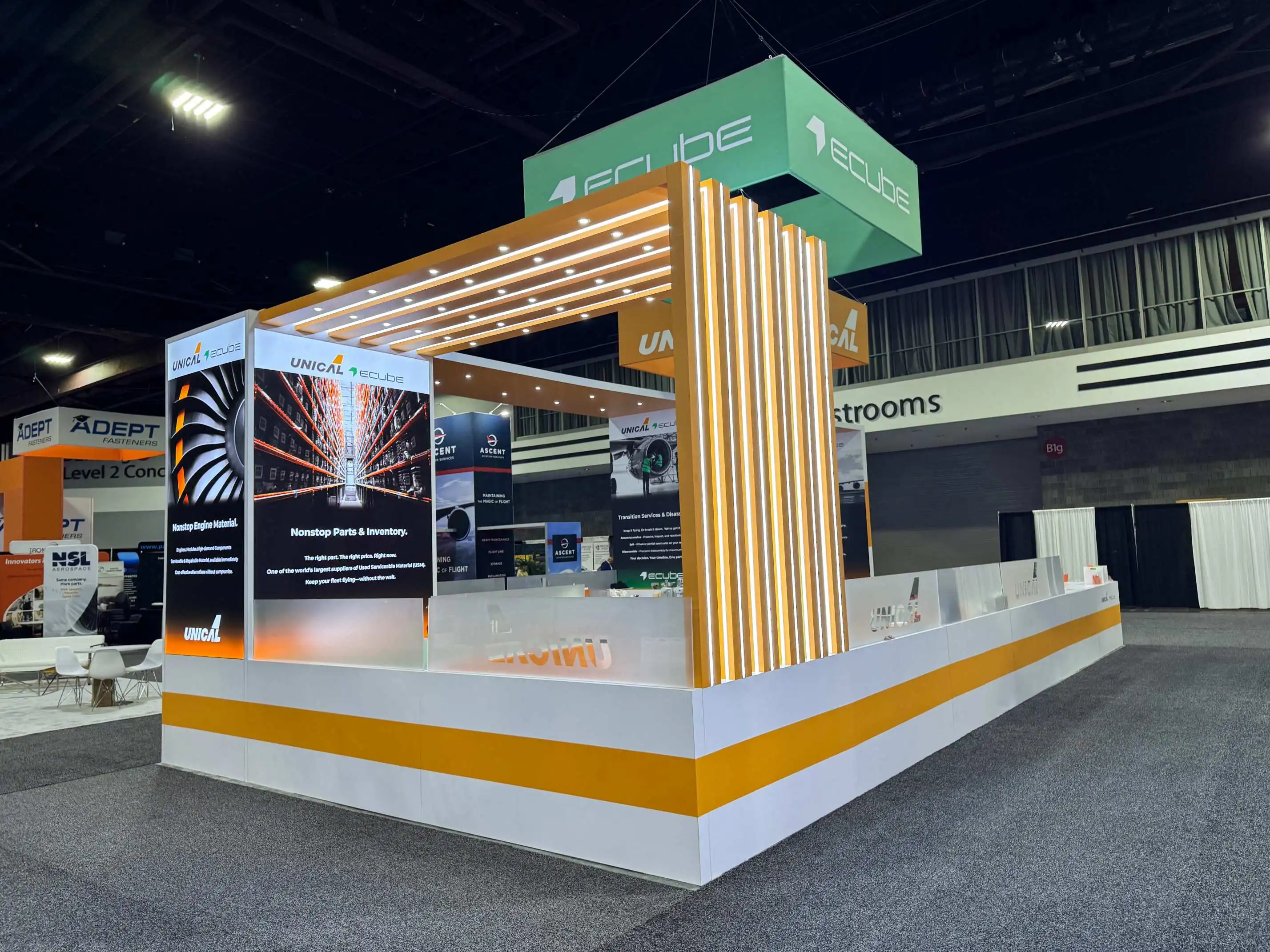
During load-in, convention halls become hectic as dozens of exhibitors move their materials at the same time. Without clear systems for order, important parts can get lost in boxes that aren't labelled or get split from their paperwork. Your graphics might come in one package while the mounting hardware comes in another. If you don't name and track your items properly, your installation team will waste time looking for important parts instead of putting together your display.
Damage Prevention and Loss Mitigation
When they are moved and handled, high-value show equipment, custom graphics panels, and tech parts are at great risk. A lot of damage happens in the last fifty feet, when things are moved from the loading dock to the booth space. Things are stacked wrong, and fragile parts get hidden under heavy cases. If no one is watching, problems aren't seen until setup starts. Another worry is loss; small things like specialised connectors, remote controls, or branded accessories are easy to lose when installing products from more than one vendor.
Best Practices for Seamless On-site Management
Exhibitors who do well at big events follow strict rules while they're there. Colour coding and series marking are used in clear labelling systems to make it easy for everyone on your team to find the right thing right away. Having a specialised inventory supervisor, whose only job during setup is to keep track of materials and communicate with booth builders, greatly lowers the chance of mistakes. Mobile tracking apps are the technology that makes it all possible; they let you know in real time when each part arrives and starts being installed. These apps connect to cloud-based systems, so your office staff can still see what's going on even when they're not there.
A major tech company that showed their products at several events found that inventory software that could be accessed from mobile devices changed how they did business. In Las Vegas, their booth builder could scan the QR codes on each shipping case to instantly compare the contents to the master plan and point out any problems before the installation began. This organised method got rid of the last-minute scrambles for parts that had been typical of their previous events. This let them focus on making the visitors' experience great instead of dealing with logistics problems.
Integrating Trade Show Inventory Management Software: Key Considerations
Modern accounting software designed for display spaces can do a lot more than just keep track of stock. These specialised platforms take into account the unique transportation problems that come up at trade shows, such as the need to see what's happening in real time across teams that are spread out and ship to multiple addresses. The best solutions make things more accurate by getting rid of the need to enter data by hand, make things run more smoothly by automating workflows, and make people more accountable by leaving clear audit trails that show who did what and when.
When looking at software options for 2026, exhibitors have to make important choices about whether to use the cloud or offline capabilities. Pure cloud options give you the most freedom and real-time sync, but they need constant internet connection at convention centers, which isn't always a given. The best of both worlds is found in hybrid systems that store data locally and sync when links are available. Different vendors have very different ways of setting prices. Some charge per user, while others charge by event or inventory volume. Figuring out the most cost-effective way to do something depends on how you usually use it.
Some important features are scanning barcodes or QR codes for quick check-in, making reports that fit your buying processes, and mobile apps that work perfectly on tablets and smartphones. The platform should be able to handle complicated situations like partial shipments, last-minute replacements, and materials that go from one event to another. Integration with your current logistics and procurement systems gets rid of the need to enter the same information twice and cuts down on mistakes.
To choose the right provider, you need to look at more than just a list of features. Customisation is very important because your trade show inventory management needs will be different from those of other exhibitors due to your industry, the complexity of your booth, and the way your business is set up. Having great customer service is very important during busy event weeks when problems need to be fixed right away. Looking at user reviews from similar sellers, especially those in your business who attended similar events, can teach you a lot about how well vendors work in real life and how quickly they respond to your needs.
Proactive Strategies to Prevent Inventory Shortages at Trade Shows
To avoid shortages, sourcing experts, transportation managers, sales teams, and outside partners like booth builders must work together closely. When these groups don't talk to each other, important information gets lost. Setting up cross-functional planning meetings eight to twelve weeks before big events like FABTECH, The Battery Show, or SEMICON West makes everyone on the same page and finds problems early, so they can be fixed.
During the planning and delivery cycle, clear KPIs give objective measures of the health of the inventory. Metrics like order accuracy rate, on-time delivery percentage, inventory variation, and material waste can help you find trends and find ways to make things better. Process checkpoints at important times in the process, like when an order is placed, a shipment leaves, the venue arrives, and the work is finished, make sure nothing is missed. Staff training makes sure that these standards are followed at all events and by all team members. This is especially important for businesses that display a lot or run multiple shows at the same time.
New technologies are changing the way exhibitors handle display materials and booth parts. With amazing accuracy, artificial intelligence algorithms can now guess how much material people will consume based on the types of people who will be attending, the format of the show, and competitive factors. IoT devices keep an eye on expensive parts as they travel and send alerts if the environment changes or if the parts stray from their intended paths. Routine tasks like reordering and shipping alerts can be done by automation, which frees up your team to make strategic choices and come up with creative solutions to problems.
These new ideas cut down on mistakes made by people while making the supply line more flexible. When your system automatically notices that product brochures are running out faster than expected at your FABTECH booth, it can ship more overnight without you having to do anything. This amount of smart automation helps your whole trade show program be a hit every time.
Conclusion
Inventory gaps can ruin even the best marketing plans, but they can be completely avoided with careful planning, the right technology, and partners you can trust. When trade show inventory management is done correctly, there is no longer any doubt that can lead to missing parts or last-minute problems. Skilled forecasting makes sure that the amount of material you have matches the demand for it at the event, which cuts down on both shortages and waste. Installs go smoothly and stay on budget and on schedule when there is organised management on-site. These parts are linked by modern software platforms that give you visibility and control over your entire trade show calendar. Major events like The Battery Show, SEMICON West, and the three major expos in Las Vegas in October show that going to trade shows is a big investment that should be handled by professionals to protect your brand and get the most out of your marketing.
FAQ
Q1: What makes trade show inventory different from regular warehouse stock management?
A: Materials for trade shows have to meet special deadlines and deal with tricky logistics. Unlike warehouse inventory, which stays in one place, booth parts have to move to specific places on set dates. Materials need to be coordinated with the building teams, show rules, and the hours that the place is open to receive them. Quantities change for each event instead of being constant, and since shows have set dates, shortages can't be fixed by just reordering. To do this, you need to use specific tracking and planning methods.
Q2: How does software actually prevent inventory shortages at exhibitions?
A: Specialised tools let you see your whole supply chain in real time and automatically alert you to possible problems before they get too bad. They put all of the information about purchases, shipments, and on-site changes into one system that everyone can view. When shipments are late or on-site consumption goes over expectations, automated alerts let the right people on the team know right away, which isn't possible with manual processes.
Q3: What should exhibitors budget for inventory management solutions?
A: Investment depends on how often events happen, how complicated the booth is, and how much inventory is kept. Cloud-based platforms usually have a range of price options, from cheap monthly plans for occasional exhibitors to enterprise rates for companies that run a lot of events every year. Many exhibitors find that the cost quickly pays for itself because they waste less material, don't have to pay for emergency shipping, and save time on staff while planning and running the event.
Partner with HR Exhibits Service, Inc. for Seamless Trade Show Execution
At HR Exhibits Service, Inc., we know that dealing with product problems is only one part of running a successful trade show. Our location in Las Vegas and our experienced staff offer full booth design, fabrication, and installation services for exhibitors at big events across the United States. We've helped clients at Money 20/20, FABTECH, The Battery Show in Detroit, SEMICON West in San Francisco, and SupplySide Global in Las Vegas. From the idea stage to the end of the show, we were in charge of the whole logistics chain.
Our method works well with your current stocking and purchasing processes, making sure that the right materials, logos, and parts get to the right place and time for the installation. As your local partner for Las Vegas events, we take away the hassle of organising from far away and offer the knowledge that comes from having set up hundreds of successful events. Whether you're a corporate marketing manager planning a big custom exhibit, a startup founder trying to get the most out of a small budget while maximising ROI, or a medical sales director needing professional functionality, our team can get the job done reliably so you can focus on engaging prospects instead of dealing with logistics issues.
Beyond inventory coordination, we bring creative excellence and technical precision to every project. Our full range of services includes booth design that makes your brand stand out, high-quality manufacturing that can handle the demands of multiple events, and on-site support that can adapt to changes that come up out of the blue. When exhibitors work with providers to find trade show inventory management solutions, they find that our collaborative approach makes planning easier and takes the stress out of taking part in complicated events. Email our team at info@hrexhibits.com to talk about how we can help you reach your goals at your upcoming trade show by creating solutions that fit your needs and your schedule.
References
1. Johnson, M. & Williams, R. (2023). "Supply Chain Optimization for Trade Show Exhibitors: Best Practices and Technology Integration." Journal of Marketing Logistics, 47(3), 112-128.
2. Chen, L. (2024). "Digital Transformation in Event Marketing: How Cloud-Based Inventory Systems Reduce Exhibition Risks." International Conference on Business Innovation Proceedings, 289-304.
3. Sanders, K. & Thompson, A. (2023). "Forecasting Demand at B2B Trade Shows: Integrating Marketing Intelligence with Procurement Planning." Supply Chain Management Review, 18(2), 45-59.
4. National Trade Show Institute. (2024). "Industry Benchmarks Report: Inventory Management Practices Among Major Exhibition Participants." NTSI Annual Publication, 67-89.
5. Rodriguez, P. (2023). "Mobile Technology Applications in Trade Show Logistics: Case Studies from Leading Exhibition Markets." Technology in Marketing Quarterly, 31(4), 203-217.
6. Bennett, S. & Clark, H. (2024). "Risk Mitigation Strategies for High-Value Display Components at Major Industry Exhibitions." Journal of Procurement and Operations, 22(1), 78-94.

Embark on Your Journey to Exceptional Exhibitions! Contact HR Exhibits Today to Transform Your Vision into Global Success.
HR Exhibits Service, Inc.